Why is retinal detachment more likely in high-myopes? High myopia is not just a high refractive index; when the near distance exceeds 600 degrees, the eye structure often undergoes significant changes. The eye tissue becomes thinner and more fragile, making the retina more prone to tear holes, leading to fluid infiltration and retinal detachment. Many people may only experience blurred vision on a daily basis, but in fact, high-myopes need regular eye examinations to detect problems early on.
How does high myopia change the eye structure?
The reason why high myopia is easily prone to retinal detachment is that the eye is elongated, and the eye tissue also becomes thinner and more fragile. The normal human eye is about 24 millimeters long, but the eye of a person with high myopia gradually elongates, and some even exceed 26 millimeters or more. After the eye is elongated, the retina behind the eyeball also becomes thinner.
The retina is an important organ responsible for vision. When it becomes thin and degenerates, cracks, deformation, and even holes easily appear around it. High myopia causes the vitreous humor to liquefy and deteriorate earlier, increasing the pull on the retina and increasing the risk of retinal detachment. As age increases, the vitreous gradually shrinks, and if it pulls on the fragile retina, it can cause retinal tears.
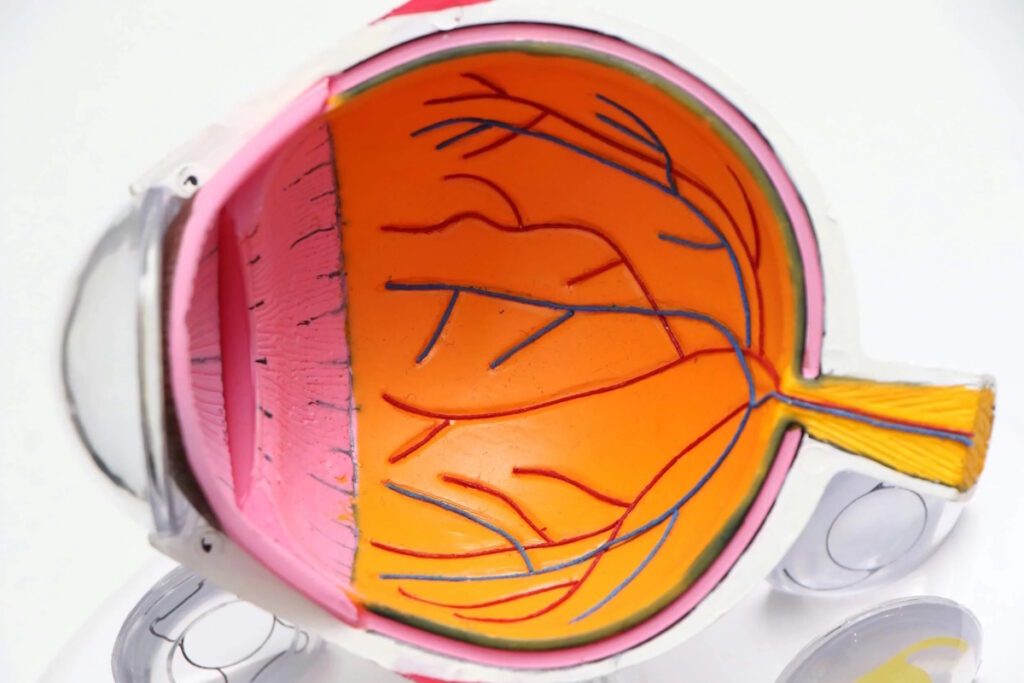
Causes of retinal perforation and detachment
Retinal detachment usually does not occur suddenly; rather, it begins with a “retinal tear.” When a small tear develops in the retina, the aqueous humor in the eye may leak into the retina, causing the retina to separate from the eye wall, resulting in retinal detachment.
Common causes include:
- High myopia causes thinning of the retina
- Retinal degeneration pulls at the retina
- External impact, high impact motion
- Aging factors
When the retina begins to detach, the patient may experience the following symptoms:
- Flashing lights suddenly increased
- Flash sensation
- The field of view is obscured by the shadows.
- Vision rapidly declines
If not treated promptly, severe damage to vision may result permanently. If any abnormal symptoms appear, seek medical attention as soon as possible.
Why retinal surgery is often combined with cataract surgery
When performing retinal surgery on patients with high myopia, ophthalmologist Dr. Tong Wenjie will recommend simultaneously treating cataracts; this is because high myopia itself is more likely to cause early cataract development, and retinal surgery can also accelerate it.Cataract formationIf the two surgeries are performed separately, not only will the recovery period be longer, but there is also a risk of re-entering the eye; combined surgery can address both problems simultaneously in a single treatment, improving retinal repair results.
High-degree myopia treatment: SMILE refractive surgery
In addition to wearing glasses and contact lenses, more and more people have chosen to SMILE refractive surgeryIt can treat myopia; it is suitable for patients with myopia of up to 1,000 degrees and hyperopia of up to 500 degrees. However, please note that SMILE can only correct refractive errors; it cannot restore the normal length of the eye axis that has already been stretched. Therefore, it cannot eliminate the retinal risk associated with high myopia itself. After undergoing SMILE, you still need to undergo regular eye examinations to effectively reduce the risk of visual impairment.
If you have high myopia or have recently experienced sudden increases in halos, flashes of light, black shadows in your vision, or blurred vision, it is recommended that you seek evaluation from an ophthalmologist as soon as possible.