Many people think macular degeneration is an eye disease that only affects older adults. However, young people are not completely at risk. Although macular degeneration is more common in older adults, people with nearsightedness have their eyeball stretched, and the retina and macular tissue may be pulled and thinned, increasing the chance of near-sighted macular degeneration. If a person has high myopia, they are more likely to develop macular degeneration.
Dr. Tong Wenjie, an ophthalmologist, explained that the macular area, located in the center of the retina, is the most densely populated area of photoreceptors, which dominate and control our central vision. In essence, it is like the film in a camera. Once the macular area is damaged, it can lead to severe visual impairment. The loss of central vision can lead to deformation and even scarring, and in some cases, blindness.
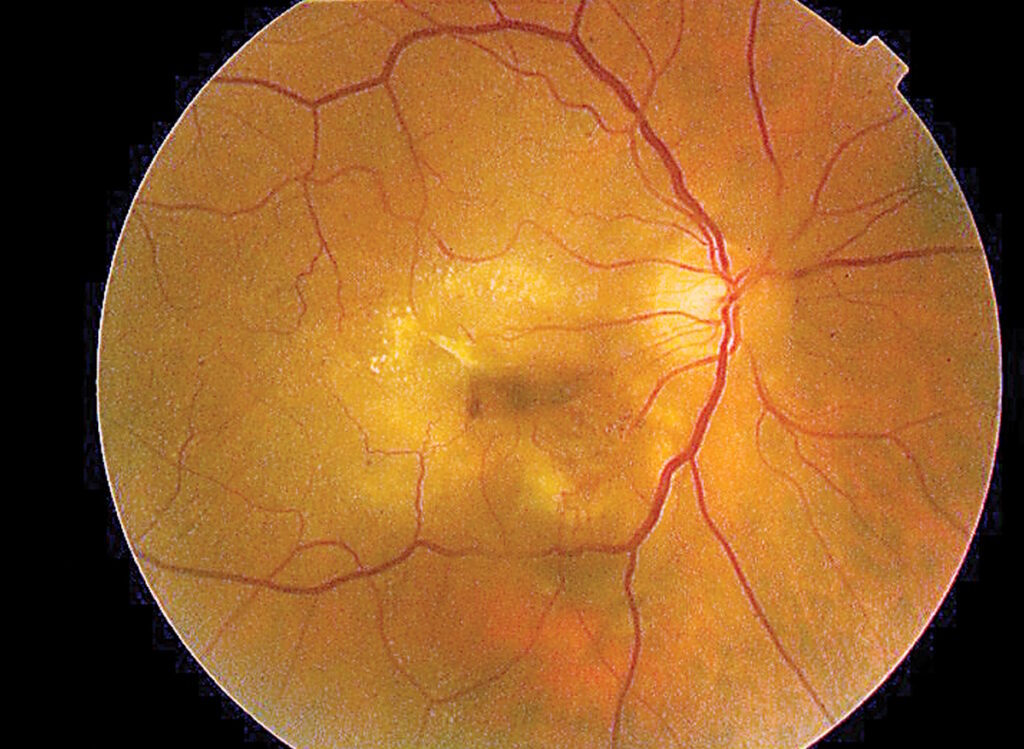
Near-sightedness and the macular area are related
The relationship between macular degeneration and the pathological changes that can be caused by high myopia is profound. The deeper the nearsightedness and the longer the eyeball, the more likely the macular and peripheral retina may be damaged by prolonged stretching, even leading to holes, atrophy, or abnormal blood vessel growth. This type of disease can cause a decline in central vision and may also result in distorted images or shadows blocking out the view. For those with myopia of 600 degrees or more, or a family history of macular disease, heightened vigilance is even more necessary.
Causes of the trend towards youthification
Age remains the main risk factor, but if young people have high myopia and lack the habit of protecting their eyes, the risk of macular degeneration may occur earlier. The aging of macular degeneration is closely related to modern lifestyle habits.
- Long-term use of mobile phones, computers, and tablets puts the eyes under a high load for a long time, which can easily exacerbate the development of myopia.
- Reduced outdoor activities, insufficient sunlight, lack of sleep, and too close a distance between the eyes can all cause myopia to deepen.
- Imbalanced diet, a lack of antioxidant nutrients, and habits such as smoking can also weaken the health of the retina.
Prevention of macular degeneration
To prevent macular degeneration, the key is to monitor and protect the eyes early. People with high myopia should undergo regular comprehensive eye examinations, especially fundus examinations, to detect macular or retinal abnormalities early. In daily life, you can increase your intake of foods containing lutein, zeaxanthin, vitamins C, E, and zinc, such as deep green vegetables, fish, and orange fruits. When going out, wear sunglasses with UV protection to reduce the harmful effects of ultraviolet rays; also quit smoking, control blood pressure, blood lipids, and blood sugar, and avoid prolonged near-sighted use of the eyes. These methods can effectively reduce the risk of macular degeneration and slow its progression.
Laser vision correction for nearsightedness
SMILE Laser VisionThe main role is to correct nearsightedness by changing the curvature of the cornea and improving the position of light focus, thereby reducing or eliminating the nearsightedness. It is suitable for patients with nearsightedness within 1,000 degrees and within 500 degrees of farsightedness. It is important to note that laser vision correction cannot directly treat macular degeneration; those who were previously considered to have high myopia still have a risk of macular degeneration. To effectively treat macular degeneration, it depends on whether it is early dry or late wet macular degeneration. For more details, please refer toMethods for treating macular degeneration。
As the number of people with myopia increases and eye-care habits change, the trend towards macular disease is worth paying attention to. The earlier people establish the habit of checking, protecting their eyes, and controlling their refractive error, the better they can protect the health of the macula and avoid damage to central vision. For people with severe myopia, regular eye examinations and professional assessments can effectively reduce the risk.