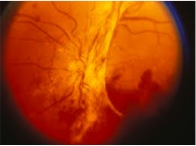
About one in ten middle-aged people in Hong Kong suffer from diabetes. Apart from being prone to fatigue and infections, this condition also affects eye health. Also known as "diabetic retinopathy," this is one of the top ten causes of blindness worldwide. Every year, approximately 200 people in Hong Kong go blind as a result of this condition. Therefore, diabetics must prevent diabetic retinopathy early.
The incidence and severity of diabetic retinopathy are directly related to the age of diabetes onset; most people with diabetes who are 10 years or older also have some degree of retinal vascular changes; patients with diabetes who have been ill for more than 15 years have an up to eightfold higher risk of developing vascular changes.
Early symptoms of eye health problems caused by diabetes may be completely absent, but by the time symptoms appear, it may be too late. "Therefore, early preventive examinations are very important."
Symptoms
Spots or dark lines floating in the field of vision
Blurred vision.
Blind spots and deformation appear in the central area
There are dark areas in vision.
Visual acuity decreased.
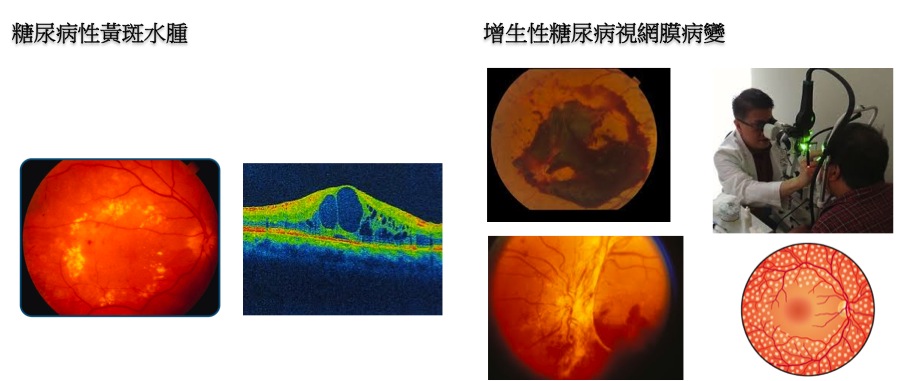
Diabetic Retinopathy: Two major complications
Treatment
A. Improve your lifestyle to prevent diabetes-related eye problems
Less sugar and less salt; control blood sugar, blood pressure, and cholesterol.
Do aerobic exercise at regular intervals.
Eat more omega-3 polyunsaturated fatty acids.
Regular checkups。
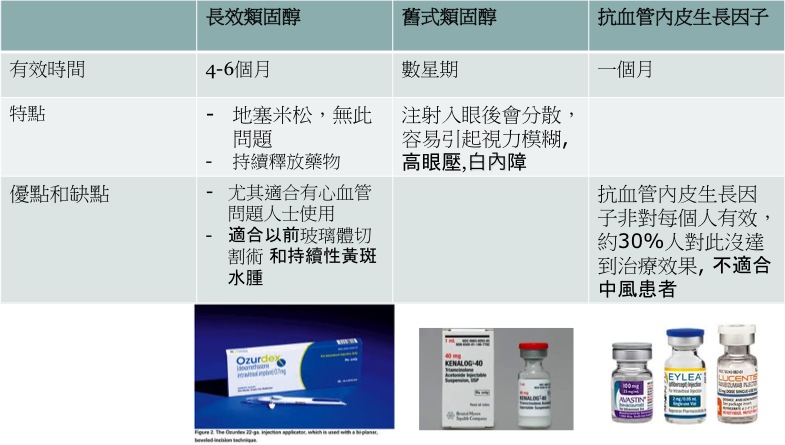
B. Diabetic macular edema – intravitreal injection treatment
Conclusion
Diabetic retinopathy is not something that happens overnight. In its early stages, it does not cause noticeable blurring or pain in the eyes. If a patient detects and controls the condition early, the eyes and vision can fully recover. However, if the disease progresses to later stages, long-term microvascular leakage leads to retinal hypoxia, vascular hyperplasia, and severe retinal complications, with significant visual impairment and ultimately severe disability or blindness.
Q and A
Q: The effects of diabetes on the eyes:
A: Cataracts and secondary glaucoma—people with diabetes tend to develop them earlier than the general population.
Refractive instability—when the blood sugar levels of diabetic patients fluctuate greatly, the refraction is affected, resulting in a temporary increase in myopia or hyperopia.
Retinal lesions and macular edema—diabetes can cause damage to the retinal microvessels, which may lead to protein leakage or hemorrhage, gradually impairing visual function. It may even cause the retina to grow new fragile blood vessels, causing vitreous hemorrhage and retinal fibrosis.