Cataract treatment

Dr. Tong Man Kit is an ophthalmologist specializing in cataract surgery. He has completed training at Harvard University affiliated hospital in the United States and has conducted academic exchanges with local ophthalmologists on issues related to cataract treatment. When should I undergo cataract surgery? Does cataract surgery need to wait until it is mature? Contact Hong Kong Bright Vision Center Eye Center for inquiries or to schedule an examination.

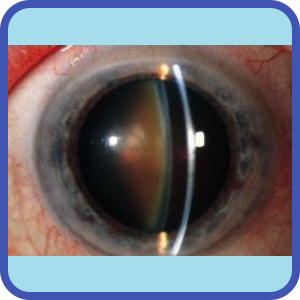
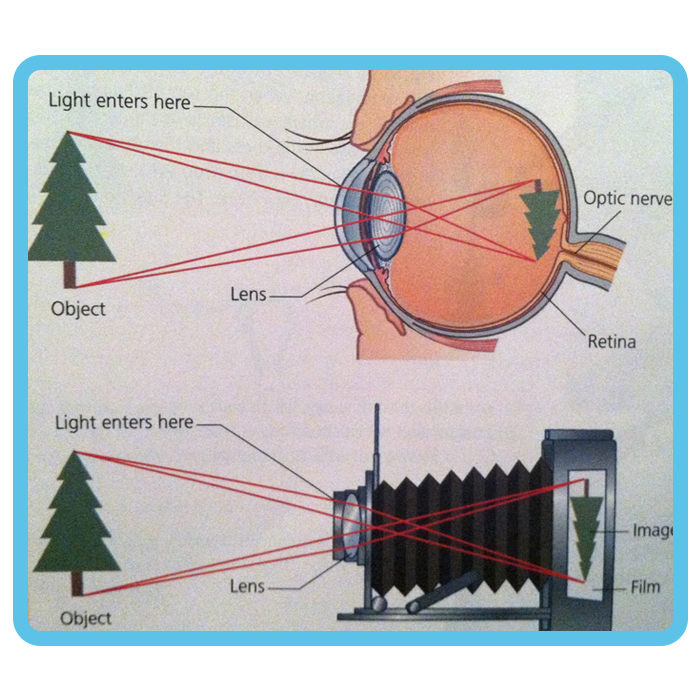
Cataracts are caused by the cloudy appearance of the transparent lens used to focus light in the eye due to aging or disease. The lens functions like a camera’s lens, helping the eye focus accurately so that the image can be focused on the retina to form a clear image. The lens is made of proteins and has the function of regulating light. When the lens becomes cloudy, its transparency decreases, and light cannot pass through, resulting in a decrease in vision and the formation of cataracts.

The most common type of cataract is senile cataract, which generally occurs in people over the age of 50. People with diabetes and those with severe nearsightedness are more likely to develop cataracts earlier.

老年性白內障症狀

Causes of cataracts


Old age


Eye injury


Eye surgery


Congenital


Other eye diseases caused by

(such as: iridocyclitis, acute glaucoma, and myopic astigmatism)


Other diseases cause
(For example: diabetes)


Drug side effects
(such as: steroids)

Symptoms of cataracts

圖片_視力模糊_白內障_症狀
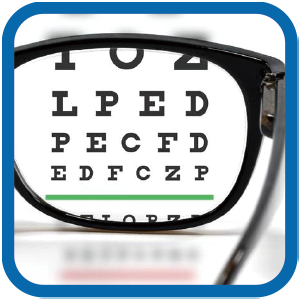
Blurred vision
圖片_看事物出現眩光_白內障
Notice the glare that appears when looking at things.
圖片_影像顏色變得晦暗_白內障的症狀​
The image color has become dark.
圖片_對光敏感_畏光_白內障
Sensitive to strong light and afraid of light
圖片_白內障的症狀​_單眼重影
Monocular diplopia
圖片_近視數度突然飆升_白內障的症狀​
The near-sightedness suddenly increased,
It may increase by two to three degrees within a month.

Visual simulation before and after cataract surgery

The image on the left shows a visual simulation of a cataract patient, while the right side shows a simulation of the normal vision returning after the surgery.

Visual simulation before and after cataract surgery

When should I undergo cataract surgery? Does cataract need to be mature before surgery?

圖片_白內障_手術
圖片_白內障手術_什麼時候做白內障手術

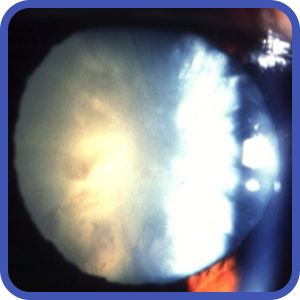
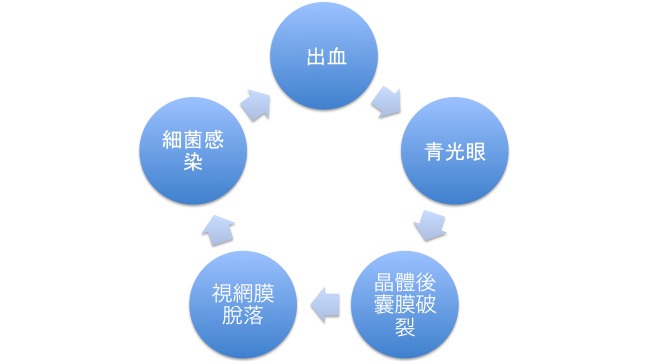
If cataracts become mature, they will cause a series of complications for the patient.For example:CataractRetinopathy.

Currently, it is not necessary to wait for the cataract to mature or for complications to occur before undergoing surgery.

  1. As vision gradually worsens, it becomes insufficient to meet daily work or life needs.

  2. The nurse's examination revealed a decrease in vision.

  3. After undergoing a doctor’s examination and discussions, we decided when to undergo the surgery.


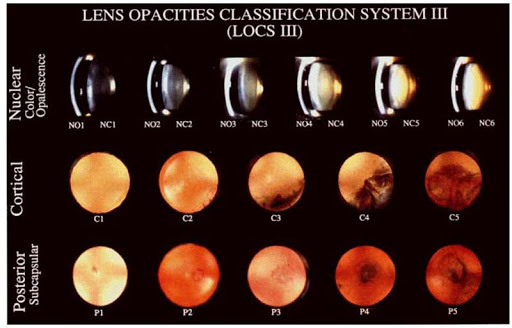
圖片_晶狀體混濁分級系統_LOCS III

How to treat cataracts?

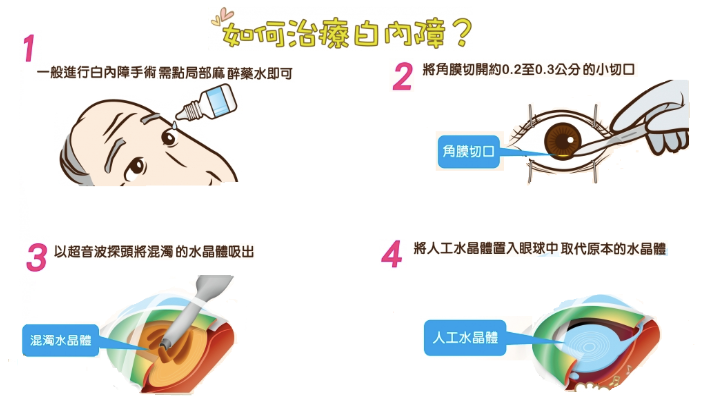
Surgery is the only method to treat cataracts. GenerallyCataract surgeryPerformed under local anesthesia, the procedure is performed using a microscope in the operating room. Using ultrasound emulsification technology, the originally cloudy crystals are removed and implanted into the appropriate location.Artificial lensThis is a minimally invasive surgery. The incision is usually very small, and sutures are not necessarily required. Therefore, the recovery time after the surgery is relatively quick.

  1. Generally, cataract surgery requires only local anesthesia.
  2. Make a small incision approximately 0.2 to 0.3 centimeters in diameter on the cornea
  3. Using an ultrasonic probe to extract the cloudy crystals
  4. Placing artificial crystals into the eye to replace the original crystalline lens
如何治療白內障
白內障手術後可能發生的併發症
Complications that may occur after surgery

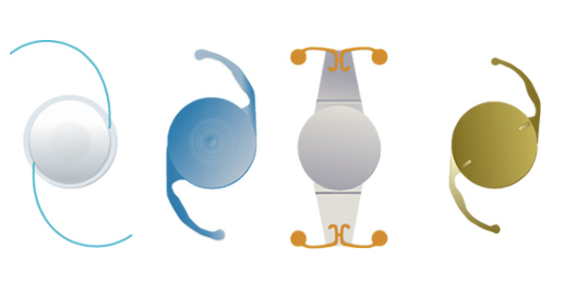
How to choose an artificial lens?

圖片_選擇人工晶體_人工晶體種類

Artificial lens

Features

Single-focus artificial lens

High-end single-focus artificial crystal

  1. Yellow mirror/white mirror
  2. High Abbe number, low refractive index, high contrast sensitivity
  3. Keratoconus defect (+0.28) and crystalline lens defect (-0.18 at age 20; -0.160 at age 40) remaining defect (range: +0.1 > 40.18)
  4. Single-eye vision can be used to treat farsightedness.

Aspherical lens

  1. ≥/= -1.50
  2. Spotlight positioning, center positioning

Wide-viewing angle artificial lens

Multifocal intraocular lens

  1. At the same time, improve the patient's near-sightedness/far-sightedness and presbyopia.
  2. Not suitable for high value angle kappa
  3. Artificial lenses may appear with halos and glare when used under certain conditions.

How to prevent cataracts?

There is no evidence that any medication or eye drops can effectively treat or prevent the formation of cataracts. As long as you avoid the ultraviolet rays of the sun, because prolonged exposure to the sun increases the risk of cataracts, when you go out, you should wear sunglasses with UV protection when you are in the sun.

Common questions about cataracts

How to determine which IOL is best for you?

You should think about the following questions:

  • Do you often use smartphones or tablets?
  • Do you drive your car often at night?
  • Do you have moderate to severe astigmatism?
  • Are there any eye diseases associated with it, such as glaucoma or diabetes?
How long is the lifespan of an artificial crystal?

For over 100 years, no cases of vision impairment caused by the aging of artificial lenses have been observed. Therefore, you do not need to worry about the lifespan of artificial lenses. However, due to manufacturing issues, there are indeed very rare cases where artificial lenses change and need to be replaced.

What should I prepare before cataract surgery?
  • Accompanied by family:
    On the day of the surgery, an adult should be present to ensure that the patient arrives on time for pre-operative preparation and post-operative care.

  • Food and Drink:
    You do not need to fast on the day of the surgery, but you should avoid eating too much or drinking too much water.

  • Medication:
    Unless otherwise directed by a doctor, please continue to take the medications you are currently taking on a daily basis.

  • Personal hygiene:
    Before the surgery, you should take a bath and wash your hair beforehand.

  • Clothing:
    Please wear clean clothes and avoid wearing shirts with narrow collars.
What should I pay attention to after the surgery?
  • For one week after the surgery, you can use eyeglasses, sunglasses, or eye protection to protect your eyes. Do not rub your eyes with your hands to prevent infection of the wound. You can lightly wipe the area around the eyes with sterile cotton wool or clean paper towel.
  • When applying eye drops, first pull down the eyelid and pour the drops or ointment into it; however, do not touch the dropper tip of the eye drops with your hands.
  • After conventional cataract surgery, you can resume normal activities without needing to stay in bed. However, traumatic injuries and complex cases such as concomitant glaucoma may require restrictions on activity.
  • Regarding diet, you do not need to avoid eating after surgery. However, you should eat less spicy foods. For those with allergies, avoid eating foods high in protein.
  • For the first month after the surgery, you should avoid swimming, strenuous exercise, and lifting heavy objects (about thirty pounds). Be careful when bending your head down to avoid collisions.
  • Do not remove the gauze or eye shield yourself on the day of the surgery. The gauze and eye shield will be removed by the clinic nurse the next day after the surgery. You can shower, wash your hair, and wash your face on the day of the surgery; however, be careful with the shower head to avoid water entering your eyes. After removing the gauze and eye shield, you can use cold tap water or distilled water to wet a cotton swab and gently clean the upper and lower eyelids to remove secretions.
  • According to the doctor's instructions, I went to the ophthalmology clinic for follow-up treatment until I recovered. Each time I visited the clinic, please bring the eye drops recommended by the doctor for post-operative use.
  • If you experience pain that is unbearable or a sudden decrease in vision, please seek immediate medical attention at the clinic.
Do I need to wear glasses after cataract surgery?

Whether to wear glasses after cataract surgery depends on the type of lens implanted. Monofocal lenses require glasses after surgery to correct farsightedness or nearsightedness due to limitations in the optical design. Multifocal lenses can provide both distance and near vision, but patients with eye diseases should not choose them. Patients with refractive error values between 150-400 can consider choosing multifocal artificial lenses to achieve a more comfortable post-operative vision.

Will cataracts that have already been operated on still "recur"?

The so-called “recurrent cataract” refers to the “posterior capsule” that is intentionally retained during cataract surgery to place an artificial lens. After a period of time, the lens thickens and becomes cloudy again. Fortunately, this type of “recurrent cataract” does not require another surgical procedure; simply using a laser in the outpatient clinic to open the cloudy posterior capsule can restore vision.

Consultation registration