
Age-related macular degeneration
Retinal degeneration is a chronic eye disease characterized by blurred central vision, distorted images, or black spots in the field of vision. The cause is primarily the degeneration or damage of the retinal spot located in the center of the retina. Visual acuity will drop sharply within the first three months after the onset of the disease. If proper treatment is not provided, visual acuity may be lost in as little as two years; if treatment is not initiated in time to control the condition, severe cases may even lead to blindness. Therefore, patients should seize the golden treatment period for retinal degeneration and seek medical attention promptly.

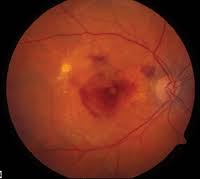
What is a macular spot?
The macula is located in the center of the retina and its primary function is to provide intermediate vision, which is crucial for activities such as reading, driving, and recognizing facial features. Additionally, the macula contains a large number of cone cells, which are photoreceptors capable of perceiving details and colors, making it the most sensitive area of vision. Due to the importance of the macula in visual function, any damage to it or degeneration of the macula (such as age-related macular degeneration) can significantly affect central visual acuity and fine visual ability.
Causes of macular degeneration
Macular degeneration is primarily caused by oxidative damage caused by some triggers, combined with age-related damage. As we age, the deposits in the eye gradually accumulate, and blood vessels begin to grow. The risk of developing macular degeneration also gradually increases. In addition to age, some unhealthy lifestyle habits also increase the risk of developing macular degeneration.
The causes of macular degeneration and the following factors are related:
- Age (the incidence rate is approximately one percent for those aged 65–74 years; approximately three percent for those aged 75–85 years)
- Smoking
- High blood pressure
- Family inheritance
- Prolonged exposure to ultraviolet UV light
- Lack of balanced nutrition
Types of macular degeneration
Clinically, macular degeneration is divided into two forms: dry macular degeneration and wet macular degeneration in the elderly. Of these, wet macular degeneration is more severe than dry macular degeneration in the elderly, and the treatment methods are also different.
Dry macular degeneration
- Dry macular degeneration is the most common type, accounting for about 8 to 9 percent.
- The cause is due to the accumulation of metabolites formed by retinal cell degeneration.
- Dry macular degeneration progresses slowly; at first it may not have a noticeable effect on vision, but it is recommended that you make changes to your unhealthy lifestyle and consume more eye-healthy nutrients, and regularly monitor the changes in the macular area at home using the Amels Square Test. If any abnormalities are detected, you should seek further medical treatment.
- If dry macular degeneration is not properly diagnosed and controlled, vision may gradually become blurred or lose central vision, and even progress to wet macular degeneration in old age.
Wet macular degeneration
- Age-related macular degeneration is less common; patients who develop this type of macular degeneration may go blind.
- The cause is the abnormal growth of blood vessels in the macular area, which leads to the damage of the various layers of the retina, resulting in retinal hemorrhage, vitreous hemorrhage, macular edema, and retinal scarring.
- Age-related macular degeneration progresses more rapidly and can lead to sudden blindness or severe visual impairment within a short period of time.
- Late wet seasonTreatment of macular degenerationMethod: Intraocular injection (vasculogenesis factor inhibitor), laser photocoagulation therapy, photodynamic therapy
Symptoms of macular degeneration
Macular hole disease symptoms may only occur in one eye, but it is also possible for both eyes to be affected at the same time. If you notice that your central vision is a little blurry, the image is distorted, or the color is lighter, then you can basically be sure that it is age-related macular degeneration; however, it is still advisable to visit an ophthalmologist for a checkup to make an accurate diagnosis.
- Visual impairment: Age-related macular degeneration can affect central vision, causing the patient to gradually experience blurred central vision or black spots, making it difficult to recognize details, read, drive, and recognize faces.
- Field of view changes: Patients may experience distortion in the central field of vision, such as straight lines appearing curved or distorted; often misjudging distances and heights
- Color perception abnormalities: Patients with macular degeneration may have problems with color perception, such as seeing colors as dull or difficult to distinguish.
Self-examination test chart for macular degeneration - Amels square chart
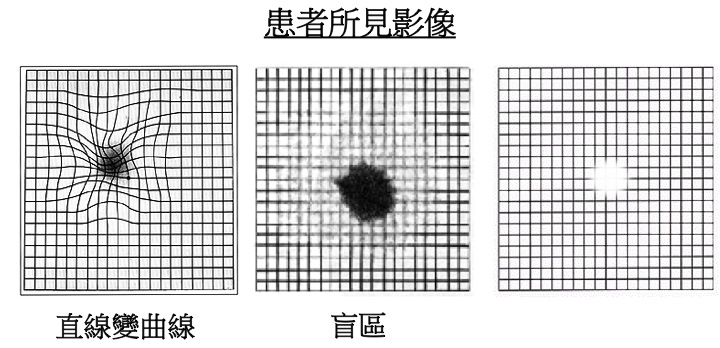
Macular degeneration examination steps:
- During testing, sufficient and even light should be provided, and the square grid should be placed at a distance of 30 centimeters from the visual line.
- If you are a person with presbyopia or myopia, you will need to wear your original glasses for testing.
- Covering my left eye with my hand, I stared at the black dot in the center of the square grid with my right eye.
- Repeat steps 1 to 3 to check the left eye.
Treatment methods for macular degeneration
The golden time for macular degeneration treatment
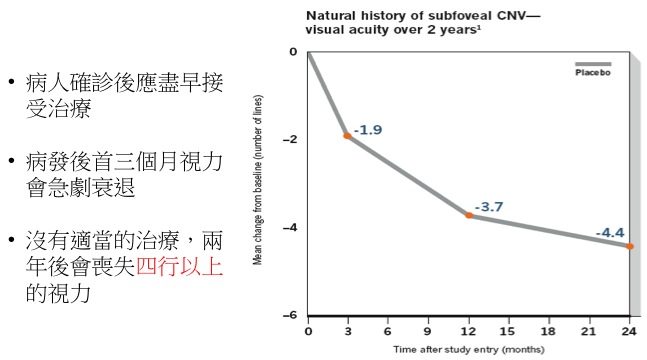
In the first three months after developing macular degeneration, visual acuity will decline sharply. If proper treatment is not provided, visual acuity may be lost beyond four lines two years later. In severe cases, there is even a risk of blindness. Therefore, patients should seize the golden treatment period for macular degeneration and seek medical attention early.
Treatment methods
Treatment for macular degeneration depends on whether the disease is in its early dry form or its late wet form. Although nutritional interventions may help prevent its progression to the wet form, there are no FDA-approved treatments for dry macular degeneration. Although there is currently no method for completely curing macular degeneration, certain treatments can delay its progression or even improve vision:
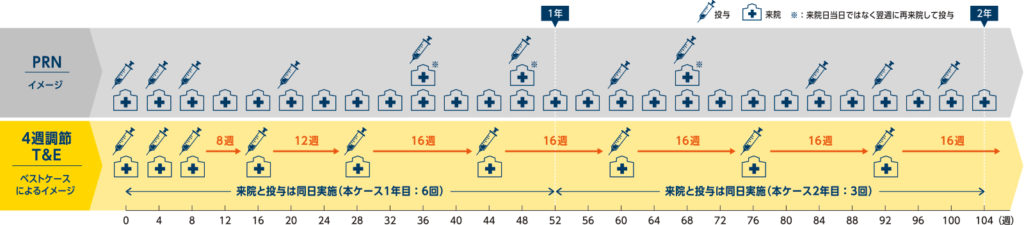
- Intravascular endothelial growth factor inhibitor (anti VEGF) injection in the eye
The most effective treatment method for wet macular degeneration today generally involves at least three injections (spaced 4 weeks apart), and subsequent injections may also be required to stabilize the condition.
- Laser light coagulation
Laser photocoagulation involves using laser heat to destroy abnormal growing blood vessels and prevent vision deterioration. However, this method may damage healthy tissue, so doctors will perform a detailed examination on the patient before the procedure and recommend the best treatment plan based on the individual case.
- Photodynamic therapy
The ophthalmologist will first inject a photosensitizing medication into the patient. This medication attaches to the abnormal proliferating blood vessels and is activated by the cold laser to destroy the abnormal blood vessels, thereby improving the visual problem.
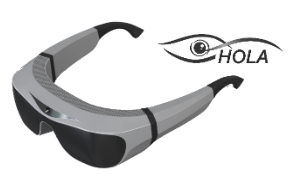
- Low vision glasses
If the macular degeneration has developed into a late stage of scarring, and when eye injections are not effective, you can consider wearing low vision glasses as an auxiliary method to improve vision.
In recent years, low vision smart glasses have made significant advancements. What makes them unique is that they can instantly project images from the surrounding environment onto the retina of low vision individuals in the healthiest position, and adjust accordingly based on the perception of the low vision individual. These glasses can enhance the patient’s perception of the real scene by supplementing and correcting details, improving their responsiveness. During examinations, ophthalmologists can use intuitive programming to adjust the glasses and test the low vision individual’s better visual range.
Standard visual acuity tables developed by the International Organization for Low Vision (OMS)
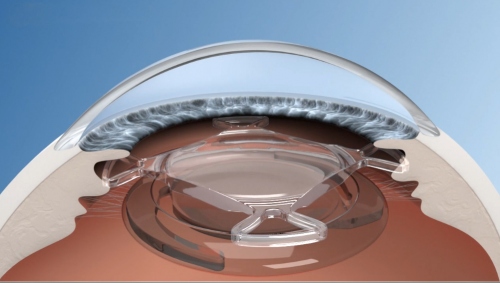
- Dual-focus add-on artificial crystal
SML is a bifocal add-on intraocular lens developed by Professor Gabor B. Scharioth featuring a specially designed central optical zone that provides a high added optical power of +10.0D*. SML is intended for eyes implanted with single vision to achieve better vision without compromising distance vision or field of view.
Treatment for macular degeneration
Retinal pigmentary lesions are irreversible; whether through surgery or other treatments to manage macular degeneration, the only way to control the condition and prevent its progression is to manage the disease. If an elderly person in your home is unfortunate enough to develop macular degeneration, you need to immediately change your diet and certain bad lifestyle habits, because only a healthy body can effectively reduce the risk of macular degeneration worsening.
Some studies suggest that the diet should include plenty of salmon and other cold-water fish, which contain high amounts of omega-3 fatty acids, which help prevent macular degeneration or reduce the risk of its development.
Clinical data show that lutein and zeaxanthin have some effect in slowing down macular degeneration. However, these nutrients cannot be synthesized by the body on their own; they must be obtained from food sources, such as corn, egg yolk, pumpkin, and some deep-green vegetables such as spinach, kale, and sweet potato leaves. Among a wide variety of vegetables, lutein and zeaxanthin content in kale is extremely high. It is recommended that you eat these vegetables more often in your daily diet to protect your eyes from macular degeneration.
Common questions about macular degeneration
Currently, there is not enough research data to show that using electronic devices such as mobile phones directly causes macular degeneration. However, the high energy visible light emitted by smartphones (commonly known as blue light) can damage the macular area. If you play with your phone or watch TV in a dark environment, your pupil will enlarge, and the macular area is more likely to absorb more blue light, increasing your risk of developing various eye diseases. Therefore, it is not recommended to use your phone in the dark.
Before the beginning of modern digital life, we already had a lot of blue light, most of which came from the sun. However, gadgets like televisions, smartphones, laptops, and tablets fill modern life with brighter, shorter wavelengths (more blue) light. The American Academy of Ophthalmology (AAO) says you don’t need them and recommends that users not use any special glasses. The organization says the blue light emitted by smart devices does not cause eye disease and may not even cause eye fatigue. It says the problem is simply caused by excessive use of smart devices. The AAO says: “Symptoms of eye fatigue are related to the way we use smart devices, not to the blue light they emit.”
Patients with early macular degeneration need to pay special attention to their diet and health. They should try to consume eye-healthy nutrients and maintain normal blood pressure, cholesterol, and blood sugar levels to effectively maintain eye health. When going out, wearing UV-blocking sunglasses can prevent the damage caused by UV rays to the macula.
In addition to consuming enough nutrients on a daily basis to help slow the progression of dry macular degeneration, anti-vascular endothelial growth factor medications can also be injected to reduce the growth and leakage of new blood vessels. For more ways to improve macular degeneration, consult our ophthalmologist who will provide a suitable treatment plan based on your individual situation.
In the event of complete blindness, abnormal new blood vessels or exudates in the macular area may affect the photoreceptors, leading to blindness. Therefore, after a diagnosis of macular lesions, the condition must be monitored closely and treatment sought by a doctor.
Preventing macular degeneration requires regular eye examinations, especially for those with a family history or those over 65 years of age, in order to detect and treat it early. Maintaining a healthy lifestyle, including a balanced diet, regular exercise, and smoking cessation, is also important for preventing macular degeneration.