Floaters are sometimes very annoying. People who suffer from them see "black spots" floating in their eyes that are neither painful nor itchy, and when you look directly at them they disappear instantly. The shape of floaters varies; for example, they can be black dots, linear, circular, oval, or tadpole-shaped. They are especially easy to spot when looking at bright, clean backgrounds. Floaters are a degenerative eye disease; in mild cases, people generally have no problems with living with the black spots and floating matter in their eyes; daily life is not affected; they do not need to undergo treatment for floaters. However, if the black spots or floating matter in the eyes are too large or too numerous, or if floaters suddenly appear or flash, causing visual impairment, it is necessary to seek ways to improve the situation and consult an ophthalmologist specializing in treating floaters for treatment and surgery or laser treatment for floaters; otherwise, the longer it is delayed, the more serious the problem may become and lead to blindness!
What is fly eye syndrome?
Migraine is medically described as a phenomenon of degeneration of the vitreous humor in the eye. The vitreous humor is a transparent gel-like substance located behind the lens and in front of the retina. Under normal conditions, the vitreous humor fills the entire vitreous cavity to support the shape of the eyeball. However, with age and problems such as nearsightedness, the vitreous humor liquefies and shrinks, forming a cloudy fiber. These fibers then float around in the vitreous humor, and when light rays refract through these fibers, the patient will feel a black spot in the eye. This is a precursor to migraine.
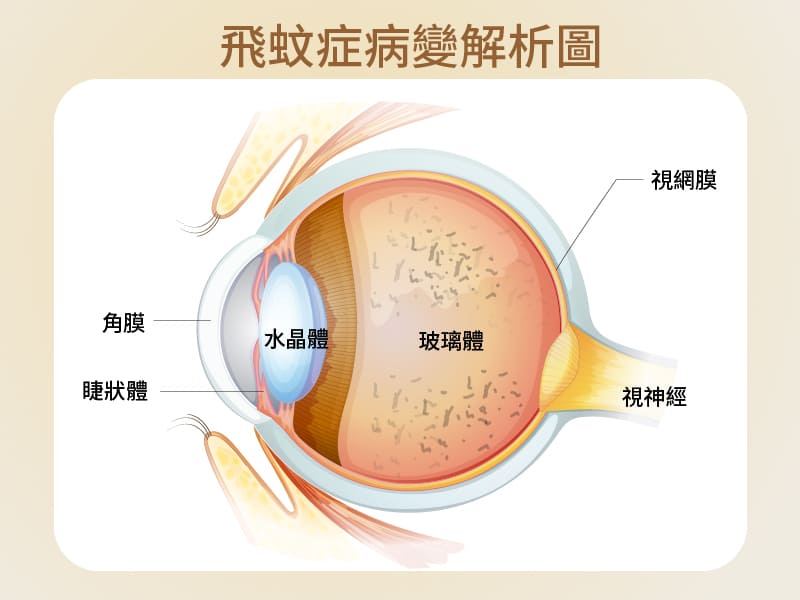
Migraine is medically described as a phenomenon of degeneration of the vitreous humor in the eye. The vitreous humor is a transparent gel-like substance located behind the lens and in front of the retina. Under normal conditions, the vitreous humor fills the entire vitreous cavity to support the shape of the eyeball. However, with age and problems such as nearsightedness, the vitreous humor liquefies and shrinks, forming a cloudy fiber. These fibers then float around in the vitreous humor, and when light rays refract through these fibers, the patient will feel a black spot in the eye. This is a precursor to migraine.
Who is most likely to develop fly-eye?
Floaters usually become more common as people age, so older adults are more likely to experience this symptom of having black spots in their eyes. However, in addition to age factors, other factors that may increase the risk of developing floaters include: nearsightedness, a history of eye surgery, eye trauma, or eye inflammation. Clinical research has found that the high-risk group for floaters includes:
- Middle-aged and elderly people
- High myopia
- Patients with high blood pressure/diabetes
- Had eyelid surgery
- Head injuries, such as in car accidents or diving sports
- Other eye problems, such as: eye inflammation
However, most cases of floaters are benign; factors such as aging and degeneration of the vitreous humor or excessive eye fatigue can all cause the symptoms of floaters. As long as the black spots in the eye do not become more numerous and remain in a fixed position, there is no need to worry too much.
Conversely, if sudden black spots appear in the eyes and affect vision or there is flashing light, it may be vitreous detachment, causing the retina to be pulled into the hole or even detached. This condition must be promptly examined, improved methods sought, or treatment for retinal detachment administered.
Causes of fly eye syndrome
The causes of fly eye syndrome can be roughly divided into three types: physiological, degenerative, and pathological.
- Rationality
About 80% of cases of floaters are considered to be physiological. Physiological floaters usually occur in people under the age of 40 or those who spend a long time working with their eyes. Most people see black dots in their eyes; these are impurities in the lens that usually do not affect vision and do not require immediate treatment for floaters. Over time, they usually disappear on their own.
- Degradation
As we age, the vitreous humor in the eye gradually deteriorates, just like the other organs in the body. During this process of degeneration, the vitreous humor forms tiny fibers as it shrinks; these fibers then float in the vitreous humor. When light enters the eye and refracts against these impurities, we see the black spots in our eyes.
- Pathological
Pathological floaters are caused by eye diseases or systemic vascular diseases. Eye diseases refer to holes (or fissures) appearing in the retina during external forces or as the retina deteriorates, resulting in vitreous hemorrhage and even retinal detachment, which impairs vision. In the most severe cases, it can lead to permanent blindness. Additionally, systemic vascular diseases, such as eye floaters, diabetes, high blood pressure, or macular degeneration, if not treated promptly and aggressively, may also lead to pathological floaters. Patients should seek methods or treatments to improve floaters as soon as possible.
Complications of Glaucoma—Retinal detachment/rupture

Although glaucoma is not a serious disease, retinal detachment caused by glaucoma is an emergency in ophthalmology. One-fourth of patients with glaucoma may suffer from vision impairment due to retinal detachment or retinal tear. Please note that if you experience any of the following symptoms of retinal detachment caused by glaucoma, including:
- There are a large number of black spots in the eyes within a short period of time.
- Abnormal flash
- The dark shadow
- The line of sight is blocked
This means that the retina may be at risk of tearing, and it is essential to seek medical attention immediately to seek treatment; otherwise, people with fly-eye will suffer permanent damage to their vision or even go blind.
How to treat fly eye syndrome?
If your condition is benign floaters, you do not need to seek immediate treatment. When you notice black spots in your eyes, you can try moving your eyes to allow the fluid in your eyes to flow so that the fibers leave your line of sight. Of course, some people cannot tolerate the floating black spots in their eyes; their attention is often distracted by the black spots, which seriously affects their mood. In this case, you may consider seeking treatment for floaters.
According to current technology, the methods for treating and improving Glaucoma mainly include laser therapy and vitreous removal surgery.
I. Laser treatment for Glaucoma
This treatment method is suitable for larger and concentrated vitreous fibers. It uses laser to shatter these fibers into smaller fragments, improving and eliminating the symptoms of vitreous floaters. The laser treatment is performed under local anesthesia, with no pain during the procedure. The entire treatment takes only 15 to 20 minutes. However, not everyone is suitable for laser treatment to improve vitreous floaters. If the fibers are loose or located too close to the retina or lens, it is not advisable to perform the procedure to avoid complications such as cataracts or damage to the retina.
2. Glaucoma surgery for retinal detachment
Corneal transplant surgery involves removing the cornea from the eye through a small incision and replacing it with a solution to maintain the shape of the eye. The procedure takes about 10 to 15 minutes. However, corneal transplantation cannot always completely remove the fibers; if the procedure itself causes bleeding or retinal tearing, new floaters may form, so most doctors do not recommend using this procedure to treat cataracts.
Methods for improving and maintaining fly eye syndrome
Once fly eye syndrome occurs, it is almost impossible to reverse; even after laser or surgical treatment, there is a possibility of recurrence. What we can do is coexist peacefully with it, or we can improve the symptoms through the following methods to alleviate the condition slightly.
One, daily care for benign floaters
- Avoid excessive eye strain
Be careful not to strain your eyes too much on a regular basis. Especially for heavy users of 3C devices, you should take a 5-10 minute break every hour to rest your eyes. During this time, blink your eyes and look at the distance to relax your eyes.
- Good lifestyle habits
In daily life, it is recommended to reduce the time spent on mobile phones; especially, it is important to avoid staying up late at night to use them, ensuring that you get enough sleep and engage in physical activity at the right time are also ways to improve night blindness.
- Regular check-ups and follow-up
Do not assume that you have benign blepharitis and can relax; patients with blepharitis must undergo regular check-ups to avoid other complications and miss out on the best treatment opportunity.
- Eye-care eating habits
On weekdays, it is recommended to include a variety of vitamins and foods with antioxidant properties in your diet, such as berries, green or yellow vegetables, carrots, soybeans, milk, and deep-sea fish oil; these are all effective ways to improve night blindness.
2. Postoperative care and maintenance for malignant glaucoma
- Receiving medical treatment
After the procedure, you must take the medication according to the doctor’s instructions. Remember to thoroughly wash your hands with soap before each dose to avoid cross-infection.
- Improve your lifestyle
For the first week after the surgery, you should avoid rapidly moving your eyes or overusing your eyes. During this time, try to avoid reading, using a mobile phone, computer, or television. Additionally, it is recommended not to engage in strenuous exercise, climb mountains, dive, or fly on an airplane for 1 month after the surgery, as these activities can stimulate the eyes and affect the speed of post-operative healing.
- Use eye mask
During the eye repair process, it is recommended to wear an eye mask at all times to prevent collisions and to avoid unintentionally rubbing your eyes during sleep at night. When using it, it is essential to ensure that the eye mask is clean, and it is recommended to wash and disinfect the mask daily to prevent infection caused by bacteria.
- Daily diet
In addition to avoiding eating irritating foods, it is also important to avoid consuming legumes, as these foods can easily cause nitric oxide in the blood to flow into the eyes, causing the inert gas within the eyes to become bloated and increasing intraocular pressure.
- Safe home environment
The home should be kept clean and tidy, reduce dust and avoid second-hand smoke. During recovery, do not change the layout of the home or place items on the hallway to avoid collisions or falls that could cause eye irritation in an unfamiliar environment.
- Regular check-ups
In addition to regular follow-up visits as instructed after the surgery, if you notice any discomfort in your eyes, such as persistent pain, sudden blurred vision, nausea, increased or enlarged shadows, etc., please remember to immediately consult your ophthalmologist to prevent the situation from worsening.
How to prevent fly eye syndrome?
Although we cannot completely avoid the occurrence of retinal edema, we can slow down the aging of the eye and reduce the risk of developing retinal edema through daily care.
One, develop good eye-care habits
- Avoid excessive use of 3C products (use your eyes for 1 hour, take a 5-10 minute break).
- Work in conditions of sufficient light and stable lighting without flickering.
- Avoid staying up late to increase eye strain
Two: Intake of eye-healthy nutrients
- Carotenoids (deep green, deep yellow and red vegetables)
- Anthocyanins (Berries)
- Vitamins (vitamins A, B, C and E)
- Omega-3 fatty acids (fish oil)
3. Properly control systemic vascular diseases (such as diabetes and hypertension)
- Maintain a balanced diet and reduce the intake of high-fat, high-salt, and high-sugar foods.
- Regular exercise (running, cycling)
- Regularly undergo a comprehensive physical examination
Although most cases of fly eye syndrome do not require treatment, it should not be completely ignored. Regular check-ups are necessary, and if symptoms worsen, seek immediate medical attention to avoid missing the golden period for treating fly eye syndrome.
#Black shadows are floating in and out of my #eyes. The dark spots on my eyes are improving #. There are dark spots in my #eyes.