Cataract

Cataract is a common eye disease in Hong Kong. Dr. Tam Weng-jei, an ophthalmologist, professionally shares knowledge about the causes, symptoms, treatment methods, lens replacement options, post-operative care, and diet for cataract, helping patients and their families gain a deeper understanding and choose the appropriate treatment plan.

圖片_飛秒激光白內障手術_FLACS_好處

FLACS Sub-second Laser Assisted Cataract Surgery

FLACS Femtosecond Laser Cataract Surgery

The application of FLACS femtosecond lasers in refractive surgery has brought about tremendous changes.Laser vision correction, for example:LASIK和SMILEWidely used in refractive surgery. However, femtosecond laser assisted cataract surgery (FLACSIt provides doctors with a highly accurate method to replace the low predictability and technically demanding steps of traditional cataract surgery.

Current technology

General cataract surgery is performed under local anesthesia, with the doctor using a microscope inside the operating room to remove the originally cloudy lens using ultrasound emulsification technology, and then implanting a suitable artificial lens.

圖示_比較

New technology

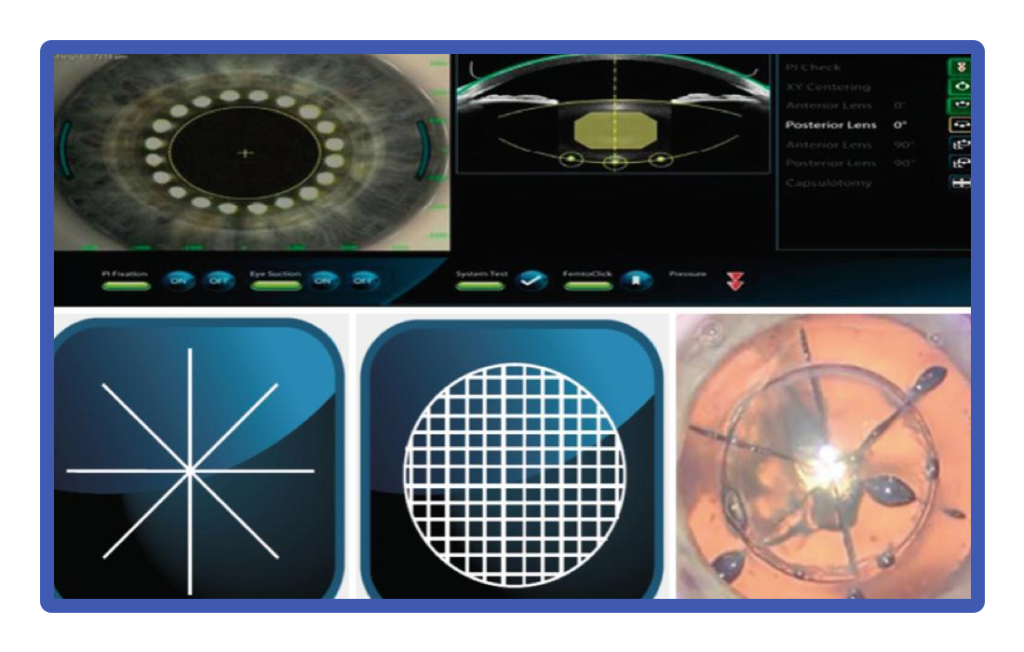
FLACSConnecting to an optical imaging system guided the laser to perform the corneal incision, anterior capsule incision, and crystalline lens fragmentation steps, providing the patient with new options and changing the requirements associated with traditional techniques.

Advantages of FLACS femtosecond laser

FLACS Femtosecond LaserThe goal isWhile improving precision and refractive results, it also provides safety and ease of surgery. Many key steps in cataract surgery, such as the anterior capsulotomy and cataract removal procedures, involve the structure of the corneal incision, the size and shape of the anterior capsule, the position of the artificial lens relative to the optic axis, and more.

  • Precise corneal incisions provide better wound healing results.
  • Predictable dispersion levels and a lower risk of eye inflammation
  • 可Reduce the ultrasonic emulsification time and energy
  • 可Reduce damage to the endothelial cells of the cornea and other complications, such as corneal and macular edema.
  • Precise anterior capsule incision can effectively predict the position of the lens
  • Significantly improve and leverage the effects of high-end artificial crystal lenses on visual acuity
圖片_FLACS技術_白內障
The attached image is FLACS technology.

In summary,FLACSCompared to traditional ultrasound-based cataract surgery techniques, femtosecond laser technology offers relative advantages in terms of precision, predictability, and use in difficult situations (such as mature cataracts). This is particularly true when implanting high-end artificial lenses.

Want to learn more about cataract surgery?

Perhaps you are also interested in:

How to choose artificial crystal? 
—Teach you how to choose the most suitable artificial crystal

Suitable for my cataract surgery
—The cataract surgery options offered by our clinic

Pre-surgery information for cataract surgery
—手術前該做好什麼準備呢?

The process of cataract surgery and new technologies
—Tell you how FLACS technology creates different surgical procedures

Common cataract misconceptions
—矯正對白內障認知

FLACS Sub-second Laser Assisted Cataract Surgery Read More »

封面圖_白內障_常用誤區

Common cataract misconceptions

Common Misconceptions about Cataracts

CataractIt is a major eye disease that causes blindness in the elderly.ButThere are still many misconceptions surrounding its symptoms and treatment methods, the most common of which include the following:

number-one (1)

Do only the elderly get cataracts?

Cataracts can affect anyone, from infants to90Someone of an older age.

Long-term exposure to ultraviolet light can worsen cataracts, but even people who avoid ultraviolet light still develop cataracts as they age.

In addition to age-related factors, congenital conditions, trauma, diabetes, medications, and radiation can all cause cataracts. 
number-2

Is it unnecessary to undergo cataract surgery at the age of 80?

Cataracts are a major eye disease that causes blindness in older adults. Even if they do not become blind, older adults may remain in a state of blurred vision for a long time, which not only seriously affects their quality of life but also poses a danger.

There are currently no effective medications for treating cataracts; the most ideal method of treating cataracts is surgery to remove the cloudy lens and replace it with an artificial lens.

Regardless of age, if there is a need in one's life and the physical condition allows, cataract surgery can be considered.

number-3

Can cataract surgery only be performed on fully matured cataracts?

No. The patient does not need to wait for the cataract to mature.

In the later stages of cataracts, the lens becomes swollen or even dissolves, which then leads to glaucoma, causing irreversible blindness. Moreover, late-stage cataract surgery is more difficult and the recovery of vision is slower.

number-four

Will cataract surgery be painful?

Most cataract surgeries involve eye anesthesia; the pain is minimal and most older adults can tolerate it.

According to some reports, compared with cataract surgery on the first eye, patients experience slightly more pain during cataract surgery on the second eye. 
number-5

Is the lifespan of artificial crystals very short?

Currently, the materials used in artificial lenses are very stable in terms of physical and chemical properties, and patients can use them for life. 

Is poor vision necessarily caused by cataracts?
Will the vision improve immediately after cataract surgery?

Perhaps you are also interested in:

How to choose artificial crystal? 
—Teach you how to choose the most suitable artificial crystal

Suitable for my cataract surgery
—The cataract surgery options offered by our clinic

Pre-surgery information for cataract surgery
—手術前該做好什麼準備呢?

The process of cataract surgery and new technologies
—Tell you how FLACS technology creates different surgical procedures

Common cataract misconceptions
—矯正對白內障認知

Common cataract misconceptions Read More »

Artificial lens

How should I choose an artificial lens?

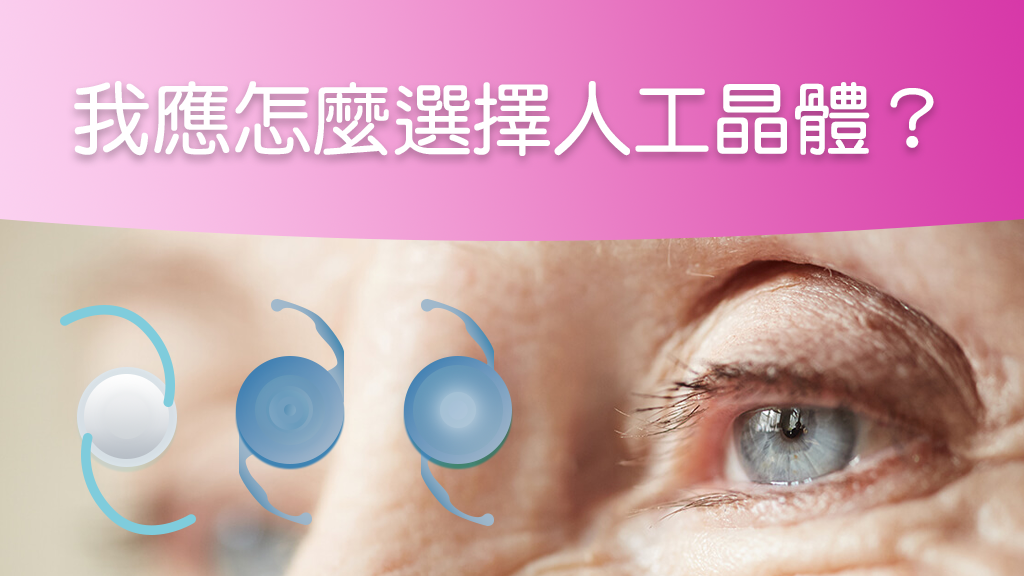
When you are faced with cataract surgery or need vision correction, choosing the right artificial lens is a crucial decision. What is an artificial lens? It is used to replaceCataractImplantable lenses for correcting visual acuity are composed of an optical component and a fixed support structure made of elastic materials such as plastic or silicone. Common types of artificial lenses include single-focus artificial lenses, multifocal artificial lenses, and all-directional wide-field artificial lenses (EDOF). Each type has its own characteristics, such as single-focus lenses that focus on clear vision at a specific distance, while multifocal and EDOF provide clear vision across different ranges.

This article will explore the individual characteristics and application conditions of artificial lenses one by one, so that you can make the best choice based on your lifestyle and vision needs.

Types of artificial crystals

Modern artificial lenses are made from biocompatible materials such as acrylic or organic silica, and do not cause allergic reactions in humans. Over the past hundred years, there have been no cases of vision problems caused by the aging of artificial lenses. Therefore, there is no need to worry about the lifespan of artificial lenses.

TodayCataract surgeryThe implantation of artificial lenses has advanced considerably. Whether post-surgery patients need to wear glasses depends on the type of lens implanted. Artificial lenses are generally divided into single-focus, multifocal, and wide-field three types; which one to use depends primarily on the patient's lifestyle and needs, with each having its own advantages.

1

Single-focus artificial lens

Single-focus intraocular lenses provide clear distance vision and better night vision, and the surgical procedure is relatively simple and carries low risk.

However, the disadvantages of this type of lens are that they cannot improve near vision or astigmatism and spherical aberration, which may lead to patients needing to wear reading glasses to correct their myopia.

For patients who do not require close-up vision or do not mind using reading glasses, single-focus artificial lenses are a suitable choice.

number-2 (1)

Full-field wide-angle artificial lens

Full-field wide-angle artificial lenses can provide patients with a wide field of view, allowing them to more clearly observe their surroundings, greatly reducing their reliance on glasses in daily life.

However, wide-angle lenses may affect visual contrast, especially when observing objects that are far or close; this may result in a decrease in visual quality. Patients may need more time to adjust to this new visual experience, especially when adjusting the visual focal distance.

number-3 (2)

Three-focus artificial lens / Multi-focus artificial lens

Multifocal intraocular lenses are suitable for people with presbyopia and cataracts. They are a multifunctional intraocular lens that provides full vision at all distances, with a lower dependence on glasses after surgery.This greatly improved the patients' overall visual satisfaction, and their night vision performance was also better than that of other types of artificial lenses.

However, patients need to adjust to this new visual effect for a period of time after implantation, becauseMulti-focus artificial lensThe crystal provides clear vision at specific three focal points, rather than a smooth transition like that of a natural eye.

人工晶體選擇

How to choose cataract artificial lenses

Because everyone's circumstances and needs are different, and artificial lenses cannot be easily replaced like eyeglasses, so when performingCataract surgeryFirst, you should consult a doctor to understand your needs and choose the right artificial lens for you.

Before cataract surgeryOne of the most important decisions to be made is choosing the type of intraocular lens. The overall eye health of the patient (such as dry eye, corneal refractive error, or macular health) along with visual needs and lifestyle play an important role in determining which intraocular lens can provide the best results for the patient.

The main decision that the patient needs to make is what kind of vision they want after the surgery, for example:

number-one (1)

Good distance vision, but wearing reading glasses.

number-2

Good distance vision + – some reading vision (Monovision) 
Far-sighted vision in one eye and near-sighted vision in the other eye. However, this can affect some sense of depth perception.

number-3

Good long-distance vision and reading vision are relatively good, but it takes time to adjust.

Glaucoma assessment tool

🔍 Not sure what kind of cataract I have and what crystal options I have?

Just about 3 minutes Fill out the questionnaire to provide you with preliminary artificial lens options based on your lifestyle and visual needs. After filling out the questionnaire, the analysis results will be sent to your email.

Immediately fill out the preliminary assessment →

Lifestyle

When considering lifestyle choices, if you frequently drive in your daily life, it is recommended to choose artificial lenses capable of providing excellent near vision to ensure safe driving. For photography enthusiasts, choosing lenses that enhance near-distance vision is more suitable, allowing for clear detail capture during shooting. In terms of sports, especially those requiring quick reaction and precise distance judgment, it is recommended to choose lenses that have both good near vision and intermediate distance vision to enhance performance.

Work requirements

If your work requires prolonged use of a computer, choosing a lens that provides good intermediate and near vision will be a wise choice to alleviate eye strain and reduce the risk of nearsightedness. For professionals who need fine visual acuity to observe details in their work, choosing a lens that also has excellent distance vision and intermediate vision will ensure that you can clearly identify details while working.

Due to limitations in optical design, post-operative patients need to wear glasses to correct near vision. The new generation advanced single-focus HD artificial lens not only improves vision in the near range—providing a longer depth of field than traditional single-focus artificial lenses—but also makes life more convenient, such as when using a computer to read bus numbers. At the same time, it retains the benefits of clear single-focus artificial lens images without glare issues.

In addition, the newly introduced next-generation intraocular lens provides a wide continuous field of view from a distance of up to 33 centimeters, eliminating the visual gaps found in tri-focus technology and other multi-focus technologies, allowing patients to experience continuous high-contrast vision from far to near even in low light conditions. Its ultraviolet light filtering technology also helps to reduce glare and halo intensity during nighttime driving.

Traditionally, ophthalmologists relied on patients to communicate visual behavior verbally or through questionnaires. The information provided may be misleading due to memory biases. Now, patients can record information about their daily activities using a “glasses monitoring device,” such as outdoor activities, driving, and other lifestyle and time ratios, providing data on patient behavior and objective measurement results.

As the system processes and analyzes the data, the recorded data is uploaded and converted into patient behavior data using artificial intelligence algorithms. The report is divided into three visual distances: near, medium, and far ranges, with a percentage set for each range to help select the most suitable artificial intelligence solution more effectively.

How long is the lifespan of artificial crystals?

Artificial crystals can last for more than 100 years, longer than anyone's lifespan. Rarely do artificial crystals change over time and need to be replaced.

How long can artificial crystals last? Do artificial crystals have any side effects?

The most important factor in restoring vision after cataract surgery is whether the eye itself has any other diseases, such as macular degeneration; or whether the patient is a diabetic, resulting from long-term high blood sugar levels that have caused retinal damage.

Factors such as corneal opacity and glaucoma can all limit the visual acuity recovery after surgery.

These patients are advised not to use "multifocal intraocular lenses," as they reduce contrast and cause a deterioration in visual quality, making it difficult to see clearly from both near and far.

Artificial crystal side effects?

Although cataract surgery is generally safe and effective, there are still some potential risks.Complications and side effectsThe following are some of the possible side effects of artificial crystal implants:

  1. Eye infections or non-infective inflammation: After surgery, the eyes may become infected or inflamed. This may require additional treatment and medication to control the condition.
  2. Cataract edema: After surgery, the cornea may become swollen, which can cause blurred vision or discomfort.
  3. High eye pressure: After surgery, the eye pressure may increase, which may require additional treatment to control it.
  4. Poor wound healing: Surgical wounds may not heal properly, which may require further treatment and observation.
  5. Retinal edema or detachment: After surgery, the retina may become swollen or detached, which can lead to vision problems.
  6. Artificial lens dislocation: The artificial lens may dislocate after the surgery, which may require further surgery to correct it.
  7. Crystal debris left in the eye: During the surgery, there may be some crystal debris left in the eye, which may require further processing and observation.

In addition to these possible complications, there are other secondary complications that may occur, but the probability is lower, such as posterior vitreous hemorrhage, intraocular hemorrhage, retinal tear, intraocular hemorrhage, and vitreous displacement.

The price of artificial crystal?

Fees are based on the length and complexity of cataract surgery, including the tools, equipment, medications, and consumables required for the procedure. For details, please contact us via WhatsApp or by phone.

Glaucoma assessment tool

🔍 Not sure what kind of cataract I have and what crystal options I have?

Just about 3 minutes Fill out the questionnaire to provide you with preliminary artificial lens options based on your lifestyle and visual needs. After filling out the questionnaire, the analysis results will be sent to your email.

Immediately fill out the preliminary assessment →

Teaching you how to choose the artificial crystal that best suits you

Perhaps you are also interested in:

How to choose artificial crystal? 
—Teach you how to choose the most suitable artificial crystal

Suitable for my cataract surgery
—The cataract surgery options offered by our clinic

Pre-surgery information for cataract surgery
—手術前該做好什麼準備呢?

The process of cataract surgery and new technologies
—Tell you how FLACS technology creates different surgical procedures

Common cataract misconceptions
—矯正對白內障認知

How should I choose an artificial lens? Read More »