This summer, have you noticed that you are more afraid of light than before? Even though you have sunglasses, the sunlight still makes you feel itchy and headaches; when driving at night, the glare from oncoming headlights seems to be a circle bigger than before; or when watching TV or using a mobile phone, the picture becomes increasingly blurry and the colors are not as vivid?
You might think it’s because you’re too tired or that the refractive error has deepened; just replace your glasses. But if you’re over 50, these symptoms combined together may be early signs that cataracts are quietly developing. Most people wait until vision has seriously affected their quality of life before taking action.
In fact, understanding your eye condition early on is the most important step in protecting your eyesight.
Why are cataract symptoms especially pronounced in the summer?
Hong Kong’s summers are often 28 to 33 degrees Celsius, with high UV index, and the strong urban reflection light make it the most stressful season for the eyes throughout the year.
For patients with cataracts, the intense sunlight in the summer makes the symptoms more noticeable: the lens of a normal eye is clear and transparent, allowing light to focus clearly on the retina. But when the lens begins to become cloudy (i.e., cataracts), light is scattered as it enters the eye, causing glare and halos. This is why you feel particularly uncomfortable in bright light.
Another summer phenomenon is the moment of "going from indoors to outdoors." In an air-conditioned room, the light is dim, and when you step out into the blazing sun, your pupils need to contract quickly to adjust. Cataracts reduce the crystalline lens's ability to adjust, making this adaptation process slower, more uncomfortable, and even temporarily making it impossible to see clearly.
If you’ve noticed that it’s getting harder to go out in public these past few weeks, it’s time to pay attention to your eyes.
Early to middle-stage symptoms of cataracts
Cataracts are progressive eye diseases; early symptoms are often subtle and can be easily overlooked or mistaken for normal vision deterioration. The following are common early to intermediate cataract symptoms:
Early cataract symptoms
- There is a noticeable glare or halo under the sunlight or car headlights
- Night vision is worse than before, making driving especially difficult.
- The colors look too yellow and dark, not very vivid.
- The vision changes frequently; after wearing the glasses for a short time, I feel that it is not clear enough anymore.
- Sometimes you don't even need glasses to see things up close (the temporary "return to childhood" phenomenon is actually due to changes in the lens density).
Symptoms of intermediate-stage cataracts
- On sunny days, you need to blink frequently or squint to see clearly.
- When reading or using a mobile phone, the text edges are blurred and there are heavy shadows.
- The contrast has decreased, and dark text is not clearly visible on light backgrounds.
- When there is insufficient indoor light at night, visual acuity noticeably decreases.
Not all symptoms of cataracts appear at the same time, but if you experience two or more of them, it is recommended that you seriously consider undergoing an eye examination.
Cataracts are a chronic disease that does not develop suddenly or improve on its own.The sooner you understand your situation, the sooner you have the opportunity to make appropriate arrangements.
Glaucoma assessment tool
🔍 Not sure what kind of cataract I have and what crystal options I have?
Just about 3 minutes Fill out the questionnaire to provide you with preliminary artificial lens options based on your lifestyle and visual needs. After filling out the questionnaire, the analysis results will be sent to your email.
Why should we pay special attention after the age of 50?
Cataracts are eye diseases closely related to age. It is quite common for people over 50 to suffer from varying degrees of cataracts, and among those over 65, cataracts are one of the main causes of visual impairment.
In addition to age, the following factors also accelerate the development of cataracts:
☀️ Prolonged exposure to ultraviolet radiation
Hong Kong has long had high UV index in the summer; people who spend a long time in strong sunlight without proper eye protection will accelerate the oxidation and clouding of the lens.
🩺 Chronic diseases
People with diabetes or who have been taking corticosteroids for a long time are at a higher risk of developing cataracts than the general population, and the onset of the disease may also be earlier.
🧬 Genetic factors
If parents or siblings have a history of cataracts, the risk of developing the disease themselves is also relatively higher.
👁️ There are also eye problems
Having high myopia or having had eye trauma are also risk factors for cataracts.
"Waiting to have cataract surgery until you can see clearly is a misunderstanding"
Many people have a deeply ingrained concept: "Cataracts can only be treated after they mature."
But the modern medical viewpoint is not that way. Waiting for the cataract to fully mature before treating it causes the lens to become harder and denser, making the surgery more difficult and with a relatively greater impact on the eye tissues. At the same time, highly mature cataracts can lead to complications such as glaucoma, posing additional risks to vision.
More importantly, if cataracts are already significantly affecting your daily life—such as difficulty seeing clearly outdoors, driving at night, or reading—you really don't need to wait any longer. Modern cataract surgery techniques are mature, and you don't have to wait until you are completely unable to see clearly before having the procedure.
The following situations suggest that you should seriously consider consulting an ophthalmologist:
- The symptoms have affected driving safety.
- Poor visual clarity when reading or working affects efficiency
- Having difficulty with nighttime activities (such as going out after dinner)
- The degree of change in a short period of time
- There is a noticeable discomfort in strong light, affecting the desire to engage in outdoor activities.
Even if you are not at this level yet, if you have early symptoms, undergoing a detailed eye examination can help you clearly understand your current condition and when you need to follow up.
💬 Book an eye assessment
Suspecting cataracts? Please contact us to arrange a detailed eye examination to understand your eye condition.
Modern cataract surgery techniques
If the ophthalmological evaluation confirms that the cataract needs to be treated, modern cataract surgery involves making a small incision and using ultrasound emulsification technology (Phacoemulsification) to break up the cloudy lens and remove it, then implanting a suitable artificial lens. The entire process is generally performed under local anesthesia, and the surgical procedure is relatively short.
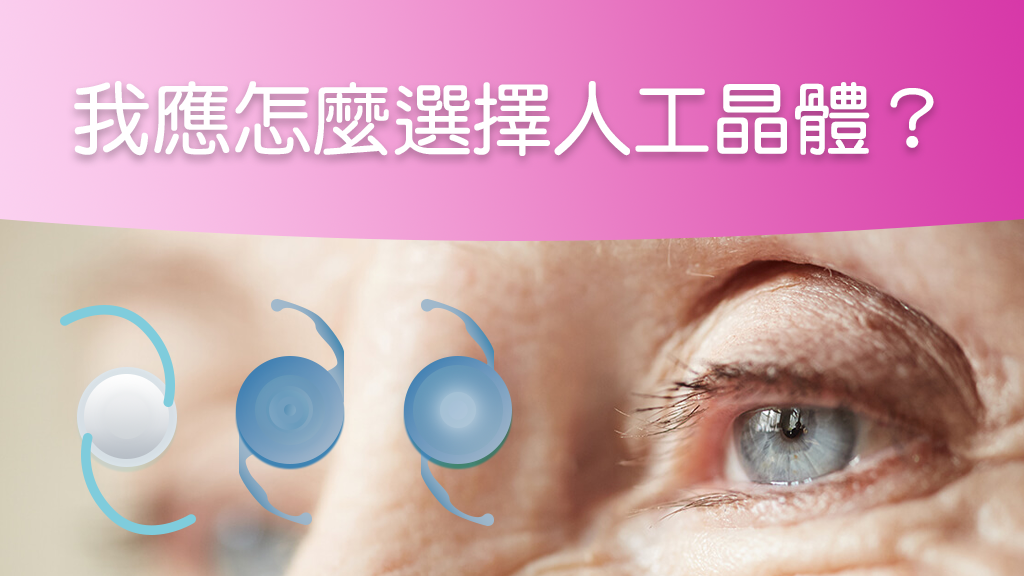
The choice of artificial lenses varies depending on the person, including different types such as single-focus lenses, trifocal lenses, and presbyopia correction lenses. The best option for you will depend on the detailed evaluation by an ophthalmologist based on your eye condition.
If you want to have a preliminary understanding of the different crystal options first, you can fill out our free questionnaire to provide preliminary guidance based on your daily habits.
Things you need to know before the surgery
Pre-operative evaluation
The complete pre-operative evaluation includes corneal topography, eye axis measurements, and macular scans, with the aim of accurately calculating the artificial lens refractive index and assessing the overall health of the eyes. If dry eye syndrome is present, it must be properly treated before the procedure, as dry eye syndrome can affect the accuracy of pre-operative measurements and subsequently impact the visual acuity after the procedure.
Post-operative recovery
After surgery, regular follow-up visits are usually required. The doctor will monitor the recovery of vision and any complications. Initial post-operative treatment requires the use of eye drops as directed by the doctor, and avoiding rubbing the eyes and contact with sewage. In general, vision gradually improves within a short period after the surgery, but individual cases vary.
Possible situations that may occur after the procedure
Some patients may experience post-operative cloudy lens (commonly known as "posterior cataract") within a short period after the surgery. This condition can be treated with outpatient laser therapy and does not require another surgical procedure.
Glaucoma Information Video
Want to learn more about cataract rejuvenation? Let's break down the misconceptions about cataract surgery one by one for you!
Common questions FAQ
Q1: I am afraid of light and glare; is it necessarily cataracts?
There are various causes of light sensitivity and glare, including dry eye syndrome, corneal problems, and cataracts. It is not always a cataract; a detailed eye examination is recommended to assess the exact cause and provide targeted treatment.
Q2: Can cataracts be "dissolved" with eye drops or medication?
Currently, there are no widely accepted medications in medicine that can reverse or dissolve cataracts. The most effective method for treating cataracts today is surgery, which involves replacing the cloudy lens to restore clear vision.
Q3: Is cataract surgery very dangerous?
Corneal transplant surgery is one of the most advanced surgical techniques in ophthalmology. Among patients suitable for surgery, serious complications are relatively rare. However, any surgery carries risks, and detailed pre-operative evaluation and full communication with the doctor are essential to understand the individual’s situation and related considerations.
Q4: Both eyes have cataracts; do I have to do both at the same time?
Generally, the surgery will not be performed on both eyes at the same time. Usually, the weaker or more noticeable eye will be operated on first, and the other eye will be considered after recovery is stable. The specific arrangements will be decided by the doctor based on the patient's condition.
Q5: After undergoing cataract surgery, do I still not need to wear glasses?
This depends on the type of artificial lens chosen and the post-operative refractive condition. Choosing a single-focus lens usually still requires glasses to aid reading; multi-focus or three-focus lenses can reduce the need for glasses, but may not be completely necessary. Thorough communication with the doctor about visual expectations before the procedure helps choose the most suitable option.
Q6: Is it too early to have cataract surgery at the age of 50?
The timing of cataract surgery is not solely determined by age, but rather by the extent of the cataract's impact on daily life and the overall health of the eyes. If cataracts have already affected quality of life and are deemed appropriate by a doctor after evaluation, age is not the sole factor to consider.
Q7: I want to know if I really have cataracts and what should I do?
Book an appointment with an ophthalmologist for a detailed eye examination, including slit-lamp examination and dilated eye examination. The doctor can directly observe the degree of cloudiness of the lens and determine whether there is cataracts and its severity, and explain the appropriate follow-up treatment for you.
In the summer, my eyes feel particularly uncomfortable. As I am already over 50 years old, I shouldn't take it lightly just because it's "too hot" or "my age has increased."
Fear of light, glare, blurred vision, and color distortion—each of these symptoms may not be serious in and of themselves, but when combined, they are signals that your eyes are sending you.
Cataracts are treatable diseases. By learning about your eye condition early and discussing it with an ophthalmologist, you can make the best decision for yourself at the most appropriate time, rather than regretting it when vision has seriously affected your life.
Rather than worrying about the results, it would be better to undergo a professional eye examination to get a clear understanding of your condition.
💬 Book an eye assessment
Suspecting cataracts? Please contact us to arrange a detailed eye examination to understand your eye condition.