Starting at the beginning of this year, you noticed that driving at night was getting more and more difficult.
The headlights of oncoming vehicles seem particularly bright, making you squint to see them. There are halos around the red and green lights, making it difficult to tell whether it’s red or green. The streetlights seem to have several layers of shadows, so you have to be very focused to see clearly the road ahead.
You think it's because the car lights are too bright, or that you're too tired.
But recently you’ve noticed that you drive slower and slower at night. Before you could drive at speeds of 80-90, now you dare to drive only at speeds of 50-60. Your family members have started to notice and ask you if you’re not feeling well.
You start to wonder: is it really your eyes that are the problem?
When it gets dark, seeing things becomes unclear; the lights have a halo effect, and the headlights are particularly glaring. These are not simply signs of aging of the eyes; they may be early warning signs of cataracts.Moreover, if you delay handling the issue, it will only become more serious and may affect your driving safety.
Why is it so hard to see things clearly at night?
Many people have had similar experiences: driving in the daytime is fine, but as soon as night falls, problems start to appear.
You might be thinking:
- Is it because my night vision is poor?
- Do I need to wear night vision glasses?
- Is it because I've gotten older and my eyes naturally become worse?
But in fact, the problem with night vision and cataracts are closely related.
How does cataracts affect night vision?
Cataracts are the gradual clouding of the lens. When the lens begins to cloud, light passing through it is refracted.Diffusion and refraction,This leads to the following problems:
1. Glare
Strong light from oncoming vehicles, such as headlights and streetlights, is scattered by the cloudy crystalline lens, making it particularly blinding. This isn't because the lights are too bright; it's because your crystalline lens is scattering the light.
2. Why do the lights have a lens effect when viewed?
You will see a ring of light around the red and green traffic lights and streetlights. This is caused by the uneven refraction of light passing through the cloudy crystalline lens. In medicine, it is called a "halo" (Halos), which is one of the very typical symptoms of cataracts.
3. Contrast decreases
The light at night is already weak, and cataracts can make it harder for you to distinguish between objects and backgrounds. For example, you may not be able to see the white lines on the road clearly, or you may not be able to see pedestrians in front of you.
4. Blurred vision
Overall visual acuity declines, especially in low-light environments.
Why isn't it as severe during the day?
This is a question that many people have wondered about. Why is it okay to drive in the daytime, but not at night?
The reason isPupillary size。
| Time | Pupillary State | Location of light passing through |
|---|---|---|
| Daytime | The light is sufficient, the pupils will be dilated.Shrink | Light mainly passes through the crystalline lens.Central(Usually the last part that becomes cloudy) |
| At night | If the light is insufficient, the pupil willZoom in | Light passes through the crystal structure.Surrounding area(Usually the parts that are more cloudy earlier) |
Therefore, in patients with early cataracts, the difficulty in seeing clearly at night is much more pronounced than during the day.
Have you ever experienced this situation?
If you are driving at night and experience any of the following situations, please be aware:
The headlights of oncoming vehicles are particularly glaring.
You might find the headlights of oncoming vehicles to be blindingly bright, making you squint or squint to see through them. Sometimes you even have to slow down to let the oncoming vehicle pass before you dare to continue driving.
Looking at the lights, I can see the aperture.
When you look at the red and green lights, you'll see a circle of light around them. Sometimes you can't even tell if it's a red light or a green light, so you have to look at other vehicles to know for sure.
Street lights have heavy shadows or star-like lights
The streetlights look like they are emitting a lot of light, like a "star explosion." You might also see a slight shadow on the streetlights; one light looks like it has two or three other lights.
Driving at night requires special caution.
You find that your driving speed gets slower at night because you have to be extra careful to see clearly the road ahead. Before, you might have been driving at 80-90 km/h, but now you dare to only drive at 50-60 km/h.
Avoid driving at night
You start trying to avoid going out at night, or ask your family members to drive. If you absolutely have to go out, you’ll choose to take public transportation or a taxi.
Rainy nights are even worse.
On rainy nights, the situation becomes even more severe. The wet road surface reflects light, and combined with the halo effect caused by cataracts, it makes it almost impossible to see the road ahead clearly.
Glaucoma surgery is an effective treatment method.
Many people are very afraid of the word "surgery," but in factCataract surgery is one of the common and mature eye surgeries.。
How is the surgery performed?
Modern cataract surgery is called "ultrasound emulsification surgery":
- Local anesthesia: Eye drops provide anesthesia; the process does not cause pain.
- Minimally invasive incision: 喺角膜邊緣開一個2-3毫米嘅小切口
- Emulsified crystalline bodies: Use ultrasound to shatter the cloudy crystalline structure, then extract it.
- Implantation of artificial lens: Insert an artificial crystal to replace the original crystalline lens.
The entire surgery usually only takes20 minutes,On that day, you can go home.
Will the night vision improve after the surgery?
Yes.
Many patients who underwent surgery are impressed by the feeling after the operation: "I can finally see clearly while driving at night! I no longer have halos around the lights!"
- The glare problem will be greatly improved.
- The halo will disappear or be significantly reduced
- The contrast will be restored
- Overall vision will be much clearer.
Some patients even said that after the surgery they could drive better at night than before, because the artificial lens is more transparent than their original crystalline lens (even before it became cloudy).
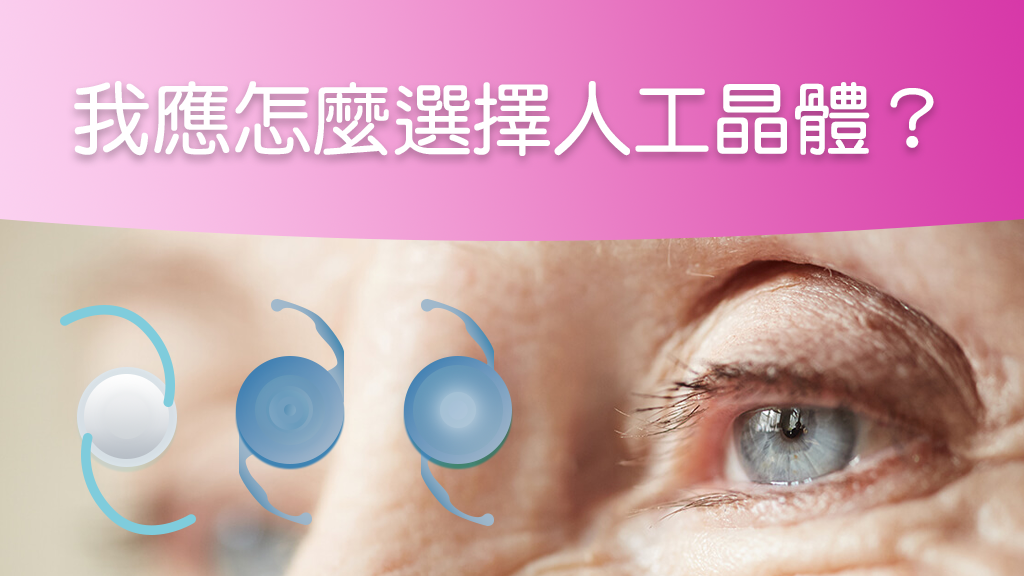
How to choose artificial crystal?
Different types of artificial lenses are suitable for different needs. If you want to know which type of artificial lens is right for you, you can use ourFree Artificial Lens Initial Evaluation Tool,In just 3 minutes, you can get a preliminary understanding of which type of crystal is best suited for you:
👉 Preliminary evaluation of cataract intraocular lens (3-minute test)
Of course, the final choice still needs to be made by an ophthalmologist based on your detailed examination results and lifestyle needs.
How long after the surgery can I drive?
| Driving type | Recovery time |
|---|---|
| Daytime driving | After the surgery1-to-2-weeks |
| Driving at night | After the surgery3-to-4-weeks(Waiting for vision to stabilize completely) |
But the actual situation depends on each person's recovery rate and the doctor's assessment.
💬 Book an appointment for cataract examination
Having trouble seeing clearly at night? Book an appointment for a detailed examination immediately to find out if it’s a cataract problem.
Common questions FAQ
1. I'm already in my 40s; is it too early to develop cataracts?
Cataracts don't only affect older people. Although most cataract patients are over 60 years old, early cataracts can also occur at ages between 40 and 50. Especially if you have nearsightedness, diabetes, or prolonged exposure to ultraviolet light, cataracts will appear earlier.
2. Will cataracts heal on their own?
No. Cataract is a process of degeneration of the crystalline lens protein; it is irreversible. No medication or eye drops can make cataracts disappear. Surgery is currently the only effective treatment method.
3. Can I wait for the cataract to "settle down" before having surgery?
This is an outdated concept. In the past, cataract surgery technology was not advanced enough; it had to wait until the cataract was very severe before it could be performed. But modern cataract surgery technology is already very mature; it doesn't need to wait until it is "ripe." On the contrary, if you wait until the cataract is too severe, the difficulty of the surgery will increase, and the risk and potential complications will also increase.
4. Will cataract surgery be painful?
Modern cataract surgery is performed under local anesthesia; the procedure does not cause pain. You will be awake during the surgery, but you will not feel any pain. There may be some sensation of foreign body after the surgery, but it usually disappears within a few days.
5. How well can vision improve after cataract surgery?
The vision after cataract surgery depends on the health of the other parts of your eyes. If your retina, macula, and optic nerve are healthy, the vision after surgery can usually be restored to near normal levels. Many people who undergo surgery say: "Finally I can regain clear vision, no longer needing to constantly wear new glasses."
6. Will the cataract recur after cataract surgery?
No. Because the surgery involves completely removing the cloudy lens and replacing it with an artificial lens. The artificial lens will no longer be cloudy, so the cataract will not recur.
However, a small number of people (about 10-20%) may experience Posterior Capsule Opacification (PCO) within a few months to a few years after surgery. This is not a recurrence of cataract, but rather an increase in the posterior capsule membrane that supports the artificial lens. If this occurs, the posterior capsule can be opened with a laser (YAG Laser), a process that takes only a few minutes and does not require further surgery.
7. If I have diabetes, will it increase the risk of cataracts?
Yes. Diabetes can accelerate the development of cataracts, and in people with diabetes, cataracts usually appear earlier than in the general population. If you have diabetes, you should have regular eye exams to detect cataracts and other diabetic eye diseases (such as diabetic retinopathy) early.
8. When it gets dark, I can hardly see anything; is that definitely cataracts?
Not necessarily. Poor night vision can also be caused by other reasons, such as astigmatism, corneal problems, and dry eye syndrome. But if youEven with new glasses, I still can't see things clearly.,And alsoThe situation continues or worsens,In that case, there is a very high chance that it is cataracts. The accurate method is to see an ophthalmologist for a detailed examination.
9. How much does cataract surgery cost?
The cost of cataract surgery depends on the type of artificial lens you choose and the surgical method. Basic single-focus artificial lens surgery generally costs between a few thousand and 15,000 yuan. If you choose multifocal or refractive lens surgery, the cost will be higher. Some medical insurance plans cover cataract surgery; we suggest you first check with your insurance plan.
10. When should I have cataract surgery?
There is no one standard answer; it depends on how the cataract affects your daily life. If the cataract is already affecting your work, driving, reading, or other daily activities, you may consider surgery. You don’t have to wait until your vision is very bad to have it done. Modern cataract surgery techniques are very advanced; the earlier you get it done, the lower the surgical difficulty and the faster the recovery.
More information about cataracts
Want to learn more about cataracts? You can watch our cataract education video series:
Conclusion
When it gets dark, seeing things becomes unclear; the lights have halos, and the headlights are blinding. These are not simply the natural aging of your eyes; they are most likely early warning signs of cataracts.
If you’ve tried wearing new glasses, reducing driving at night, and avoiding headlights, but the problem persists, it means you need a professional assessment.
Cataracts do not heal on their own; they only worsen over time. The sooner you are diagnosed and treated, the sooner you can regain clear vision and drive safely.
Don't wait until vision problems severely affect daily life or even lead to accidents before taking action.One professional examination can determine your condition and the appropriate treatment plan.
💬 Book an appointment for cataract examination now
Does nighttime vision problems affect driving safety? Book an immediate appointment for a comprehensive eye examination.