Childhood Myopia

Cover Image_Myopia in Children_Prevention and Management_Important Considerations

Tips for Controlling Myopia in Children

What Should Parents Pay Attention to When Controlling Children's Myopia? Smart Eye Care Tips You Need to Know

Children today frequently use computers for online classes. Even when not attending lessons, they remain glued to their phones and tablets, rarely putting down their devices. Consequently, many children develop myopia at an early age.A survey revealed that over half of myopic children aged 4 to 12 who participated in e-learning during the pandemic experienced worsening myopia. This significantly increases the risk of developing high myopia, potentially leading to more severe eye health issues in the future. Therefore, as parents, it is crucial to teach children early on how to protect their eyes and implement effective myopia control to prevent worsening myopia. Here are nine tips to share with you. When using smartphones, computers, browsing the internet, or reading, remember to pay attention to the following points:

Every 20 minutes, give your eyes a break.

Ensure adequate lighting when reading.

Maintain a minimum viewing distance of 30 centimeters.

Adjust the screen brightness to a comfortable level.
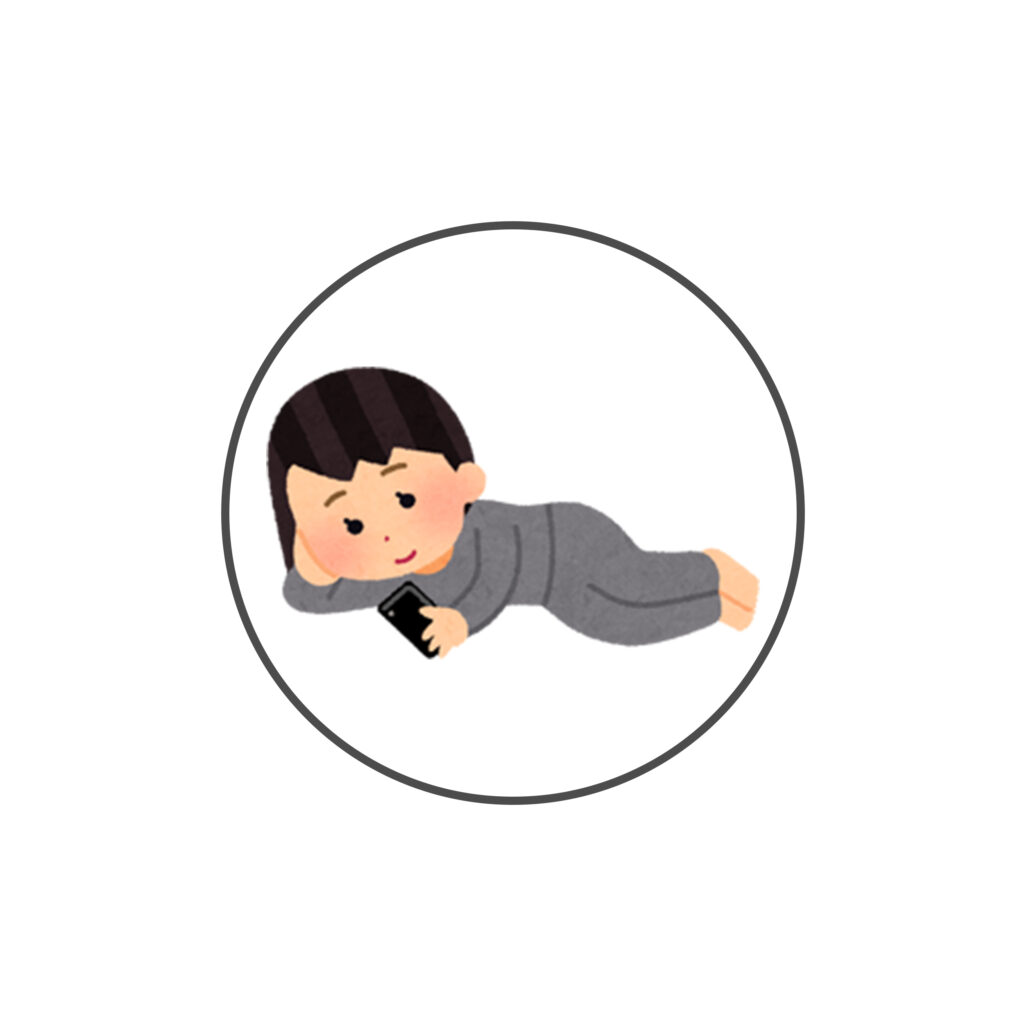
Do not watch while lying in bed or riding in a vehicle.
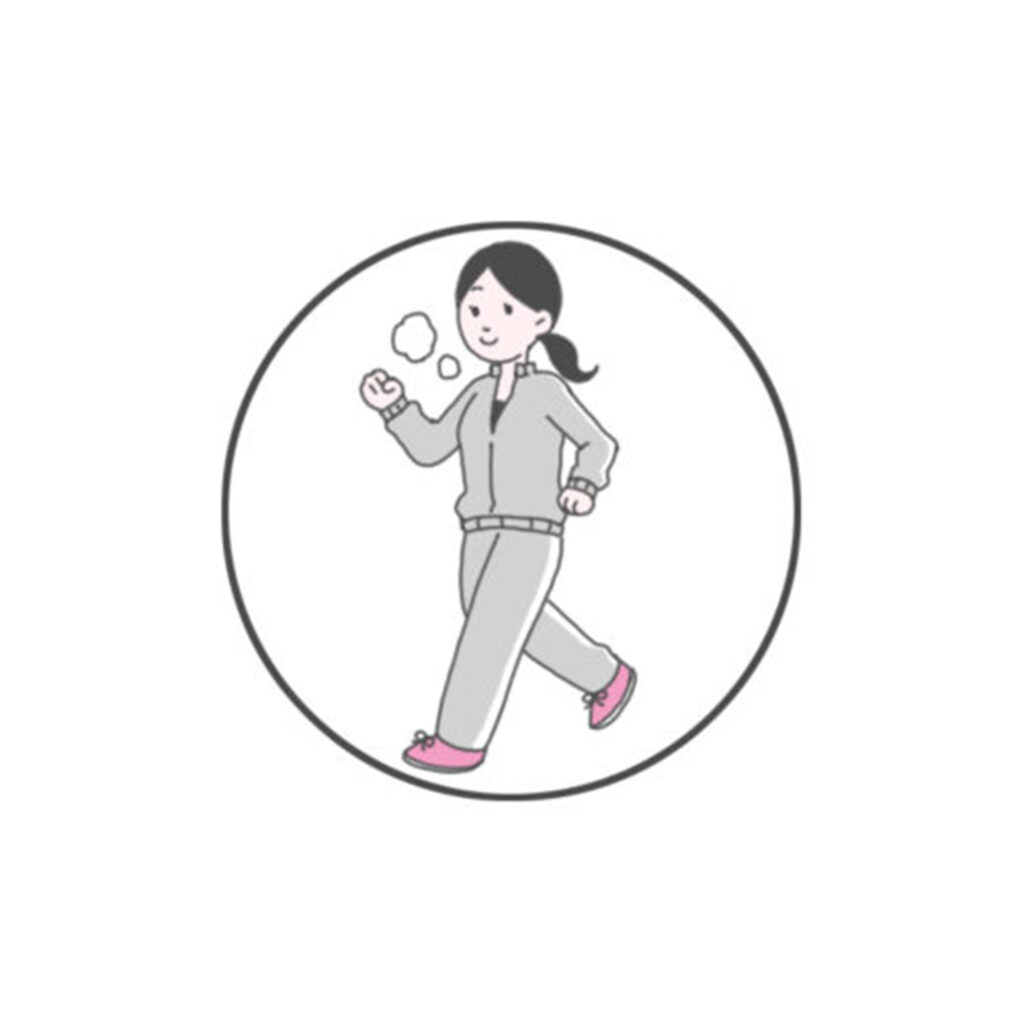
Increase the amount of time spent on daily outdoor exercise

Go to bed early and rise early every day.

多進食含豐富維生素A的食物
例如紅蘿蔔
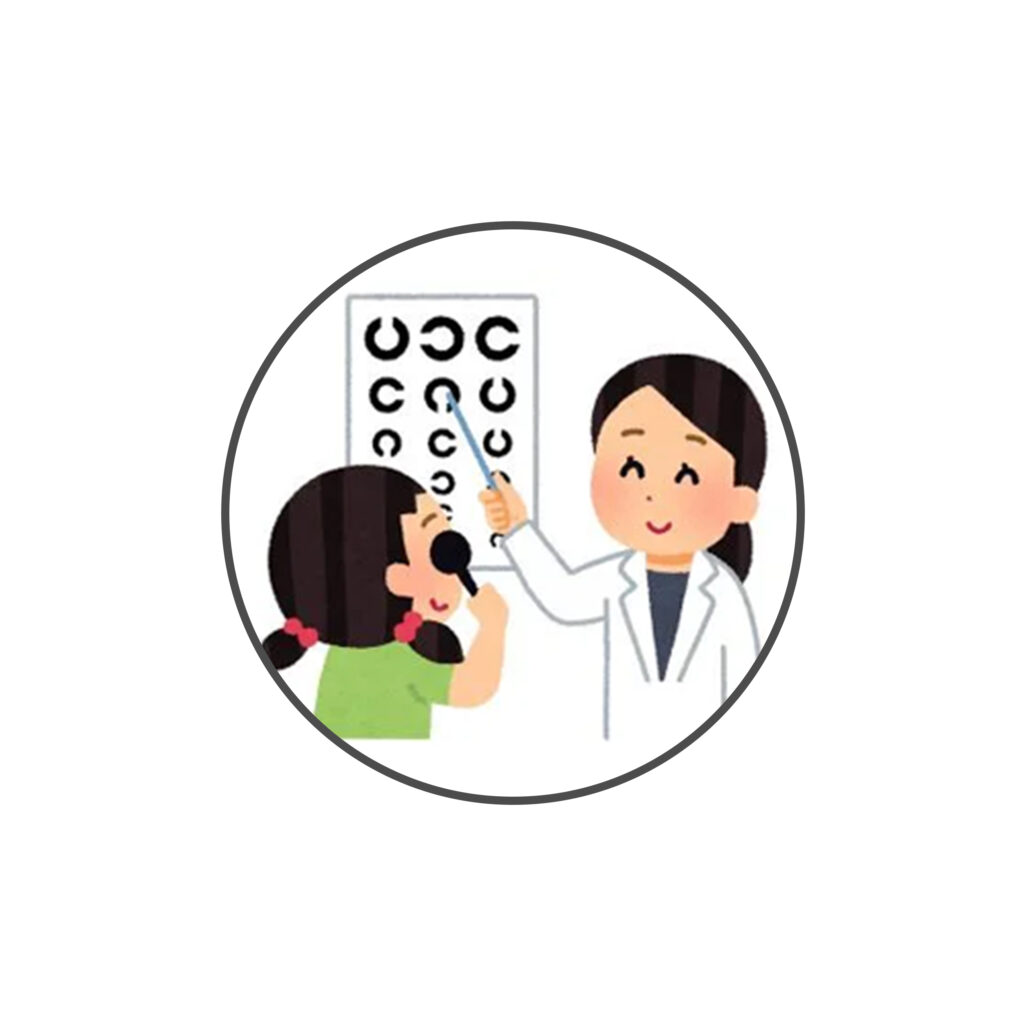
Get comprehensive eye exams early and regularly.

Tips for Controlling Myopia in Children Read More »
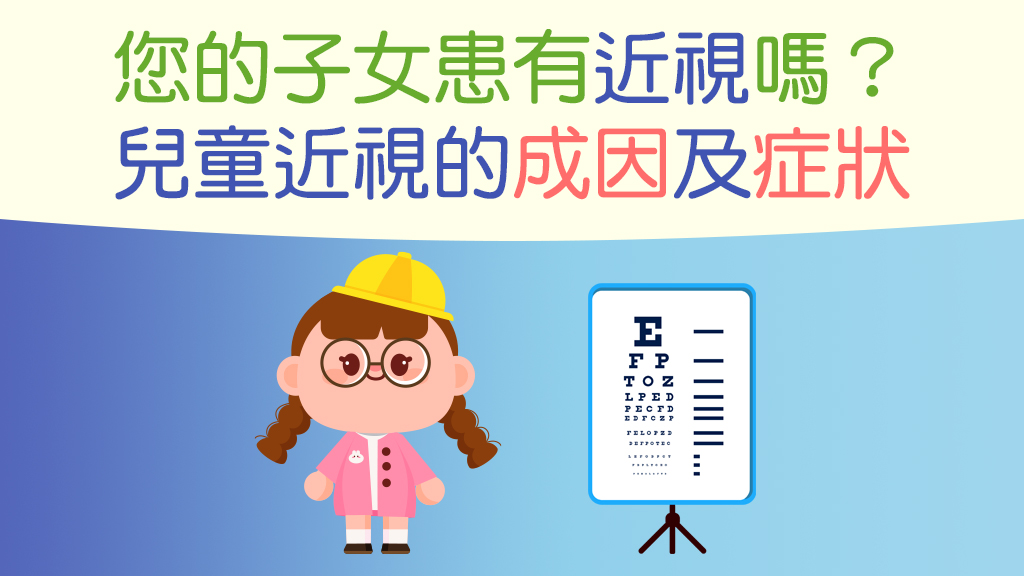
Cover Image_Causes of Childhood Myopia_Symptoms of Myopia

Causes and Symptoms of Childhood Myopia

Causes of Myopia in Children

Hong Kong has one of the highest rates of myopia in the world, with nearly 18% of children already experiencing nearsightedness by age 6! What exactly causes myopia in children?

Myopia Myopia occurs when the eyeball is too long. In a relaxed state of distant vision, parallel light rays passing through the eye's refractive system focus in front of the retina. This causes distant objects to appear blurry, while near objects appear clearer.

Myopia can be hereditary, but environmental factors are also major contributors to its development, such as:

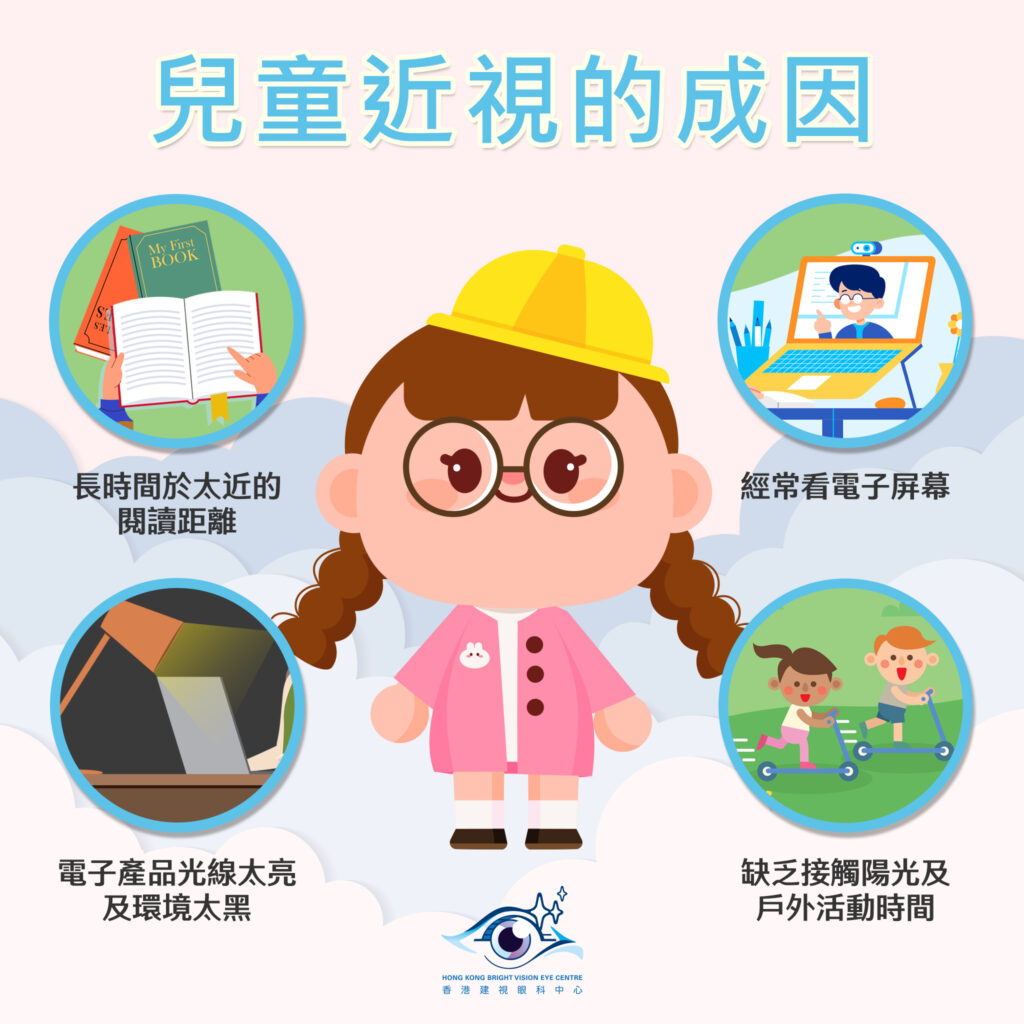
  • Reading at too close a distance for extended periods
  • Electronic devices emit excessive brightness, and the environment is too dark.
  • Frequently looking at electronic screens
  • Lack of exposure to sunlight and outdoor activity time

Symptoms of Myopia in Children

How can you tell if your child has myopia?
Parents should regularly observe whether their child exhibits the following behaviors:

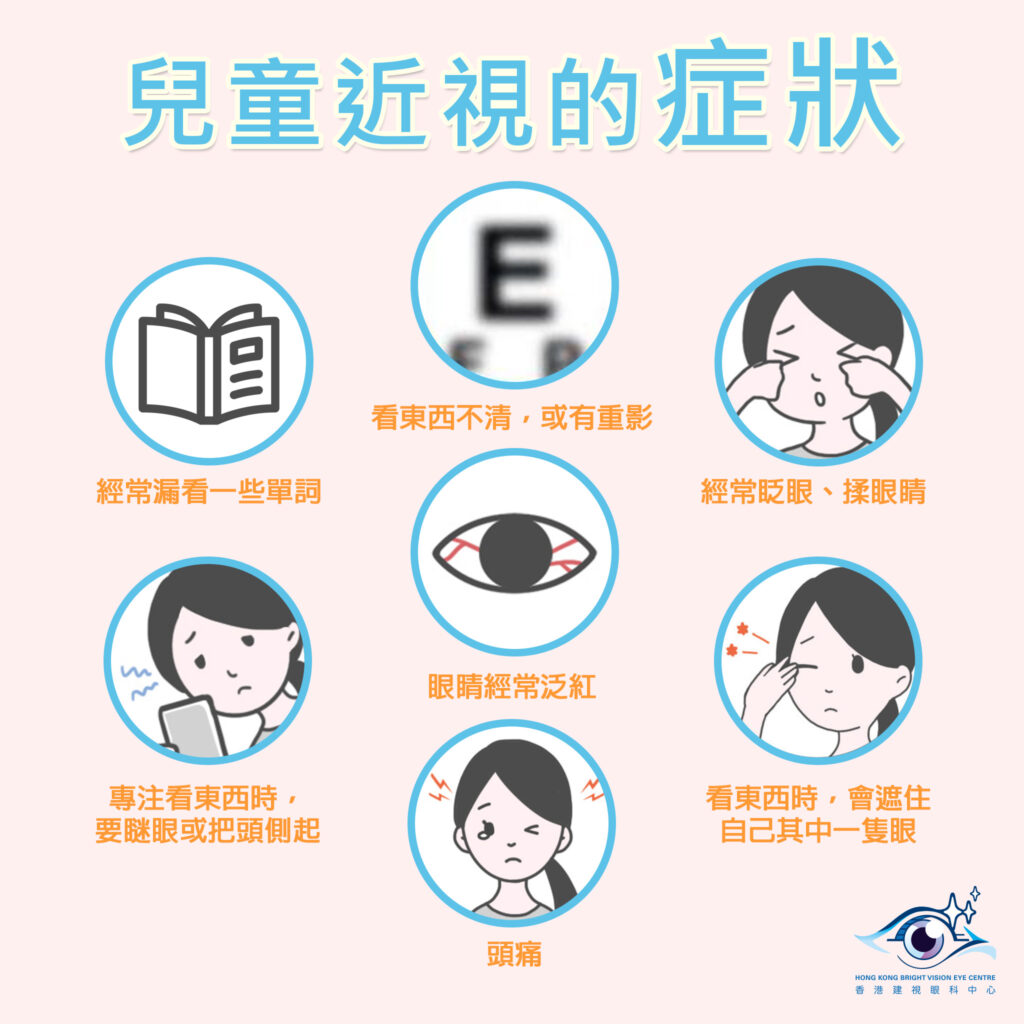
  • Complaining of a headache
  • Reporting blurred vision (or double vision)
  • Frequent blinking and rubbing of the eyes
  • Eyes are often bloodshot.
  • When focusing on electronic screens or reading books, you need to squint or tilt your head to see clearly.
  • When looking at electronic screens or reading books, cover one of your eyes. 
  • When reading, I often overlook certain words.

If parents notice their child frequently exhibiting the above behaviors, there is a high likelihood they have developed myopia. It is recommended that parents promptly take their child for an eye examination and seek professional advice from an ophthalmologist.

及早控制兒童近視
可預防加深近視的風險

Children's Myopia: Don't Ignore It!

Children who frequently view electronic screens have a significantly increased risk of developing myopia. If parents notice their child has myopia, it is recommended to consult a professional ophthalmologist and pursue appropriate vision correction treatment. Currently, there is a " Children's AI Myopia Control Program ." This program can predict changes in a child's myopia over the next three years, enabling the provision of personalized myopia correction treatment plans for children.

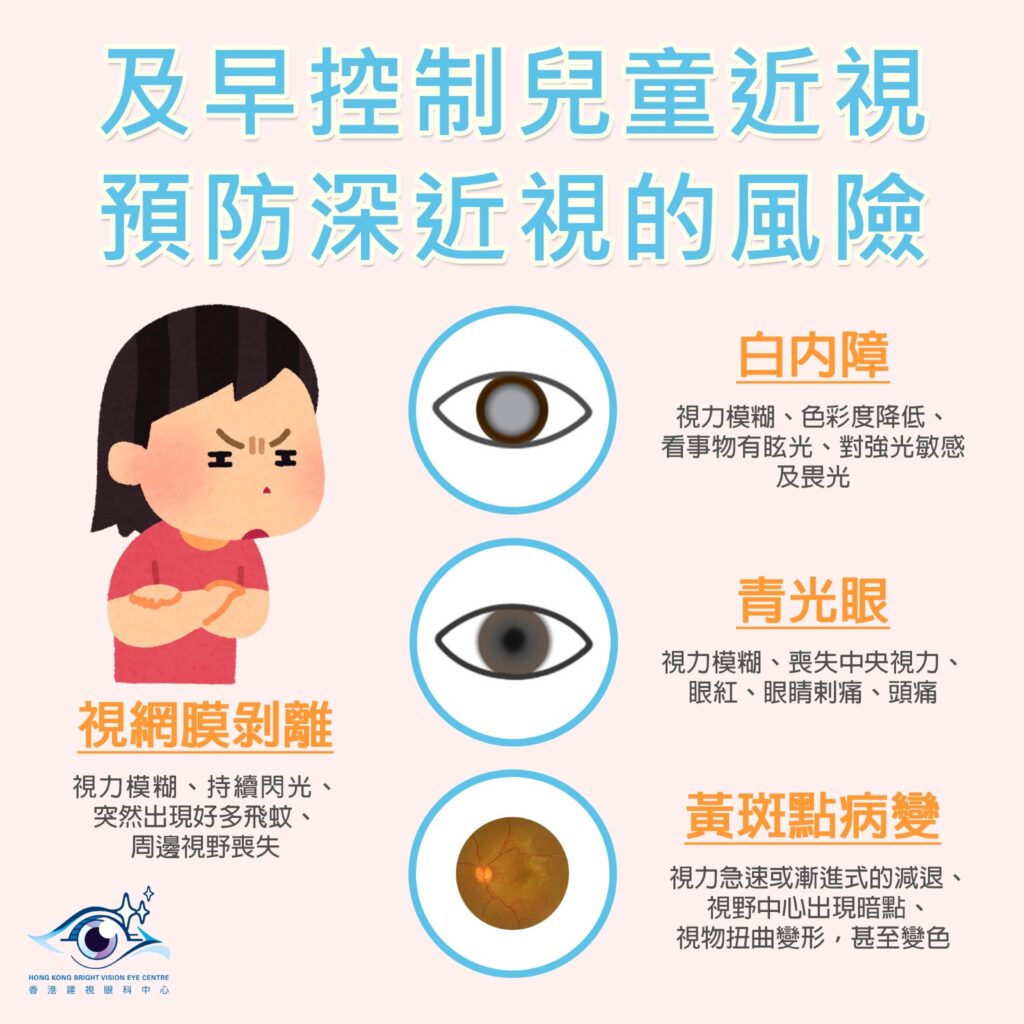
Without corrective treatment, myopia is highly likely to worsen. The elongation of the eyeball will cause the retina to thin progressively, simultaneously increasing the risk of developing various eye diseases, such as retinal detachment and macular degeneration , and glaucoma and cataracts , among others. These complications can impair vision, and in severe cases, lead to blindness or loss of sight. Therefore, it is recommended to control myopia in children as early as possible and ensure timely correction!

Early eye examinations for children can effectively prevent or delay the progression of myopia, reducing the likelihood and risks of developing high myopia in the future.

Parents, please remind your children to start protecting their eyes from an early age by improving their daily habits!

Causes and Symptoms of Childhood Myopia Read More »

3 Latest Methods for Preventing and Reducing Myopia in Hong Kong Children—Do You Know About Them?

3 Latest Methods for Preventing and Reducing Myopia in Hong Kong Children—Do You Know About Them?

Myopia Prevalence Among Children in Hong Kong

The prevalence of myopia among Hong Kong schoolchildren increases with age, doubling from 6.3% among preschoolers to 18.3% at age 6, and climbing to 61.5% by age 12. Among adults aged 21–30, the rate of myopia reaches as high as 84.7%.

If it progresses to high myopia, the risk of developing various eye diseases later in life—such as retinal detachment, cataracts, glaucoma, and macular degeneration—will increase significantly.

The goal of orthokeratology for children is not to completely halt the progression of myopia, but to slow down the rate of myopia progression.

Prevention of Myopia

If a child's myopia progresses by 100 degrees per year, this is considered rapid progression, and treatment may be considered. For children, the ideal progression rate is within 50 degrees per year.

Low-dose atropine eye drops have become a commonly used first-line treatment among ophthalmologists in recent years to slow the progression of myopia in children.

Research from the Chinese University of Hong Kong indicates that this method can effectively slow the progression of myopia in children by up to 60%, with rare side effects.

Additionally, a pair of "Multi-Zone Positive Optical Defocus" (DIMS) lenses designed by The Hong Kong Polytechnic University has been proven to slow the progression of myopia by up to 60% in participating children.

The lens comprises a "central optical zone" designed to correct refractive errors, along with a "multi-zone progressive myopic defocus" extending from the central zone to the periphery of the lens.

When the wearer views objects at different distances, DIMS lenses provide clear vision and myopic defocus to correct vision and help slow the progression of myopia.

Finally, children may choose to wear orthokeratology lenses (OK lenses).

It utilizes specially designed rigid orthokeratology contact lenses and the surface tension of tears to alter the curvature and shape of the cornea.

Children undergoing orthokeratology simply need to wear the reshaping lenses while sleeping at night, with the benefit of not needing glasses in the morning.

The only concern is that children may unconsciously rub their eyes during sleep, potentially causing corneal damage or infection. Therefore, this method is only suitable for children aged 8 and above who possess a higher level of self-care ability.

3 大最新的香港兒童近視預防加深方法,你知道嗎? Read More »