
Early intervention to control the progression of myopia in children

Hong Kong ranks among the regions with the highest prevalence of myopia globally. Data from the Department of Health indicates that approximately 18.3% of Hong Kong children develop myopia by age 6. By the time they graduate from primary school at age 12, 62% suffer from myopia. By university age, this figure rises to 90%. Therefore, early childhood myopia prevention is particularly crucial.

Hong Kong Vision Eye Center participated in the National Key R&D Program. The "Children's AI Myopia Control Program" has been validated in a cohort of 129,242 adolescents, achieving a prediction accuracy exceeding 80%, thereby providing valuable support for myopia early warning in youth.


: How Does This AI Platform Help Parents Control Children's Myopia?

The "Children's AI Myopia Control Program" aims to slow the progression of myopia in children. Since individuals with high myopia face a higher risk of developing eye diseases later in life, parents should educate their children early on to establish good eye care habits from a young age. This helps prevent children from becoming high myopia patients (600 degrees or above) as they grow older.

Generally speaking, the ideal progression rate for myopia in children is within 50 diopters per year. If a child's myopia increases by 100 diopters annually, this is considered rapid progression, and treatment should be considered.

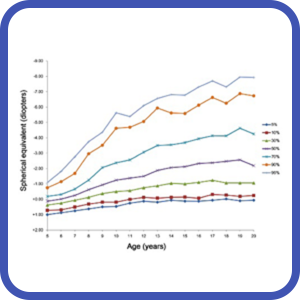
Parents can accurately predict their children's future myopia progression through the "Children's Myopia Control AI Platform." This AI platform uses big data intelligent analysis to generate predictive results, enabling parents to monitor changes in their children's refractive errors at different ages based on the prediction report (which parents can consider a "refractive development profile").Ophthalmologists will also use the prediction report to provide parents with a detailed analysis of their child's current myopia status, comparing it to normal refractive development for the same age group, and develop a personalized myopia treatment plan.

Children's AI Myopia Control Program Details include:

Complete the survey questionnaire@5x
1. Complete the online questionnaire about your child's daily habits
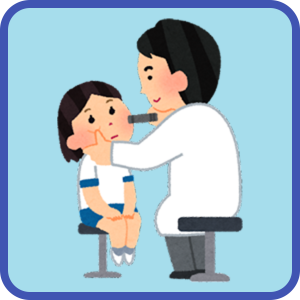
Eye Exam@5x
2. Conduct vision examinations, refraction tests, biometry, and other related assessments.
Verify data entry@5x
3. Input inspection data,
Utilizing artificial intelligence and big data analysis to predict myopia trends over the next three years.
Smart Prediction Results@5x
4. Parents can view smart prediction results and refractive development records at
Parents can use the myopia progression chart to understand their child's myopia development at each age stage.
Eye Treatment@5x
5. Ophthalmologists develop personalized treatment plans for children to slow the progression of myopia.

What methods are available to control myopia in children?

Low-concentration atropine eye drops

Defocusing Lenses (DIMS)

Orthokeratology Contact Lenses (OK Lenses)

Providing Unit

Ophthalmologist's Prescription

Optician Fitting

Optician Fitting

Research Unit

The Chinese University

The Hong Kong Polytechnic University

The Hong Kong Polytechnic University

Principle

Slow down eye elongation

Optical defocus, suppressing eye length

Wearing at night exerts pressure on the cornea.

Alter the state of the cornea to reduce myopia

Suitable for ages

From age 3 until full development

Ages 6 and up

Ages 8 and up

Suitable for prescription strength

Any prescription

Myopia not exceeding 650 degrees

Astigmatism not exceeding 400 degrees

Myopia not exceeding 600 degrees

Benefits

One drop every night—convenient to use.

No preservatives, minimal side effects

Individually wrapped for safety and hygiene

No need to wear contact lenses

No need to wear glasses during the day.

Side Effects/Disadvantages

Minimal side effects

It may only be used as an adjunctive therapy.

Not a first-line treatment


More difficult to fit for children

Unconsciously rubbing one's eyes while sleeping.

May cause corneal damage or infection

Effect

Slow down within one year

67% myopia

Slow down within 2 years

52% myopia

Slow down the eyeball

Extended by 43%

Consultation Registration