結膜炎_封面圖

Causes and treatment methods of conjunctivitis (red eye syndrome)

Conjunctivitis, also known as red eye syndrome, is a common eye disease. The initial or pre-symptomatic symptoms of red eye syndrome often include stinging or itchy eyes, a sensation of foreign objects in the eyes, redness of the entire face, a burning sensation, and blurred vision. Conjunctivitis can be caused by a variety of factors, including viruses, bacteria, and allergies. Understanding the different types, symptoms, causes, and treatments of conjunctivitis can help us better prevent and manage this condition.

What is conjunctivitis?

Conjunctivitis, also known as red eye syndrome, is an inflammation that causes the eyes to become red, painful, and itchy. The conjunctiva is the thin membrane between the eyelids and the eyeball, which serves to keep the eyes moist and protect them. However, when this layer of membrane becomes inflamed or irritated, the tiny blood vessels inside it become swollen and inflamed, causingThe eyes turn redSymptoms of conjunctivitis include red eyes, itching, tears, and increased secretion. Depending on the cause of the inflammation, the symptoms of conjunctivitis also vary slightly.

Types of conjunctivitis

Viral conjunctivitis

Viral conjunctivitis is related to the respiratory system and is caused by viral infection. The most common viruses are adenovirus and enterovirus. This type of conjunctivitis is highly contagious and usually spreads through direct contact with the secretions or contaminants of an infected person. The symptoms of viral conjunctivitis include swollen eyes, tearing, burning sensation, and transparent watery secretions. Some patients may also experience inflammation in the corners of their eyes.

Viral conjunctivitis

Staphylococcal conjunctivitis is caused by bacterial infection. Common pathogens include Staphylococcus aureus, Streptococcus pneumoniae, and Pneumocystis jiroveci. Symptoms of this type of pink eye include swollen eyes, pain, and the discharge of a sticky white or yellow secretion from the eyes and eyelids, especially when waking up in the morning. Inflammatory eye disease caused by bacteria requires prompt treatment to avoid causing more serious eye health problems.

Allergic conjunctivitis

Allergic conjunctivitis is the most common type. It is caused by an allergen and is usually associated with seasonal or perennial allergies. This type of conjunctivitis is not contagious but can cause extreme discomfort.

Seasonal allergies

Seasonal allergic conjunctivitis usually occurs in spring and autumn and is associated with allergens such as pollen and grass. Symptoms of this type of eye redness include itchy eyes, tears, swelling, and increased secretion.

Chronic allergic conditions

Chronic allergic conjunctivitis can occur at any time of the year. It is usually caused by allergens such as dust, dust mites, pet dander, and mold, and the symptoms are similar to seasonal allergies, but they are usually mild.

Giant columnar sensitivity

Giant papillary conjunctivitis is a less common type of allergic conjunctivitis, usually associated with the use of contact lenses. In patients who wear contact lenses for an extended period, the surface of the conjunctiva becomes bumpy, causing inflammation of the eyeball. Symptoms of this type of red eye syndrome are accompanied by severe itching and secretion. The solution is to never buy contact lenses haphazardly; always seek professional eye care from an ophthalmologist to have your eyes examined and to receive advice from a doctor to reduce the risk of complications and long-term consequences.

Symptoms of conjunctivitis (red eye syndrome)

  • The eyes are swollen
  • Crying
  • Itches the eyes
  • Burning sensation
  • Increased secretion (possibly watery, viscous, or purulent)
  • Swollen eyelids
  • Feeling of foreign object in the eye
  • Blurred vision (in some severe cases)

Causes of conjunctivitis

The causes of eye inflammation can be roughly divided into three categories: viral infection, bacterial infection, and allergies. In addition to these three categories, transmission is also one of the common causes of eye inflammation. Conjunctivitis is usually transmitted through direct contact with the secretions of an infected person or indirect contact with contaminated objects. Both viral and bacterial conjunctivitis are highly contagious, so people who come into close contact with the infected person (such as family members, classmates, colleagues, etc.) are at higher risk. In contrast, allergic conjunctivitis is not contagious and is usually related to an individual’s immune system.

High-risk groups for conjunctivitis:

  • Children and preschoolers: Because it is easily transmitted in school and kindergarten environments
  • People who came into contact with the infected person: including family members and close contacts
  • People with allergies: prone to allergic conjunctivitis
  • Contact lens wearers: Especially those who wear them incorrectly or do not follow hygiene standards

Treatment methods for conjunctivitis (red eye syndrome)

How long does it take for eye bacterial infections to clear up? How quickly does conjunctivitis improve? This is undoubtedly one of the most frequently asked questions by all patients with conjunctivitis. The treatment for red eye depends on the cause of the inflammation. Different types of red eye have different treatment methods. Early diagnosis and appropriate treatment of red eye can alleviate eye symptoms, shorten the course of the disease, and prevent complications.

Viral conjunctivitis

Viral conjunctivitis usually resolves on its own without special treatment. The symptoms of red eyes usually disappear within a few days to two weeks. Patients can use eye drops for red eyes and apply cold wet towels to the eyes to reduce swelling and discomfort. It is important to note that because the infection is highly contagious, patients should avoid touching their eyes as much as possible and frequently clean their hands to reduce the risk of transmission.

Viral conjunctivitis

Staphylococcal conjunctivitis usually requires antibiotic treatment. Antibiotic eye ointment orEye dropsIt can effectively treat red eye syndrome, improve bacterial infections, shorten the duration of the illness, and reduce the risk of transmission. When using antibiotics, follow the doctor's instructions and complete the entire course of treatment.

Allergic conjunctivitis

The treatment for allergic conjunctivitis is primarily to avoid the allergens. If you accidentally come into contact with an allergen and develop allergic conjunctivitis, will it go away on its own? As soon as possible, clean your eyes. Try to avoid touching your eyes. This type of allergic conjunctivitis will resolve on its own within a few hours or days. If you feel very uncomfortable, your doctor may also prescribe an antihistamine based on the patient’s condition to relieve the symptoms of inflammation in the eye’s conjunctiva.

How to prevent conjunctivitis?

  • Maintain good personal hygiene and wash your hands frequently
  • Avoid touching or rubbing your eyes
  • Do not share personal items such as towels and pillows with others
  • Regularly clean your contact lenses and follow the wearing and cleaning guidelines.
  • Avoid contact with people who have contracted conjunctivitis
  • During the allergy season, try to avoid going out or wearing protective glasses.
  • Avoid using expired or contaminated cosmetics

We hope this article can help you better understand conjunctivitis. If you have any further questions, please feel free to click the button below to consult our expert ophthalmologists.

Common problems

How long does red eye syndrome take to get better/how long does conjunctivitis take to get better?

The course of conjunctivitis depends on the cause of the inflammation. Viral conjunctivitis usually occursFrom several days to two weeksHealed himself; bacterial conjunctivitis inAfter using antibiotics, it usually takes one week to see results.There has been some improvement; the course of allergic conjunctivitis depends on the time of exposure to the allergen; symptoms can last from several hours to several days.

What should I do if I have conjunctivitis (red eyes)?

If you suspect you have conjunctivitis, you should seek medical attention promptly to determine the cause and receive appropriate treatment. Avoid close contact with others to prevent transmission, and maintain good personal hygiene.

Can I work with conjunctivitis?

After being confirmed to have conjunctivitis, especially viral or bacterial conjunctivitis, it is recommended to avoid work or school until the infection period ends to prevent spreading to others. Patients with allergic conjunctivitis can decide whether they need to rest based on their own symptoms.

How to quickly cure conjunctivitis?

Early diagnosis and appropriate treatment can accelerate recovery from inflammation of the eye's conjunctiva. For bacterial conjunctivitis, following the doctor's instructions to use antibiotics is crucial. For viral conjunctivitis, relieving symptoms and preventing transmission are the primary goals. For allergic conjunctivitis, avoiding the allergen and using antihistamines is necessary.

Can conjunctivitis lead to blindness?

Conjunctivitis usually does not cause blindness, but if it is not treated promptly or if there are other eye diseases, it can cause serious complications that affect vision. Therefore, early diagnosis and treatment are very important.

Causes and treatment methods of conjunctivitis (red eye syndrome) Read More »
smile vs lasik

Which is better: SMILE or LASIK? Dr. Tong Wenyue explains it in detail for you

SMILE smile lens replacement (English:Small Incision Lenticule Extraction) and LASIK corneal cutting laser vision correction (English:Laser Assisted in Situ Keratomileusis) are two common laser vision correction surgeries with their own characteristics and applications.

LASIK uses ultra-precise laser to create corneal flap and reshape the cornea to correct vision. It is suitable for nearsightedness, farsightedness, and astigmatism. SMILE uses femtosecond laser to create a lens-like tissue inside the cornea and remove it through a small incision. It is mainly used to treat nearsightedness and astigmatism.

Compared to LASIK, SMILE has smaller incisions, faster recovery, and fewer post-operative discomforts and dry eye symptoms. What are the differences between these two eye surgeries? Which groups of people are best suited? How should you choose? The following will explain them in detail.

What is LASIK laser vision correction?

Laser-assisted in situ keratotomy (LASIK) originated in the 1990s and was introduced to Hong Kong in 1992. It is a common eye surgery in Hong Kong.

The basic principle of LASIK surgery is to change the corneal shape by grinding the corneal middle layer with a femtosecond laser. This procedure is used to correct vision problems such as nearsightedness with an angle of up to 1500 degrees, farsightedness with an angle of up to 600 degrees, and astigmatism. By precisely reshaping the cornea with femtosecond laser, the light can be focused correctly on the retina, improving vision.

Since the introduction of LASIK surgery, its technology has continuously improved, making the surgical process more precise and safer. Thousands of patients have already been able to get rid of glasses and contact lenses through LASIK surgery and enjoy clearer vision. Today, LASIK surgery has developed into a highly mature and widely accepted vision correction method.

LASIK Surgery Process

  1. Disinfection and anesthesia: Before the surgery begins, the doctor will disinfect and inject anesthesia around the patient's eyes to ensure that they do not feel discomfort during the procedure.
  2. Making the corneal flap: The doctor uses a femtosecond laser to cut the corneal flap, then lifts it open to expose the lower layer of the cornea.
  3. Laser reshaping of the cornea: Using ultra-precise laser beams, it precisely removes part of the corneal tissue to reshape the cornea.
  4. Replaced corneal flap: After reshaping is completed, the corneal flap is replaced, and the wound will heal naturally, so there is no need for sutures.
  5. Postoperative care: After the surgery, the doctor will provide some care instructions, including the use of antibiotic eye drops and artificial tears, and recommend regular follow-up visits for checkups.

What is SMILE smile correction?

SMILE Laser Vision CorrectionSmall incision lenticule extraction is a new type of laser refractive surgery that was introduced in 2011 and introduced to Hong Kong in 2014. The SMILE refractive surgery principle is to useFemtosecond laserThe procedure involves cutting the middle layer of the cornea through the upper layer of the cornea, then removing it through a small incision to change the curvature of the cornea, thereby achieving corrective vision. This surgical method does not require the creation of large corneal flaps, thus causing less damage to the cornea.

SMILE laser vision correction can be used to treat myopia, hyperopia, and astigmatism.PresbyopiaFor presbyopia, it has the characteristics of high accuracy and low risk. Due to the small incision and shorter post-operative recovery time, patients also experience greater comfort. As technology advances, SMILE eye surgery in Hong Kong has gradually become one of the preferred vision correction procedures for many patients.

In addition, to make it more efficient and safer for ophthalmologists to perform SMILE surgery, a upgraded version of SMILE PRO has recently been introduced. SMILE PRO is a great benefit for patients who are sensitive, nervous, or afraid that their eyes will not be able to focus properly.

SMILE Surgery Process

  1. Disinfection: Ophthalmologists will use sterile eye surgery-grade disinfectant to clean the skin, eyelids, and eyelashes around the eyes.
  2. Corneal Lenses Cut: Ophthalmologists use the SMILE device's laser to cut the corneal lens, which is the middle layer of the cornea. This is the difference between SMILE laser vision correction and LASIK.
  3. Micro-incision creation: Using a laser, a micro-incision of approximately 2 to 4 mm is created in the upper layer of the cornea.
  4. Remove the lens: Use a device to remove the cut cornea lens from the micro incision, then close the incision.
  5. Postoperative care: After the surgery, the doctor will provide care guidance, including the use of antibiotics.Eye dropsIn combination with artificial tears, regular check-ups are recommended.

LASIK vs SMILE Comparison

LASIK and SMILE each have their own advantages, and it is impossible to say which one is better. If you want to correct your vision through surgery, we recommend that you visit a reputable eye clinic to consult with a doctor. After a series of examinations and consultations, I believe the doctor will provide you with the best treatment plan.

LASIKSMILE
Eligible personsUp to 1500 degrees for nearsightedness; up to 600 degrees for farsightedness; up to 600 degrees for astigmatismUp to 1000 degrees for nearsightedness; up to 500 degrees for farsightedness and presbyopia
Surgical time (one eye)About 10 minutesAbout 5 minutes
Laser procedure time (single eye)Production of corneal flap: 10 seconds laser reshaping of cornea: 10~30 secondsAbout 25 seconds (smile pro can be shortened to 10 seconds)
Size of the woundApproximately 20 mmAbout 2-4 mm
Natural healing time of the corneaSeveral weeksWithin several hours/several days
Postoperative discomfortThere may be slight discomfort.Less discomfort
AftereffectsThere may be a risk of corneal flap dislocation.The risk of smile correction surgery is extremely low
AdvantagesRecovery is fast, and visual acuity improves significantly.The incision is small, and the corneal structure is more stable.
DisadvantagesThere is a risk associated with the corneal flapThe technology is newer, and there are fewer long-term effectiveness data.
Dry eyes有Mild
PainThere was almost no pain after the surgery.There was almost no pain after the surgery.

Whether it’s LASIK or SMILE, both are effective vision correction surgeries with their own advantages and applications. Patients should discuss the details with a professional ophthalmologist based on their own eye conditions and needs to choose the most suitable surgical method. With advancements in modern technology, more and more people are expected to be able to break free from the constraints of glasses and contact lenses and enjoy clearer vision and a higher quality of life.

Common problems

Will LASIK and SMILE surgery cause scarring after the procedure?

Data shows that more than 95% of patients maintain good results after LASIK surgery for many years; only a small percentage of them need a second surgery within 10 years to improve their vision; while SMILE smile lens surgery has smaller incisions and a more intact cornea after surgery, and there is usually a lower chance of vision rebounding after the surgery.

What are the prices of LASIK and SMILE? Are they expensive?

The price of LASIK and SMILE depends on individual circumstances. It depends on what vision problems you want to improve, whether the surgery is for just one eye or both eyes, and many other factors that affect the price of LASIK and SMILE. Therefore, we recommend that you schedule an appointment with a trusted ophthalmologist.

How long after surgery can I resume work?

Most people can resume work within 1 to 3 days after LASIK surgery, while the recovery time after SMILE surgery may be shorter. Each person's situation is different, so it is recommended to follow the doctor's advice after the procedure.

How should I care for myself after SMILE surgery?

The most important thing to follow after SMILE surgery is the doctor's instructions regarding medication, regular follow-up visits, and avoiding contact with sewage in the first week. For more information about post-operative care, please visitSMILE Laser Vision CorrectionView.

What are the risks of SMILE vision correction?

SMILE refractive surgery has a lower risk, but still presents some potential complications after the procedure, such as dry eyes, reduced night vision, and sensitivity to light; while inflammation between the layers of the cornea and bacterial infections are more rare.

Which is better: SMILE or LASIK? Dr. Tong Wenyue explains it in detail for you Read More »

老花眼症狀

Symptoms and causes of presbyopia

PresbyopiaEye fatigue is a normal physiological phenomenon. The main characteristic of presbyopia is a decrease in near-vision ability, especially when reading or performing close-up work. Presbyopia is a vision problem that develops with age; symptoms usually begin around age 40, and the cause is the deterioration of the function of the ciliary muscle and the lens, resulting in slower focusing ability.

8 Major Symptoms of Presbyopia

Although presbyopia is not considered a serious eye disease, as people age,PresbyopiaThis will also deepen over time, and the symptoms of presbyopia will become increasingly noticeable. This will greatly affect your daily life and work efficiency. The following are some symptoms that may indicate that you have presbyopia:

  1. When reading or watching on a mobile phone, it takes more than 40 centimeters of distance from the eyes to see the letters clearly.
  2. The eyes are prone to fatigue/dryness/pain.
  3. It is difficult to see nearby objects in dimly lit environments.
  4. When looking at distant objects and then looking closer, the focusing seems to be slower.
  5. You need to blink or rub your eyes frequently to try to adjust the focal length.
  6. Reading time is reduced, requiring more rest time.
  7. You may experience blurred or unclear vision, especially at close range.
  8. Performing fine work, such as detailed drawing or the making of handmade crafts, requires more time and effort.

2 ways to self-test for farsightedness

In fact, the early symptoms of presbyopia are not obvious; many people also believe that they are caused by excessive eye strain or temporary blurred vision. The following provide two methods for you to test at home to see if you have presbyopia. However, this is not a professional diagnostic method; if you notice that you already have presbyopia symptoms, we recommend that you visit a professional eye clinic for a comprehensive examination and develop a treatment plan tailored to your needs.

Banknote testing

  1. Take out a banknote and place it in the most visible place for you.
  2. Then focus on the small print on the banknote.
  3. The visual line leaves the banknote and the object 2 to 3 meters away is seen approximately 5 seconds later.
  4. Then look back at the small text line again to see if you can read it in a few seconds.

If you can focus within 1 second, that’s normal; if it takes more than 1 second, you’re at risk of developing presbyopia; if it takes more than 3 seconds, it’s almost certain that you have presbyopia.

Examination of symptoms of presbyopia

  • When looking at an object, I sometimes want to take off my glasses; wearing them actually makes it clearer to see.
  • You feel that the home or office is dimmer than before.
  • Often misread numbers or letters
  • Often feel tired in the eyes
  • Shoulder and neck pain, stiffness
  • Constantly frowning and feeling dizzy

All of the above are common characteristics of presbyopia. If you have more than 3 symptoms, you may be suffering from presbyopia. It is recommended that you consult an ophthalmologist as soon as possible for professional advice and assistance.

Causes of presbyopia

The main cause of presbyopia is the gradual loss of elasticity and flexibility in the ciliary muscle and lens in the eye, which prevents the eye from adjusting its focal length accurately, resulting in a decrease in near vision and the symptoms of being unable to see near objects. Presbyopia is usually associated with age, but it can also be influenced by other factors.

In addition to natural aging, the following causes can also contribute to the development of cataracts:

  • Genetic factors: Genetics may influence whether a person is susceptible to cataracts and the age at which they develop them.
  • Long-term eye fatigue: Prolonged exposure to electronic screens or other close-up work can lead to symptoms of presbyopia in young people.
  • Environmental factors: Harsh environmental conditions, such as strong ultraviolet radiation or pollutants, can also accelerate the development of cataracts.

How to Prevent and Treat Presbyopia

Almost everyone cannot avoid the symptoms of presbyopia. Although there is currently no mature technology to prevent presbyopia, we can slow down the progression of presbyopia through various methods, such as maintaining good eye-care habits, giving the eyes adequate rest periods, and eating more eye-healthy nutrients.

If you start to notice signs of presbyopia, you don't need to worry too much; you can choose to wear reading glasses or reading glasses with a wide lens.LBV Presbyopia Laser Vision Correction TreatmentPresbymaxPresbyopia correctionGo for surgical methodsImprove farsightedness。

In summary, presbyopia is a vision problem related to age. To slow down the onset of presbyopia symptoms, it is essential to maintain eye health on a daily basis, and undergo regular eye examinations to promptly intervene and treat the condition to effectively maintain good vision and maintain quality of life.

Symptoms and causes of presbyopia Read More »

乾眼症眼藥水

Can dry eye drops be enough? An ophthalmologist explains it to you

Dry eye syndrome, as the name suggests, is characterized by a feeling of dryness in the eyes. After working for a short time with the eyes, the eyes feel tired and dry. This condition significantly affects the quality of life. Dry eye syndrome is usually caused by insufficient tear secretion or abnormal gland secretion in the eyelids, resulting in dryness of the ocular surface. Symptoms include dry eyes, a burning sensation, blurred vision, a foreign body sensation, and red eyes.

Therefore, many people will casually buy eye drops that claim to treat dry eyes to alleviate the symptoms. However, these eye drops are not necessarily suitable for everyone. Below, we will introduce you to more information about dry eye medications and solutions for dry eyes.

Will dry eye drops be effective?

Dry eye drops can alleviate symptoms to some extent by replenishing the necessary tears in the eyes and reducing friction. However, different eye drops contain different ingredients; some may contain preservatives or pharmaceutical ingredients, and long-term use can cause damage to the eyes. Therefore, it is not recommended to buy eye drops indiscriminately. If you experience dry eye symptoms, it is best to consult an ophthalmologist to determine the cause and choose the appropriate eye drops based on the doctor’s recommendations.

Types of eye drops for dry eyes

Artificial Tears

Artificial tears are the most common eye drops for dry eye syndrome. They are suitable for patients with milder symptoms and contain ingredients such as fibers to maintain consistency, dispersants to prevent evaporation, and preservatives. Artificial tears can alleviate dry eye symptoms, prevent corneal damage, and maintain the smoothness of the eye surface. Artificial tears come in three forms: eye drops, eye drops, and eye ointments. You can consult an ophthalmologist first to choose the appropriate artificial tears to improve dry eye symptoms.

  • Pharmaceutical formThis is the most common type of eye drops in aqueous form; each product contains different ingredients for lubrication and moisturizing, so the effects vary accordingly.
  • Glycerine-basedIt is more viscous than a water-based formula, has better moisturizing effects, and can prolong the time that moisture remains in the eyes. After applying, slight blurred vision may occur; if you are concerned about affecting your work, you can use it at bedtime.
  • Ointment typeThe effect is most lasting; after using it, close your eyes for 5 minutes and rotate your eyes to ensure the ointment is evenly distributed. Since it may cause temporary blurred vision, it is recommended to use it before going to bed at night.

💧 Want to know how severe your dry eye is?

It takes 2 minutes to complete.Dry Eye Syndrome Index (OSDI) assessment questionnaireGet a preliminary understanding of how dry eyes affect your daily life and take early control of your eye condition.

👉 Complete the OSDI Dry Eye Assessment Questionnaire immediately

Autologous serum 

Some patients with severe dry eye syndrome may not be able to relieve their symptoms with artificial tears. In this case, ophthalmologists will recommend using autologous serum eye drops. These serum are made from the patient’s own blood and contain growth factors that have anti-inflammatory and healing effects, as well as being effective in moisturizing the eye.

Since this eye drop does not contain preservatives, special care must be taken when using it to avoid contamination of the eye drop.

Anti-inflammatory eye drops

These eye drops contain anti-inflammatory ingredients as well as corticosteroids and cyclosporine. Although anti-inflammatory eye drops can alleviate dry eye symptoms, long-term use of eye drops containing corticosteroids may lead to other more serious eye diseases, so you should seek medical advice before using them.

Is dry eyes caused by dry eyes? Are eye drops the only solution?

Many people often use eye drops recommended by friends and relatives when their eyes are uncomfortable to relieve the discomfort. However, dry eyes are not necessarily caused by dry eye syndrome. Using the wrong medication not only fails to improve the discomfort but may actually worsen the situation.

When you suspect that you have the diseaseDry eye syndromeAt that time, you can self-test based on the following questions:

  1. Do you often experience dry eyes or fatigue?
  2. Are your eyelids tight or heavy?
  3. Blurred vision with a sense of foreign object?
  4. Do your eyes itch often?
  5. Do you have a lot of mucus and a thick secretion in your eyes when you wake up in the morning?
  6. Are your eyes very sensitive to external stimuli such as light, wind, and smoke?
  7. Do your eyes feel uncomfortable in places with air conditioning?
  8. Do you experience a burning or tingling sensation in your eyes?

If you experience two or more of these symptoms, it is likely that you have dry eye syndrome. However, before purchasing eye drops for dry eye syndrome, it is necessary to understand the causes of the condition in order to administer the correct treatment. It is recommended that it is best to consult an ophthalmologist after undergoing an examination to determine whether the eye drops are indeed effective.

How to use dry eye medication correctly?

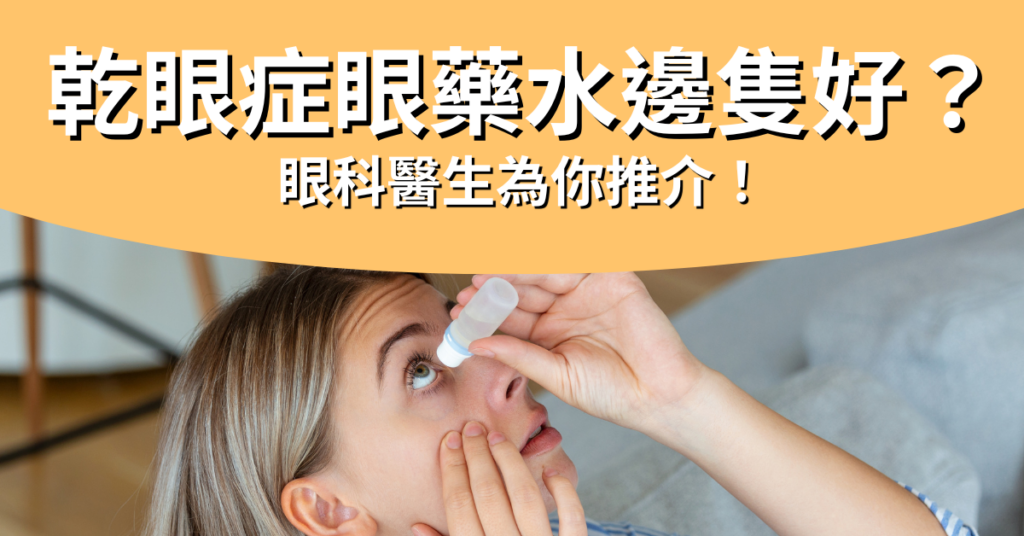
After receiving a doctor's prescription, using eye drops correctly is also very important. If the eye drops are not used correctly, the effectiveness may be reduced, leading to a longer period of time to improve dry eye syndrome. Below is a list of steps for using common eye drops for dry eye syndrome:

  1. Ensure that your hands are clean.
  2. With your head tilted back, look up, and gently pull down the lower eyelid into a bag shape.
  3. According to the doctor's recommendation, drop the eye drops into the eye bag.
  4. After applying the drops, close your eyes lightly and wipe away any excess eye drops with a clean tissue. At the same time, press lightly on the corners of your eyes and the bridge of your nose with your fingers to prevent the eye drops from evaporating.

In addition to eye drops, what are some other ways to relieve dry eyes?

Eye drops are the most common type.Methods to treat dry eyesIf symptoms cannot be improved, or you need a quick solution to dry eyes, you may consider other faster and more effective treatments:

Intense Pulsed Light (IPL) treatment

Pulse-wave light therapyUsing the energy emitted by pulsed light softens the oil-producing glands in the eyelids, improves the quality of the oil, and helps with inflammation; it is especially suitable for patients with eyelid inflammation.

LipiFlow thermal pulse

LipiFlow thermal pulse therapy is a localized heating massage that melts the oil from the blocked eyelid glands, allowing the oil to be secreted normally and alleviating dry eye symptoms. This treatment method can be effective for 9 months to 3 years, and is especially suitable for patients who cannot apply heat patches.

BlephEx eyelid hygiene

BlephEx is a deep cleansing method that removes bacteria, biofilm, demodex mites, scalp flakes, and accumulated dead cells from the eyelids and eyelashes, keeping the eyelid gland openings open and improving the symptoms of dry eyes.

Laparoscopic carotid artery occlusion surgery

The lacrimal duct occlusion surgery blocks the opening of the lacrimal duct, allowing the tears to remain on the surface of the eye to maintain the stability of the tear film on the eyeball, thereby alleviating dry eye syndrome.

Finally, we recommend that you do not purchase unsuitable dry eye medication on your own, nor casually recommend dry eye medication that you think is effective to others. BecauseCauses of dry eyesDifferent conditions require different solutions. If you feel discomfort in your eyes, you can schedule an appointment with our ophthalmologist for further examination.

Can dry eye drops be enough? An ophthalmologist explains it to you Read More »

5種老花眼矯視方法_封面圖

How to correct presbyopia? An ophthalmologist explains 5 major methods of correcting presbyopia!

PresbyopiaPresbyopia is a vision problem that occurs with age. Almost everyone develops presbyopia; it usually occurs in people around 40 years old. Many people with presbyopia are reluctant to wear reading glasses because they fear being ridiculed for being old, which can affect their daily lives. However, there are now more and more methods to correct presbyopia available on the market; wearing reading glasses is no longer the only option; Dr. Tong Wenjie, an ophthalmologist who strongly recommends it, is one of them. Presbymax cataract laser surgeryThis not only avoids the embarrassment of wearing reading glasses, but also allows the eyes to regain the vision of their younger days.

Methods of treating presbyopia

Although cataracts are not considered a serious eye disease,PresbyopiaAs people age, this gradually affects their standard of living, so many people consider undergoing cataract surgery to correct their vision.

LBV progressive lens correction

Laser Blended Vision, or LBV multifocal correction, is a form of multifocal correction that uses laser to correct the shape of the cornea.Improve farsightednessOne of its methods. Its operation principle is to change the curvature of the cornea to adjust the refraction of light, while improving presbyopia, it also provides better three-dimensional vision and ensures good vision at long and intermediate distances.

However, LBV multifocal contact lenses are not suitable for everyone; for example, patients with eye diseases such as cone-shaped cornea, cataracts, or glaucoma may not be able to undergo this type of surgery.

SMILE progressive lens correction

Smile old-fashioned reading glassesThe system using a femtosecond laser (Carl Zeiss VisuMax) focuses the main lens into a flat image without any degree of distortion (for viewing distances at medium and long distances), while the secondary lens is designed to focus at approximately 50–200 degrees (for viewing at close distances), thereby improving the problem of presbyopia.

The biggest advantage of Smile multifocal contact lenses is that they do not require the complete opening of the corneal flap during the process of correction; only about 3 mm of incision is required to remove the excised tissue, thus offering high safety and a short recovery time, and less dry eye after surgery.

However, this type of surgery is not suitable for people withFar visionPeople with myopia greater than 1000 degrees or presbyopia greater than 500 degrees. Moreover, the Monovision "one-eye vision" principle of SMILE multifocal contact lenses may cause blurred mid-distance vision and lead to problems with poor stereopsis.

Presbymax Presbyopia correction

Presbymax cataract surgery is currently one of the methods globally recognized as effective in improving presbyopia. Doctors use laser to refine the cornea, creating a convex lens effect that improves the vision problems of presbyopia. This surgery also incorporates Spherical Aberration, which reduces slight spherical aberration, increases the depth of field, elongates the focal point, and changes chromatic aberration. This not only makes distant, intermediate, and near vision clear, but also prevents distortion of original colors and the sense of depth, and does not cause glare.

Presbymax multifocal contact lenses are the most advanced and mature in modern times.Laser vision correction treatment for presbyopiaThe patient satisfaction rate is very high; compared to LBV and SMILE, Presbymax is more suitable for most patients with presbyopia.

老花手術

Single-eye vision surgery

Single-eye vision surgery is performed by laser refractive surgery to correct farsightedness. The principle is to correct the main eye to 0 degrees, while the other eye retains the near-vision correction to compensate for farsightedness. This type of surgery is suitable for those with myopia and those without it.CataractSomeone from

However, since the visual acuity of both eyes after surgery will vary significantly, it takes some time for the eyes to adjust; some people may not be able to adapt to this change and will need to consider undergoing another surgery. Additionally, post-surgery cataracts can also have the potential to worsen again, which may mean that they will need to wear reading glasses again in the future.

Multifocal artificial lens

Multifocal intraocular lenses are implanted "glasses" that offer full-field vision in all distances—far, intermediate, and near.Artificial crystalIt can simultaneously improve problems such as presbyopia, myopia, or hyperopia. If a patient with presbyopia also suffers from cataracts, they can consider undergoing this type of surgery. The cataract problem can be solved simultaneously. Multifocal intraocular lenses are made of elastic materials such as plastic or silicone, and usually are not noticeable. However, this type of surgery is invasive; after the procedure, care must be taken to avoid problems such as bacterial infection or lens dislocation.

How to choose cataract surgery?

Advanced cataract surgery continues to innovate, leading to a wide range of methods for correcting cataracts today. However, not all surgeries are suitable for everyone. Therefore, when choosing cataract surgery, it is necessary to carefully consider multiple factors, such as a patient’s medical history, the degree of nearsightedness/far-sightedness/astigmatism, personal lifestyle habits, and cataract surgery costs. To achieve optimal treatment results, doctors generally perform comprehensive examinations on patients before the procedure to confirm their eye health status before deciding on the treatment method.

Dr. Tung Weijie stated that Presbymax cataract surgery is one of the currently recognized and mature cataract surgery methods worldwide. The patient satisfaction rate after the Presbymax surgery is extremely high, and in Hong Kong, the cataract surgery costs are relatively affordable. The surgery takes only a very short time, about 10 minutes, and patients can resume normal activities within 24 hours. Vision can be fully restored within a few weeks without any discomfort, making Presbymax the best choice for cataract surgery.

Risk of presbyopia correction

Presbyopia correction surgery is usually classified as a minimally invasive procedure. The incision is small and recovery time is relatively short. However, in reality, all surgeries carry some risk. Therefore, before considering undergoing surgery, it is still necessary to learn about some of the risks associated with presbyopia correction in advance.

  • Infection of the wound:After the procedure, it is essential to take care of the wound according to the doctor's instructions to prevent bacterial infection.
  • Glare and shadows:Some old-lens vision correction procedures may cause glare or ghosting after the procedure, which may affect nighttime driving.
  • Fear of lightSome patients may be more sensitive to light after surgery, which can lead to discomfort in bright environments.
  • Excessive or insufficient correction:Although doctors meticulously formulate corrective treatment plans before surgery, it is not possible to guarantee 100% accuracy; if the patient experiences discomfort, a second surgery may be necessary to improve the situation.
  • Corneal problems: In rare cases, surgery may lead to corneal problems such as scarring or corneal epithelial cell proliferation.

The risk of farsighted eye surgery may vary depending on the procedure. It is recommended that you ask your doctor for a detailed explanation before choosing farsighted eye surgery. Of course, these risks do not occur frequently and may be temporary. As long as you seek the help of a qualified ophthalmologist, there is no need to worry excessively.

How to correct presbyopia? An ophthalmologist explains 5 major methods of correcting presbyopia! Read More »

5種改善老花眼的方法_封面圖

5 Ways to Improve Presbyopia

PresbyopiaIt is a vision problem related to age. When people reach around 40 years old, they start to find it difficult to focus on near objects and need to move the objects farther away from their eyes to see clearly.

So, can farsightedness be improved? How can farsightedness be improved? First of all, farsightedness is a vision problem that not everyone can avoid; the eye structure naturally ages as we reach a certain age, resulting in a decrease in vision. However, with advances in medicine, there are now many methods available to effectively correct farsightedness.

Next, this article will delve into five methods to improve farsightedness, helping you to improve your farsightedness.

Wearing reading glasses

Wearing reading glasses is one of the most common ways to improve presbyopia. There are currently two options available: single-focus lenses and progressive lenses. Single-focus lenses allow you to see objects at a fixed distance; they are only worn when you need to see things that are close up. Progressive lenses allow you to see objects at long, intermediate, and close distances at the same time. Although progressive reading glasses may seem convenient, their design is somewhat special, so for some people they may cause dizziness due to discomfort.

If traditional reading glasses are inconvenient for you, or you find them unsuitable for wearing due to work-related reasons, you can also consider wearing reading glasses with bifocal lenses. The specific choice of reading glasses or bifocal lenses depends on your personal lifestyle and adaptability; you can also seek advice from an ophthalmologist.

Performing eye movements

Proper eye exercises not only improve farsightedness but also effectively prevent farsightedness and other eye diseases. There is no specific time frame for eye exercises; simply doing them every day will have an effect.

Quick blink movement

The blink reflex stretches the eyelid muscles, restoring the elasticity of the eye muscles, and effectively promotes blood circulation.

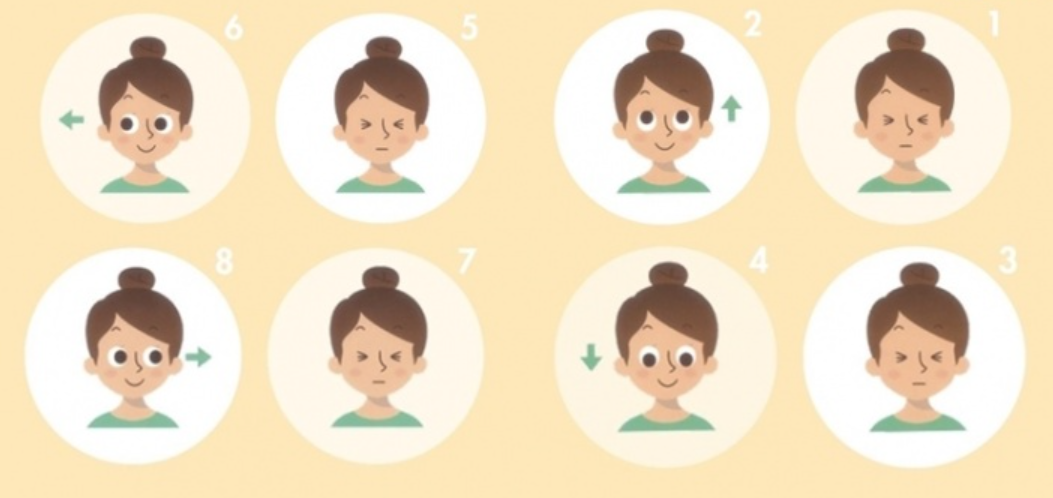
  1. Close your eyes for 2 seconds, then open them and look at the object for 5 to 10 seconds.
  2. Close your eyes for 2 seconds, then open them and look down for 5 to 10 seconds.
  3. Close your eyes for 2 seconds, then open them and look to the left for 5 to 10 seconds.
  4. Close your eyes for 2 seconds, then open them and look to the right for 5 to 10 seconds.

Eye focusing movement

Extend your thumb, focus your eyes on the thumb, and slowly move your thumb closer to your eyes, then move it farther away from your eyes. Repeat this process repeatedly to effectively train the ciliary muscle and improve farsightedness.

Maintain good lifestyle habits

Good eye care habits are one of the important ways to improve and prevent presbyopia. When using electronic devices, avoid using fonts that are too small to prevent prolonged squinting that causes the crystalline lens and ciliary muscle to age prematurely. Additionally, try to rest your eyes for 5 to 10 minutes every hour by closing them or looking at a distant object to give your eyes a proper rest to relieve eye strain.

In addition, due toPresbyopiaAs the age increases, it becomes more and more difficult to see clearly, so it is recommended to undergo 1-2 eye examinations a year and to improve farsightedness using the methods provided by the ophthalmologist.

Eat eye-healthy foods

In addition to the above methods to improve farsightedness, we can also eat more eye-healthy foods on a daily basis to improve or prevent the symptoms of farsightedness. It is recommended that we pay more attention to supplementing the following nutrients on a daily basis to maintain eye health:

Omega-3 fatty acids

It can be obtained from fish such as salmon and sardines.

Flavonoids

Beta-carotene is an essential nutrient for eye health that can be obtained from foods such as chicken eggs and spinach.

Vitamins A, C, and E

Vitamins A, C, and E contain abundant antioxidants that can effectively slow down the progression of cataracts, thereby improving cataracts. These nutrients can be obtained from fruits such as mangoes, apricots, and avocados, among others.

In addition to the above nutrients, zeaxanthin, lutein, and beta-carotene also have eye-healthy effects; you can also seek advice from an ophthalmologist or nutritionist regarding eye-healthy foods.

Having refractive surgery performed

For those who want to quickly solve the problem of farsightedness, refractive surgery may be an ideal choice. The following will introduce several common procedures.Presbyopia correction surgery:

Cataract surgery

If the elderly person suffers from cataracts, cataract surgery is also a method that can simultaneously improve farsightedness. How does cataract surgery improve farsightedness? Before starting cataract surgery, the patient can choose the appropriate lens with the help of a doctor.Artificial crystalInserted into the eye. However, it is important to note that after implantation of the artificial lens, side effects such as halos, glare, and lower contrast sensitivity may occur. Therefore, doctors generally recommend that patients try wearing contact lenses before the surgery to test visual correction.

LBV progressive lens correction

Laser Blended Vision, or LBV multifocal refractive surgery, is one method of correcting presbyopia by correcting the shape of the cornea through laser treatment. Its operating principle involves changing the curvature of the cornea to adjust the refraction of light, thereby improving visual problems. However, LBV multifocal refractive surgery is not suitable for everyone; for example, patients with eye diseases such as cone-shaped corneas, cataracts, or glaucoma may not be able to undergo this type of surgery.

SMILE Presbyopia correction

Small Incision Lenticule Extraction (SMILE) cataract surgery uses the Carl Zeiss VisuMax femtosecond laser system to flatten the main eye into a flat, uncorrected vision without any refractive error. The main eye is preserved with approximately 50-200 diopters of myopia to compensate for presbyopia. SMILE cataract surgery can be performed without opening the cornea, by making a small incision of approximately 3 millimeters to cut out the corrected corneal tissue, thereby changing the corneal curvature to correct presbyopia. However, SMILE cataract surgery also has certain limitations, such as that it may not be suitable for people with high farsightedness or near-sightedness.

Presbymax Presbyopia correction

Presbymax multifocal lens correction is currently one of the methods globally recognized as effective for improving presbyopia. By applying laser to the surface of the cornea to form a convex lens effect, this procedure improves the vision problems of presbyopia. This surgery also incorporates Spherical Aberration, which is a slight spherical aberration that increases the depth of field of both eyes, elongates the focal point, and changes chromatic aberration, which not only makes distant, intermediate, and near vision clear, but also does not affect the original color and sharpness of depth perception, nor does it cause glare problems. Presbymax multifocal lens correction is the most advanced and mature method in modern ophthalmology.Laser vision correction treatment for presbyopiaThe patient satisfaction rate is very high; compared to LBV and SMILE, Presbymax is more suitable for most presbyopic patients.

In short, improving farsightedness is not difficult; it can be achieved through proper methods. For more information, please click the button below to contact our ophthalmologist and develop a suitable plan for your individual situation.

5 Ways to Improve Presbyopia Read More »

近視和老花分別_封面圖

What should I do if I have both nearsightedness and farsightedness? Read this article to learn about refractive eye surgery methods.

Myopia andPresbyopiaThese are two different vision problems, but they can indeed coexist in the same person. These common vision problems can affect quality of life and work efficiency, so it is important to identify them early and actively seek appropriate vision correction solutions. The following will help you distinguish between nearsightedness and farsightedness, and how to correct nearsightedness + farsightedness.

What is presbyopia?

Presbyopia is a part of the natural aging process of the eyes; it usually occurs after age 40 and mainly manifests as blurred near vision. As age increases,The degree of old flowersThis gradual increase is due to the crystalline lens of the eye losing its elasticity and weakening its refractive power, making it difficult for the eye to focus on objects at close range, especially in darker environments.

Although the incidence of farsightedness is related to age, with the advancement of technology, almost everyone is surrounded by electronic devices. Long hours of staring at screens lead to prolonged strain on the ciliary muscles, prematurely aging the eyes. In Hong Kong, the incidence of farsightedness among people under 40 has increased by 20 to 30 percent; many people even begin experiencing symptoms of farsightedness between the ages of 35 and 40.

What is myopia?

Unlike nearsightedness and farsightedness, nearsightedness refers to the ability to see clearly when looking at objects at close range, but seeing distant objects becomes blurry. Nearsightedness is usually caused by the cornea of the eye or the length of the eye not matching its refractive power, resulting in the light not being properly focused on the retina.

The causes of myopia are mainly two: hereditary and acquired. However, myopia is mainly caused by acquired factors, such as prolonged near-distance reading or using electronic devices, or using the eyes in overly bright or dark environments. In contrast, the risk of hereditary myopia is relatively low, unless both parents are severely nearsighted.

How to distinguish between farsightedness and nearsightedness?

Presbyopia and myopia are two different vision problems. Presbyopia is the inability to see clearly at close distances; myopia, on the other hand, is the feeling of blurred vision when looking at objects at long distances.

The following chart provides a simple overview of the signs, causes, prevention, and treatment methods for farsightedness and nearsightedness.

PresbyopiaMyopia
SymptomsClose-up images are blurry and difficult to read.The long-distance image is blurry and the road signs are not clearly visible.
CausesAging of the ciliary muscle and stiffness of the corneaExcessive eyeball protrusion
Prevention methodsAvoid excessive eye strain. Eat a healthy diet. Regular eye examinations after age 40* Cataracts cannot be avoided; only the rate of progression can be slowed down.Reading under good lighting helps prevent long-term use of electronic devices and regular eye examinations.
Treatment methodsPresbyopia glasses and contact lensesPresbyopia correction surgeryMyopia glasses and contact lens surgery

Can people with nearsightedness also develop farsightedness?

Yes, even with myopia, it is possible to develop presbyopia in middle age or old age. People with myopia can initially see clearly with their near vision glasses, but after age 40, they may find that they cannot see clearly when looking at near objects, and even need to remove their near vision glasses to see clearly. In this case, they need to replace their glasses with ones that have presbyopia functionality.

How to treat farsightedness and myopia?

Progressive glasses

Wearing glasses is one of the most common and affordable treatment methods. If you also suffer from nearsightedness and farsightedness, you can consider choosing progressive lenses. Progressive lenses can place the degrees of nearsightedness and farsightedness on the same lens, eliminating the hassle of having to frequently replace your farsighted and nearsighted glasses. Using progressive lenses makes it more convenient to meet visual needs at different distances, making it the vision correction option most people will prioritize.

Contact lenses

Today’s contact lenses are not limited to a single function; there are also some that can correct both nearsightedness, farsightedness, and presbyopia at the same time. For those who do not like wearing glasses, you can consider choosing contact lenses that correct both farsightedness, presbyopia, and myopia at the same time. However, if you want to purchase contact lenses that can simultaneously improve near vision, farsightedness, and presbyopia, you need to seek professional eye care to have it fitted by an ophthalmologist after a series of examinations and evaluations to ensure the visual correction is effective and comfortable.

Orthopedic surgery

For some people, refractive surgery may be the best solution for quickly correcting nearsightedness and farsightedness. These surgeries can improve vision by changing the structure of the eye. If you plan to restore your vision through refractive surgery, you must seek out a qualified and professional ophthalmologist for the procedure.

It is important to note that although surgery can solve the problems of nearsightedness and farsightedness, the degree of farsightedness will still increase year by year as one ages. Therefore, before considering surgery, it is advisable to seek advice from an ophthalmologist and thoroughly understand the risks and effects of the procedure. At the same time, patients should be prepared and aware that they may need to re-wear reading glasses or contact lenses after the surgery.

#Presbyopia, myopia, # #presbyopia, myopia, #presbyopia at the same time, presbyopia with age-related myopia

What should I do if I have both nearsightedness and farsightedness? Read this article to learn about refractive eye surgery methods. Read More »

遠視和老花_封面圖

What are the differences between farsightedness and presbyopia? Explaining the causes and treatment methods in detail

Both farsightedness and nearsightedness are conditions where the visual field is clear when looking at objects at a distance, but blurred when looking at objects at close range. Therefore, people often confuse farsightedness and nearsightedness. However, farsightedness and nearsightedness are two completely different vision problems, and the corrective methods for each are also slightly different. The following will help you distinguish between farsightedness and nearsightedness, and how to correct farsightedness and nearsightedness.

What is presbyopia?

PresbyopiaIt is a vision problem related to age. When people reach around 40 years old, the eye's lens gradually loses elasticity, making it difficult to see objects at close range, especially when reading small fonts or performing close-up work. Moreover, constant eye strain often leads to blurred vision.HeadacheSymptoms such as eye pain and so on.

Presbyopia is a vision problem that cannot be avoided by anyone. Assuming you do not have myopia, hyperopia, or other vision problems, most people will start to develop presbyopia around the age of 40, with the degree increasing by an average of 10 degrees each year thereafter; after 60 years of age, the degree gradually decreases.


The following list of old-lens prescriptions is only a general reference; the old-lens prescription is generally measured in British letters “D” (Diopter), for example, +1.00D means the old-lens prescription is 100 degrees.

Age and presbyopia chart
AgePresbyopia
40 years old+1.00D
50 years old+2.00D
60 years old+3.00D
After 60 years of ageGradual decline in numbers

What is farsightedness?

Far-sightedness is a vision problem related to the structure of the eyeball. Generally, farsightedness is congenital. If one of the parents has farsightedness, the child is also highly likely to develop the problem.

The main causes of farsightedness are due to the eyeball having an excessively short axial length or a cornea with poor curvature, which causes the focus to be behind the retina instead of directly focusing the object on the retina. Similar to cataracts, people with farsightedness can see clearly distant objects, but when looking at objects at close range they may experience blurred vision and, over time, headaches or eye strain may occur when using the eyes for long periods of time.

How to distinguish between farsightedness and presbyopia?

Symptoms of farsightedness and presbyopia appear similar, but they are actually two different vision problems. Presbyopia is caused by the eyeball being shorter than normal, which means that objects cannot focus on the retina; farsightedness is a vision problem associated with age, mainly due to the deterioration of the ciliary muscles and the lens, which makes focusing difficult.

The following chart provides a simple overview of the symptoms, causes, prevention, and treatment methods for farsightedness and nearsightedness.

PresbyopiaFar vision
SymptomsClose-up images are blurryClose-up images are blurry
CausesAging of the ciliary muscle and stiffness of the corneaThe eyeball axis is short and the cornea has a flat arc.
High-risk groupsAge 40 and aboveFamily inheritance
Prevention methods*Presbyopia cannot be avoided; it can only be slowed down.
Avoid excessive eye strain and eat a healthy diet: Regular eye examinations after age 40
*Far-sightedness is hereditary and can only be slowed down by reducing the degree of nearsightedness.
Regular eye examinations and early vision correction
Treatment methodsPresbyopia glasses and contact lensesPresbyopia correction surgeryEyeglasses and contact lens correction surgery

Can you still develop farsightedness and cataracts?

This is because presbyopia is related to age; no one can avoid it. However, people with farsightedness tend to develop presbyopia earlier than those with myopia, because the degree of farsightedness and myopia cannot be offset. Additionally, if farsighted patients do not undergo timely correction, the ciliary muscle may age prematurely due to prolonged overuse. Therefore, even if they have myopia, the symptoms of farsightedness will still appear as they age.

How to treat farsightedness and presbyopia

As medical technology continues to develop, correcting farsightedness and presbyopia is no longer limited to wearing traditional eyeglasses; whether through surgery or wearing contact lenses, customized vision correction can be achieved, while improving farsightedness and presbyopia problems.

Presbyopic glasses

Wearing reading glasses is one of the most common ways to improve presbyopia. Prescription-matched reading glasses can provide clear vision at close distances, helping patients overcome difficulties when reading and working close up. However, some people choose to purchase reading glasses on their own and casually wear them on the street. Over time, this can actually damage the glasses. Therefore, it is always wise to seek professional eye care to have your presbyopia-appropriate reading glasses fitted.

For people who already have presbyopia issues, they may need to wear additional reading glasses and need to change glasses in different situations. This can cause some inconvenience, at which point choosing multifocal lenses to address both presbyopia and myopia at the same time becomes a consideration.

Old-fashioned con

Although it is a progressive lens, its design principle and traditional multifocal lenses are similar, so today’s progressive lenses are no longer focused solely on improving presbyopia; they can also improve farsightedness and other vision problems. Typically, these types of progressive lenses require professional eye care to be fitted by an ophthalmologist; not everyone is suitable to wear contact lenses, so a checkup of the eyes is necessary before fitting.

Presbyopia correction surgery

Modern cataract surgery is a fundamental solution to the problems of farsightedness and presbyopia, allowing patients to no longer rely on reading glasses or contact lenses. Especially the latest technologyPresbymax cataract correction technologyIt can simultaneously correct farsightedness, allowing patients to have clear vision and no longer be bothered by presbyopia and farsightedness.

The biggest advantage of Presbymax is that it can achieve full 3D vision across all distances. Whether there is presbyopia, myopia or hyperopia, Presbymax cataract surgery can perfectly solve these vision problems. Additionally, this type of surgery is short in duration and has minimal scarring. Most patients can resume their daily activities within 24 hours, with extremely high success rates.

For those who do not want to wear traditional glasses or are not suitable for wearing reading glasses, Presbymax cataract surgery is arguably the best value for money option.

What are the differences between farsightedness and presbyopia? Explaining the causes and treatment methods in detail Read More »

老花和散光_封面圖

Are farsightedness and presbyopia really indistinguishable? Read this article to get a clear understanding.

隨著年齡的增長,許多人可能會開始發現看事物變得模糊,閲讀變得困難,這種情況通常稱爲老花。然而,罹患散光眼的患者在看事物時同樣也會遇到視力模糊的問題,因此,很多人常常混淆老花和散光。這兩者該如何區別?老花和散光同時出現的話又該如何處理?下文將一一為你解釋。

What is presbyopia?

Presbyopia是一種隨著年齡增長而發生的視力問題。老花主要影響到人們對近距離物體的清晰度,尤其是在閱讀小字或執行細微工作時。

老花發生的主要Causes是因爲眼睛中的晶狀體變得僵硬,使其難以調整焦距以看清近距離的物體。這種變化是由於眼睛組織的老化,導致晶狀體失去彈性和靈活性。老花通常在40歲左右開始出現,並會隨著年齡的增長而加劇,直到60歲後度數的上升趨勢才會逐漸減慢。

什麼是散光?

散光是一種屈光不正的現象,可分爲先天性和後天造成,無論是哪種散光,其主要症狀都是看事物時會出現曡影影像模糊或扭曲的情況。

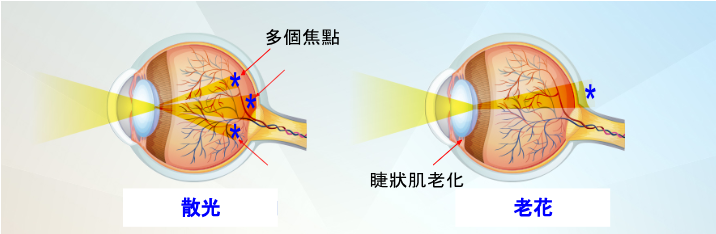
在正常的情況底下,光線會通過角膜、水晶體和玻璃體後,在視網膜上聚為一個焦點,形成清晰的影像。如果角膜的弧度不規則的話(即,角膜不是呈正圓的半球體),光線就無法正常通過,形成多焦點的現象。

老花和散光的分别

老花和散光是兩種不同的視力問題。散光是指光線聚焦不同,導致遠近距離畫面出現模糊或扭曲;而老花則是因爲眼球結構老化造成近距離視力喪失。

以下圖表簡單概括老花和散光的徵狀、成因、如何預防和治療方法。

PresbyopiaChromatic aberration
SymptomsClose-up images are blurry and difficult to read.遠近事物有曡影影像扭曲
CausesAging of the ciliary muscle and stiffness of the cornea角膜弧度不規則
Prevention methodsAvoid excessive eye strain. Eat a healthy diet. Regular eye examinations after age 40* Cataracts cannot be avoided; only the rate of progression can be slowed down.良好的燈光下閲讀避免長時間使用電子產品定期進行眼睛檢查*先天性散光無法避免,只能維持良好用眼習慣,避免散光加速惡化
Treatment methodsPresbyopia glasses and contact lensesPresbyopia correction surgery散光眼鏡散光隱形眼鏡手術

有散光會有老花嗎?

老花是一種眼睛老化的現象,每個人都會有老花眼,只是來的快或慢而已。因此,無論是否有近視、遠視或散光問題都會患上老花。

如何同時治療老花眼和散光?

上文提到,老花和散光是兩種完全不同的視力問題,但現有的老花矯視方法一般都能同時改善散光。一般輕微的散光(100度以内)並不需要特別治療,同時擁有老花眼和散光的患者可以在需要時佩戴老花眼鏡或老花con,如果感覺到視力不佳或感覺影像怪怪的,則需要向專業眼科醫生另尋方案。

以下是一些能夠同時改善老花和散光的普遍治療方案:

Progressive glasses

漸進式眼鏡能夠同時改善老花、散光、近視、遠視等問題,增加影像的清晰度。然而,由於特殊的鏡片設計,初次佩戴時可能會感到不適,需要一段時間來適應。對於一些人來說,佩戴眼鏡可能在工作上造成不便或覺得不美觀,因此可以考慮選擇佩戴隱形眼鏡,同樣能夠有效改善老花和散光問題。

漸進式隱形眼鏡

漸進式隱形眼鏡的原理和漸進式眼鏡相同,能同時改善多種視力問題。但是如果沒有佩戴過隱形眼鏡的人可能需要時間去適應它,同時也需要根據醫生指示使用,以眼部避免感染。然而,這類con的最高散光度數只能在大約在225度左右,若你的散光度數太高的話,就只能尋求眼科醫生擬定其它矯視方案。

角膜塑型片(Ortho-K)

角膜塑型片是一種矯正型隱形眼鏡。散光眼患者在睡覺時佩戴可以調整角膜弧度,睡醒后取下便能擁有正常的角膜弧度,這時患者就只需要佩戴老花眼鏡便能看清楚近距離事物。

矯視手術

隨著醫療科技不斷地進步,現今的矯視手術已有多種選擇。對於散光和Presbyopia較深的患者,可以參考眼科醫生的建議,選擇合適的矯視手術方案,以重拾視力。

然而,要注意的事,老花會隨著年齡而加深,因此,在矯視手術的幾年後仍可能需要佩戴老花眼鏡或老花con來保持良好的視覺。

無論選擇哪種治療方法,都應該根據個人的情況和需求來進行選擇。因此,在決定治療方法之前,最好向眼科醫生諮詢以獲得專業建議。

Are farsightedness and presbyopia really indistinguishable? Read this article to get a clear understanding. Read More »

老花眼鏡 老花度數 老花眼鏡度數 老花度數表 老花度數計算 老花 度數 100度老花 老花眼度數怎麼算 老花英文 老花度數換算 老花年齡對照表 老花鏡度數 近視 老花 老花100度眼睛在何種距離以內的事物將看不清楚 老花150度 老花鏡 老花度數與年齡 老花眼镜 老花近視 近視老花眼鏡

Is the presbyopia getting worse or getting better? How can presbyopia be improved?

Presbyopia is a natural aging phenomenon related to age. It is caused by the deterioration of the conjunctival muscle’s ability to regulate the eye and the aging of the lens.PresbyopiaThis makes it difficult to focus on near objects when looking at them, resulting in blurred images, especially when reading. Not only that, the degree of farsightedness continues to deepen with age, so if you want to have clear vision, you must wear progressive lenses or seek medical advice for other corrective vision solutions.

How to identify old-style reading glasses?

Presbyopia usually begins to appear around the age of 40, and the degree of farsightedness continues to worsen as age increases. Here are some early symptoms of presbyopia:

  • When reading, you need to zoom in or move the text closer to see it clearly.
  • The line of sight is difficult to focus when reading, and it is easy to experience headaches.
  • The eyes are prone to fatigue and soreness.
  • When looking at something far away and immediately looking at something close, the focusing speed seems to slow down.
  • People with myopia began to feel that they didn't need glasses to see clearly anymore.
  • In places with poor lighting, it is difficult to see clearly.

Although there is currently no cure for presbyopia, there are still several options available to correct vision, such as wearing bifocal eyeglasses, multifocal contact lenses,Laser vision correctionOr surgery, etc. If you notice the above symptoms starting to appear, it is recommended that you seek an ophthalmologist for examination; the doctor will usually conduct a diagnosis based on the findings.Vision checkThe optometrist will measure your old-range vision to determine the diagnosis, and then recommend the appropriate corrective method.

Calculation method for presbyopia

Presbyopia is generally measured in diopters (D), using the English alphabet “D” (Diopter). For example, +1.00D means that the presbyopia is 100 diopters. Assuming you do not have myopia, hyperopia, or other vision problems, most people will start to develop presbyopia around the age of 40, with an average increase of about 10 diopters each year until the age of 60. After that, the degree of presbyopia gradually decreases.

Age and presbyopia chart
AgePresbyopia
40 years old+1.00D
50 years old+2.00D
60 years old+3.00D
After 60 years of ageGradual decline in numbers

The above prescription chart is only a general reference; the actual situation varies from person to person. We recommend that everyone seek an eye examination from an ophthalmologist to obtain the exact prescription for their eyeglasses.

Can myopia and hyperopia be offset with each other?

Myopia and hyperopia are two different vision problems, and their causes also differ.MyopiaIt is because the eye has an irregular refractive power, which causes difficulty in seeing distant objects; while farsightedness is the deterioration of the ciliary muscle and crystalline lens functions, resulting in blurred images when looking at near objects. However, people who simultaneously have both nearsightedness and farsightedness can indeed see near objects without wearing glasses at a certain age; this is because the degree of nearsightedness is exactly the same as the degree of farsightedness that has increased, and therefore they may mistakenly believe that they do not have farsightedness.

Nevertheless,Myopia and hyperopia cannot be offset with each other.This is because the near-sightedness does not decrease with age. At the same time, people who have both nearsightedness and farsightedness do not need to wear glasses when looking at close objects, but they still need near-vision glasses to see clearly when looking at distant objects. Therefore, when you notice that you have farsightedness, you need to consider replacing your glasses with multifocal lenses or seeking other vision correction methods from a professional ophthalmologist.

How to choose reading glasses?

Once farsightedness is detected, the most convenient solution is to wear reading glasses. Although the degree of farsightedness will still increase after wearing reading glasses, this can significantly alleviate the problem.The degree of eye fatigueThis reduces the burden of seeing close objects.

Additionally, some people may choose to purchase prescription glasses themselves, but everyone’s prescription may vary slightly, and some may also have problems with nearsightedness or farsightedness; wearing glasses of the wrong prescription haphazardly will only cause discomfort.

When choosing lenses, there are two options: single-focus lenses and progressive lenses. Single-focus reading glasses can only be used to see objects at a fixed distance; they must be worn only when you need to see close objects. For people with near-sighted or far-sighted problems, you need to replace different lenses frequently. Progressive lenses can see objects at long, intermediate, and short distances at the same time, but these types of lenses are designed differently and require time to adjust to them.

If you find traditional reading glasses uncomfortable, or they are not suitable for wearing due to work-related reasons, you can also consider having progressive reading lenses fitted. However, it is important to note that progressive lenses, which are in close contact with the eye, require strict adherence to the doctor’s instructions for use, especially regarding their maintenance and cleaning, to avoid causing bacterial infections or triggering other eye health issues.

Presbymax laser cataract surgery

In addition to wearing reading glasses or reading glasses with bifocal lenses, there is now a type of presbymax laser refractive surgery that can solve vision problems such as presbyopia and myopia at once, allowing you to completely abandon wearing reading glasses.

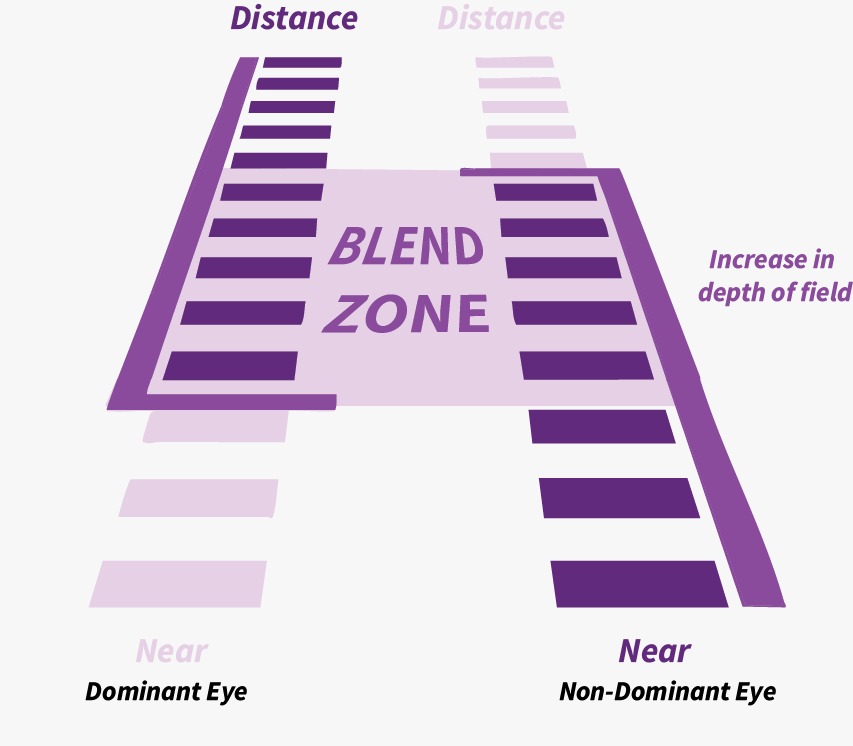
Presbymax is suitable for elderly cataract patients aged 40 to 60 years old. The doctor will use a laser to grind the cornea to change its curvature, correcting near vision, far vision, and astigmatism in the dominant eye to nearly 0 degrees, used to see images at a distance. The other eye is reserved or made with approximately 150 to 250 degrees of near vision, used to see near images and counteract presbyopia, and will also include a slight spherical aberration of about 150 to 250 degrees to increase the depth of field and change the chromatic aberration, thereby creating a "fusion zone" in both eyes. This not only makes distant, intermediate, and near vision clear, but also does not affect the sharpness of original colors and the sense of depth, nor does it cause glare problems.

Furthermore, the surgery can be completed in as little as 10 minutes, is safe, and does not cause discomfort. Most people can resume normal activities 24 hours after the surgery, and their vision can be restored within a few weeks, making it suitable for most patients with presbyopia.

Whether you choose reading glasses, contact lenses, or refractive surgery, the choice should be based on your personal lifestyle and seek the advice of a professional doctor.

Common problems

How many times is farsighted considered serious?

The severity of farsightedness usually depends on the degree of farsightedness. Generally speaking, the higher the farsightedness, the more noticeable the impact is. However, everyone’s situation is different; some people may only experience minor farsightedness issues, while others may need glasses with a higher degree of farsightedness to see a noticeable improvement.

Will my presbyopia increase?

As age increases, the degree of farsightedness usually gradually increases and does not become worse; if you suddenly feel that your farsightedness has improved, it may beCataractThis is a sign of presbyopia. Therefore, doctors generally recommend that patients with farsightedness undergo regular eye examinations and, if necessary, replace their eyeglasses to accommodate the changes in farsightedness.

How to choose the lens power for reading glasses?

The prescription for reading glasses should be determined based on your eye exam results and the doctor’s recommendation. Eye specialists will help you measure your reading prescription and help you choose the glasses that best suit your needs. Remember to have regular check-ups to ensure your prescription remains appropriate for your needs.

No matter what degree of presbyopia you have, early identification and the wearing of suitable eyeglasses for presbyopia are crucial for maintaining good vision and quality of life. It is recommended that everyone undergo regular eye examinations to ensure the health and vision of their eyes.

Is the presbyopia getting worse or getting better? How can presbyopia be improved? Read More »