What is dry eye syndrome - abnormal eyelid gland function (MGD)?

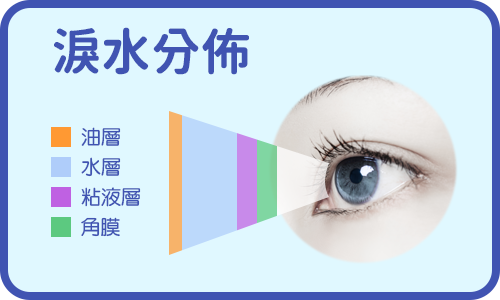
Our tears are composed of three layers: an oil layer, a water layer, and a mucous layer.

Oil layer (lipid layer):
It is the outermost layer of the tear film.Slow down the evaporation of tearsIt lubricates the contact surface of the eyelids and the eyeball.

Water layer (tears layer):
It is located in the middle layer of the tear film and on the smooth surface of the cornea. It supplies oxygen to the corneal epithelial cells and protects against external pathogens and removes metabolic products.

Mucous layer:
It forms a hydrophilic interface on the inner layer of the tear film, allowing the tear layer to be evenly distributed on the eye surface, while also providing nourishment and protecting the cornea and smoothing the surface of the cornea.
Any problem in any of these three layers can lead to dry eyes.

Dry eye syndrome – eyelid gland dysfunction (MGD)It is a common type of chronic inflammation.
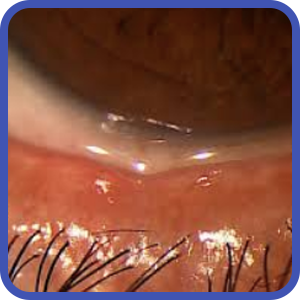
This causes the oil glands to become clogged, and the oil they produce becomes thicker and less viscous, resulting in the evaporation of tears. This is one of the most common eye diseases, accounting for 70% of all dry eye conditions.

淚水分佈

Causes of abnormal eyelid gland function

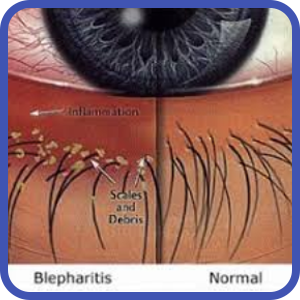
  1. Blepharitis
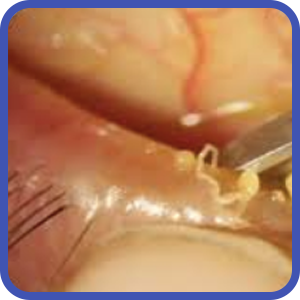
    This condition is caused by a biofilm of commensal bacteria on the skin covering the edge of the eyelid. The external toxins of these bacteria can enter the meibomian glands, causing blockage of the meibomian glands and a reduction in the quality or quantity of tears.

  2. Skin condition
    For example: Acne Rosacea

  3. In modern Western diets, changes in the levels of Omega-3 and Omega-6 fatty acids in the human body are very common, which can lead to impaired lipid-binding function.

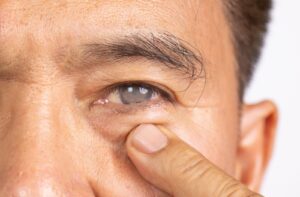
圖示_眼睛_乾眼症
圖片_瞼板腺功能異常的原因​_皮膚狀況_痤瘡酒渣鼻
圖片_乾眼症_瞼板腺功能障礙_瞼板腺功能異常的原因​

Dry eye syndrome - symptoms of abnormal eyelid gland function

When you hear the word "dry eye," what symptoms do you think of? It might be that your eyes are dry and there is no tears.
But that’s wrong. In fact, “constantly watering eyes” is the most common symptom of dry eye syndrome! Because when there is dry eye and insufficient tears, the body usually produces too many tears to help relieve the symptoms. This is called “reflexive tear secretion,” but it actually causes the tears to keep flowing continuously. It’s important to note that “reflexive tear secretion” is only a temporary measure taken by the body to help relieve the symptoms; it cannot cure dry eye syndrome.

Common symptoms of dry eye syndrome:

  • Itching of the skin or mucous membranes or eyelids, especially near the base of the eyelashes
  • Dry eye (MGD accounts for 70% of all dry eye conditions)
  • Red eyes
  • Eye pain
  • Blurred vision
  • Continuous flow of tears
  • Headache
  • Easily tired
  • Fear of light
  • Contact lenses are difficult to wear, resulting in failure to successfully put them on.

Inquire about the price of dry eye examination and treatment

Recognizing the types of dry eye syndrome

Dry eye syndrome can be divided into two types: "water deficiency" and "evaporation"

1. Water-deficient dry eye syndrome

The lack of tears from the tear glands leads to dry eyes.

Treatment method:

  • Artificial Tears/Gels
  • Steroid eye drops
  • Cyclosporine eye drops (RESTASIS®, Allergan)
  • Punctal occlusion: blocked tear ducts
General advice:
  • Reduce the use of contact lenses
  • Humidifier Air Humidifier
  • Pay attention to the working environment and avoid direct exposure to the air vents of the air conditioner.
  • Take proper rest

2. Exudative dry eye syndrome

It is mostly caused by meibomian gland dysfunction (MGD), accounting for about 70% of all dry eyes. The meibomian glands are responsible for secreting the oily substance in the tears. This oily substance serves to slow down the evaporation of the tears. MGD is a common chronic inflammation that causes the meibomian glands to become blocked, and the lack of oil in the tears speeds up their evaporation.

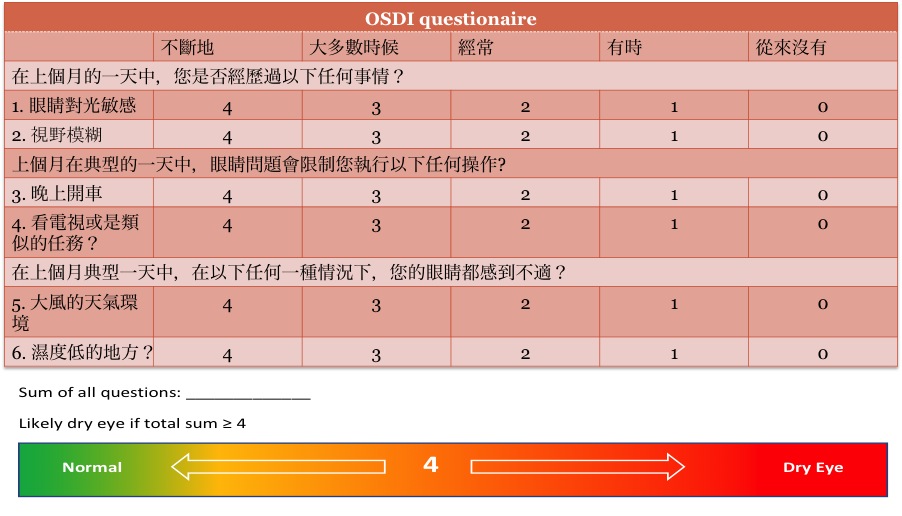
Test yourself to see if you have dry eye syndrome – abnormal eyelid gland function (MGD)

圖片_OSDI_乾眼症_自診斷

Dry eye syndrome - abnormal eyelid gland function FAQ

Can dry eye syndrome be cured?

Currently, there is no treatment method that can completely eliminate all symptoms caused by dry eye disease. Since dry eye disease is caused by multiple factors, the treatment methods for mild and severe symptoms vary greatly. Fortunately, there are currently many methods available to treat this condition. Your ophthalmologist can help you find ways to alleviate the symptoms.

Here are treatments for chronic dry eye syndrome, so you can find the one that works best for you.

  • There are many medications and procedures available to treat chronic dry eye syndrome.Artificial TearsIt can hydrate your eyes. If you have moderate dry eye symptoms, you may only need artificial tears. However, you need to apply them several times a day.
  • In addition, two alternative therapies that help alleviate the symptoms of chronic dry eye include acupuncture and pulsed light therapy. One study shows that compared with artificial tears,AcupunctureIt may be beneficial, but more research is needed to support this. One theory suggests that acupuncture can alleviate pain and inflammation, thereby reducing irritation to the eyes and improving dry eye symptoms.
  • Intense Pulsed Light (IPL)Treatment is often used as an alternative to alleviate the symptoms of rosacea and acne. In a credible study involving chronic dry eye syndrome, 93% of participants reported being satisfied with the degree of improvement in their symptoms after IPL treatment.
Will I feel dry eyes when wearing contact lenses?

The use of contact lenses is believed to be closely related to dry eye syndrome. Approximately 80% of soft contact lens wearers and approximately 70% of hard contact lens wearers complain of dry eyes. Tears serve as a lubricant between the contact lens and the pupil (cornea) to protect your eyes. In the absence of tears, the cornea and conjunctiva are likely to be damaged, which in turn reduces their resistance to bacteria and causes severe corneal infections.

I use electronic devices all day, so my eyes are dry. Is there any good preventive measure?

Preventive measures that can be taken when using electronic devices include:

  • Winking deliberately
  • Using a humidifier to add moisture to the dry indoor air
  • Position the computer screen below eye level
  • Airflow from the air conditioner will not blow directly into your eyes.
  • Take proper rest
What is the effective treatment for dry eyes?

Depending on the patient's symptoms and condition, multiple dry eye treatments can be used. Typically, eye drops that help maintain moisture, eye drops containing moisturizing ingredients, and other formulas to replenish the reduced tears can be used to treat mild dry eye. Improving the quality and quantity of the tears during treatment is very important, and lubricating eye drops can often be helpful. However, if eye drops are not effective in treating dry eye, artificial puncturing of the tear ducts can be used to artificially close the tear points and inhibit the outflow of tears.

What happens if dry eye syndrome is not treated?

Subjective symptoms, such as dry eyes or sand-like texture, and ocular diseases (injuries) may worsen. Additionally, bacteria can enter the eyes through injury and lead to severe corneal infections. If people with these diseases wear contact lenses, their symptoms may worsen.

Is there a relationship between age and dry eyes?

The amount of tear secretion decreases with age as the tear gland that produces it declines in function. Decreased tear secretion is thought to be one of the causes of dry eye syndrome. On the other hand, the function of the tear drainage (tear duct drainage) may sometimes be reduced, resulting in a decreased amount of tears flowing out. This means that dry eye syndrome does not always occur with age.

I have been using the eye drops purchased at the pharmacy. Is there a problem with using them continuously?

If the eye drops you bought at the pharmacy are not able to relieve your symptoms, please consult your ophthalmologist.

Tears play a role in transporting oxygen and nutrients to the eye and killing bacteria that enter the eye, but excessive use of eye drops can cause valuable tears to be washed away. Additionally, eye drops purchased at the pharmacy for dry eye patients may not be affected by the ingredients because these ingredients are not diluted by tears.

Consultation registration