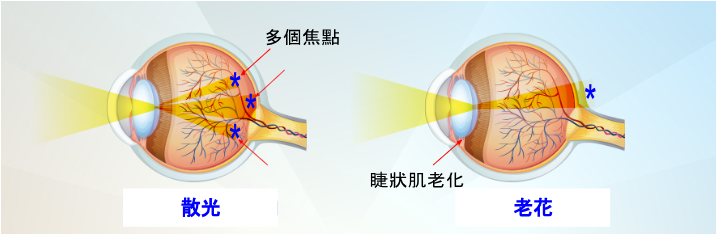
老花(Presbyopia)是隨著年齡增長而出現的一種視力問題,幾乎每個人都會有老花,通常發生在40歲左右的人身上。許多患有老花的人因擔心被嘲諷年紀大而不願配戴老花眼鏡,導致影響日常生活。然而,現在有越來越多種矯正老花的方法推出市場,配戴老花眼鏡已不是唯一選擇,像是眼科專科湯文傑醫生極力推薦的 Presbymax 老花激光手術,不僅可以避免配戴老花眼鏡的尷尬,還能讓眼睛恢復年輕時的視力。
Treatment Methods for Presbyopia
Although presbyopia is not considered a serious eye disease, the degree of presbyopia gradually increases with age, affecting people's quality of life. Therefore, many individuals consider undergoing presbyopia surgery to correct their vision.
LBV Presbyopia Correction
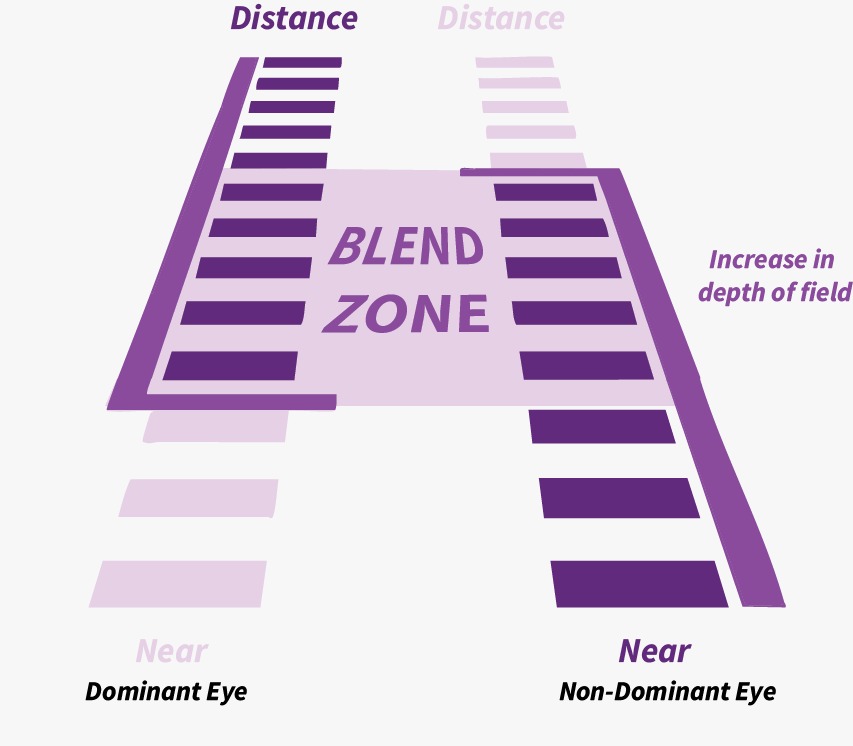
Laser Blended Vision (LBV) for presbyopia correction is a method that uses laser to reshape the cornea, thereby improving presbyopia. Its operating principle involves altering the curvature of the cornea to adjust light refraction. This not only corrects presbyopia but also enhances stereoscopic vision, ensuring excellent vision at both distance and intermediate ranges.
However, LBV refractive surgery is not suitable for everyone. For instance, patients with eye conditions such as keratoconus, cataracts, or glaucoma may not be eligible for this type of procedure.
SMILE Presbyopia Correction
Smile Presbyopia Correction utilizes a femtosecond laser system (Carl Zeiss VisuMax) to reshape the dominant eye into a plano state (for viewing at medium and long distances), while leaving the non-dominant eye with approximately 50 to 200 degrees of myopia (for near vision), thereby improving presbyopia.
The key feature of Smile refractive surgery is that it does not require a full corneal flap. Instead, a small 3-millimeter incision is made at the periphery to remove the tissue. This results in high safety, short recovery time, and fewer cases of dry eye post-surgery.
However, this type of surgery is not suitable for individuals with hyperopia, myopia exceeding 1000 diopters, or astigmatism exceeding 500 diopters. Furthermore, the monovision principle employed in SMILE presbyopia correction may result in blurred intermediate vision and reduced depth perception.
Presbymax Presbyopia Correction
Presbymax presbyopia correction technology is currently one of the globally recognized methods for effectively improving presbyopia.The procedure involves the doctor using laser to reshape the cornea, creating a convex lens effect to correct presbyopic vision issues. This surgery incorporates a slight spherical aberration, enhancing binocular depth of field, extending focal length, and modifying chromatic aberration. This not only ensures clear vision at all distances—far, intermediate, and near—but also preserves original color perception and depth sensitivity without causing glare.
Presbymax老花矯視是現代最先進且成熟的老花激光矯視療程,患者滿意度都很高,比起 LBV和 SMILE,Presbymax 更適合大部分老花患者。
Monocular Vision Surgery
單眼視覺手術是通過激光矯視除老花。其原理是將主力眼矯正至0度,另一隻眼睛保留近視度數,以抵消老花。這類手術適合有近視和沒有白內障的人士。
However, due to the significant difference in prescription between both eyes after surgery, a certain period of adaptation is required. Some individuals may be unable to adjust to this change and may need to consider undergoing another procedure. Additionally, presbyopia may worsen again post-surgery, potentially necessitating the use of reading glasses in the future.
Multifocal Intraocular Lens
Multifocal intraocular lenses (IOLs) are implantable "glasses"—a versatile type of artificial lens offering full-range capabilities for distance, intermediate, and near vision. They can simultaneously address presbyopia, nearsightedness, or farsightedness. Presbyopic patients also suffering from cataracts may consider this type of surgery to resolve both conditions at once.Multifocal IOLs are made from flexible materials like plastic or silicone, and patients generally do not feel the presence of the lens. However, this procedure is invasive, requiring careful postoperative care to prevent bacterial infections or lens displacement.
How to Choose Presbyopia Surgery?
Presbyopia correction surgery continues to innovate, resulting in today's diverse range of presbyopia correction methods. However, not all procedures are suitable for everyone.Therefore, when selecting presbyopia surgery, careful consideration of multiple factors is essential. These include eye health history, degree of myopia/hyperopia/astigmatism, personal lifestyle habits, and the cost of presbyopia correction. To achieve optimal results, doctors typically conduct comprehensive preoperative examinations to assess eye health before determining the appropriate treatment approach.
湯文傑醫生表示,Presbymax老花矯視技術是目前全球認可及成熟的老花矯視方法之一。經過Presbymax手術的患者滿意度極高,而且在香港,老花矯視收費也相對親民。手術時長非常短,大約10分鐘即可完成,24小時内患者便可正常活動,數周內視力可完全恢復,毫無不適感,因此Presbymax才能成爲老花矯視的最佳選擇。
Risks of Presbyopia Correction
Presbyopia correction surgery is typically classified as a minimally invasive procedure, featuring small incisions and relatively short recovery times. However, it's important to note that all surgeries carry inherent risks. Therefore, before considering this procedure, it's essential to understand some potential risks associated with presbyopia correction surgery.
- Wound infection: After surgery, it is essential to properly care for the wound according to your doctor's instructions to prevent bacterial infection.
- Glare and double vision: Some patients may experience glare or double vision after presbyopia correction surgery, which can affect nighttime driving.
- Photophobia: Some patients may experience increased sensitivity to light after surgery, which may cause discomfort in bright environments.
- Overcorrection or undercorrection: Although doctors meticulously plan correction strategies before surgery, they cannot guarantee 100% accuracy. If patients experience discomfort, a second surgery may be required to improve the outcome.
- Corneal Issues: In extremely rare cases, surgery may lead to corneal complications such as corneal scarring or corneal epithelial hyperplasia.
老花矯視風險可能會因不同手術而有所不同,建議在選擇老花手術前請醫生詳細説明。當然這些風險並非經常發生,亦有可能是暫時性的。只要是尋求正規眼科醫生的幫助,就無需過於擔心。