Floaters can be quite bothersome. People with floaters see "dark spots" drifting in their vision—painless and impossible to rub away. When you stare directly at them, they vanish instantly.The shapes of floaters vary—they can appear as black dots, lines, circles, ovals, tadpole-like shapes, and more. They are particularly noticeable when looking at bright, clear backgrounds. Floaters are a degenerative eye condition. For mild cases, individuals generally only need to learn to live with the dark spots or floating objects in their vision.and daily life remains unaffected, treatment for floaters is generally unnecessary. However, if the dark spots or floaters become too large or numerous, if floaters suddenly worsen or are accompanied by flashes of light, or if vision is impaired, it is crucial to seek improvement methods. Consult an ophthalmologist specializing in floaters for advice and consider surgical or laser treatment for floaters. Otherwise, delaying treatment may lead to severe consequences, potentially resulting in blindness!
What is floaters?
From a medical perspective, floaters are a symptom of vitreous degeneration. The vitreous is a transparent gel-like substance located behind the lens and in front of the retina. Under normal conditions, it fills the entire vitreous cavity, helping to maintain the eye's shape.However, with aging and conditions like myopia, the vitreous liquefies and shrinks, forming cloudy fibers. These fibers float within the vitreous cavity. When light rays refract off these fibers, patients perceive dark spots in their vision—the precursor to floaters.
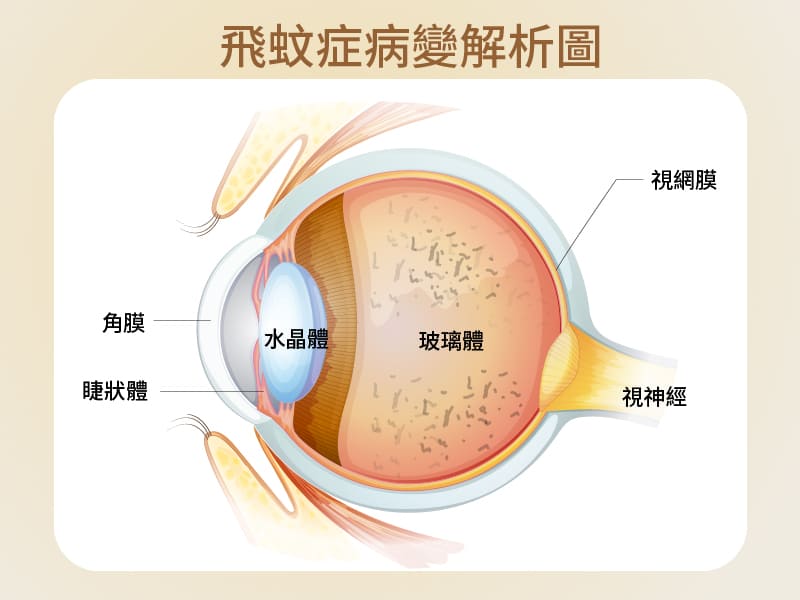
From a medical perspective, floaters are a symptom of vitreous degeneration. The vitreous is a transparent gel-like substance located behind the lens and in front of the retina. Under normal conditions, it fills the entire vitreous cavity, helping to maintain the eye's shape.However, with aging and conditions like myopia, the vitreous liquefies and shrinks, forming cloudy fibers. These fibers float within the vitreous cavity. When light rays refract off these fibers, patients perceive dark spots in their vision—the precursor to floaters.
Who is most likely to develop floaters?
Floaters typically become more common with age, making older adults more prone to experiencing dark spots in their vision. Beyond age, other factors that may increase the risk of developing floaters include: myopia, a history of eye surgery, eye trauma, or eye inflammation. Clinical medical research indicates that high-risk groups for floaters include:
- Middle-aged and elderly people
- Individuals with high myopia
- Patients with hypertension/diabetes
- Undergone eye surgery
- Head injury due to impact, such as: car accidents, diving athletes
- Other eye problems, such as: eye inflammation
However, most cases of floaters are benign. They can occur due to age-related vitreous degeneration or excessive eye strain. As long as the number of dark spots in your vision doesn't increase and their position remains stable, there's generally no need for excessive concern.
Conversely, if you suddenly experience a large number of dark spots in your vision that are already affecting your field of vision or accompanied by flashes of light, it could indicate vitreous detachment. This condition may cause traction on the retina, leading to retinal tears or even detachment. Such situations require immediate examination to seek treatment options or undergo floater treatment.
Causes of Floaters
The causes of floaters can be broadly categorized into three types: physiological, degenerative, and pathological.
- physiological
Approximately 80% of floaters are physiological in nature. Physiological floaters typically occur in individuals under 40 or those who experience prolonged eye strain. Most people notice dark spots in their vision, which are impurities within the vitreous humor. These generally do not affect vision and do not require immediate treatment; they often disappear on their own over time.
- Degenerative
As we age, the vitreous humor in the eye gradually degenerates, much like other organs in the body. During this process, the vitreous contracts and forms tiny fibers that float within it. When light enters the eye and refracts off these impurities, it creates the dark spots we see.
- pathological
Pathological floaters are caused by eye diseases or systemic vascular conditions. Eye diseases refer to retinal tears or holes that occur due to external traction or degenerative processes, leading to vitreous hemorrhage or even retinal detachment. This can result in vision impairment and, in the most severe cases, permanent blindness.Additionally, systemic vascular diseases such as retinal hemorrhage, diabetes, hypertension, or macular degeneration may also present pathological floaters if not addressed promptly and treated effectively. Patients should seek early intervention or treatment options to manage floaters.
Complications of Floaters — Retinal Detachment/Hole

Although floaters are not a serious condition, retinal detachment caused by floaters is an ophthalmic emergency. One in four patients with floaters may experience vision loss due to retinal detachment or tears. Remember, if you experience any of the following signs of retinal detachment caused by floaters, including:
- A large number of dark spots appear in the eyes within a short period of time.
- Abnormal Flash
- Shadow
- Obstructed view
This indicates a potential retinal tear, requiring immediate medical attention and treatment. Otherwise, patients with floaters may suffer permanent vision damage or even blindness.
How to treat floaters?
If your condition is benign floaters, immediate treatment is not necessary. When you notice dark spots in your vision, try moving your eyes to shift the fluid within them, allowing the fibers to drift out of your line of sight. Of course, some individuals find the constant presence of floating dark spots intolerable, as they frequently distract attention and significantly impact mood. In such cases, floater treatment may be considered.
With current technology, the primary methods for treating and improving floaters are laser therapy and vitrectomy surgery.
I. Laser Treatment for Floaters
This treatment method for floaters is suitable for larger, concentrated vitreous fibers. It uses laser energy to break these fibers into smaller fragments, thereby improving and eliminating floater symptoms.Laser treatment is performed under local anesthesia, and patients experience no pain during the procedure. The entire treatment takes only 15 to 20 minutes. However, laser therapy is not suitable for everyone seeking to improve floaters. If the fibers are too scattered or located too close to the macula or lens, the procedure should not be performed to avoid complications such as cataracts or macular damage.
II. Vitrectomy Surgery for Floaters
Vitrectomy surgery involves removing the vitreous gel inside the eye through a small incision and replacing it with a solution to maintain the eye's shape. The procedure typically takes only 10 to 15 minutes. However, vitrectomy does not necessarily eliminate all floaters. If the surgery itself causes bleeding or retinal tears, new floaters may form. Therefore, most physicians do not recommend this surgery for treating floaters.
Methods for Improving and Managing Floaters
Once floaters develop, they are nearly impossible to reverse. Even after laser or surgical treatment, recurrence is possible. What we can do is learn to live with them peacefully. Alternatively, the following methods may help improve floaters and slightly alleviate symptoms.
I. Daily Care for Benign Floaters
- Avoid excessive eye strain
Avoid overexerting your eyes during daily activities, especially if you are a heavy user of electronic devices. Take a 5- to 10-minute break every hour to rest your eyes. Use this time to blink frequently and look into the distance to relax your eyes.
- Healthy Lifestyle Habits
In daily life, it is recommended to reduce the time spent on your phone, especially avoiding late-night phone use. Ensuring adequate sleep and engaging in regular exercise can also help improve floaters.
- Regular follow-up appointments
Never assume that having benign floaters means you can relax. Floater sufferers must undergo regular check-ups to avoid missing other potential conditions and missing the optimal treatment window.
- Eye-Protecting Dietary Habits
In daily life, one should increase intake of various vitamins and antioxidant-rich foods through diet. Examples include berries, green or yellow vegetables, carrots, soybeans, milk, and deep-sea fish oil—all of which are dietary approaches that may help improve floaters.
II. Postoperative Care and Maintenance for Malignant Floaters
- Topical medication treatment
After surgery, be sure to follow your doctor's instructions for medication. Remember to thoroughly wash your hands with soap before each application to prevent cross-infection.
- Improve daily routines
Avoid rapid eye movements and excessive eye strain for one week after surgery. During this period, minimize reading books, using mobile phones, computers, or watching television. Additionally, refrain from strenuous exercise, mountain climbing, scuba diving, or air travel for one month post-surgery, as these activities may stimulate the eyes and slow down the healing process.
- Use an eye mask
During the eye recovery period, it is recommended to wear an eye shield at all times to prevent collisions and avoid unintentional rubbing of the eyes while sleeping at night. Ensure the eye shield is clean when in use, and it is advised to wash and disinfect it daily to prevent wound infection caused by bacteria.
- Daily diet
In addition to avoiding irritating foods, it is also important to avoid legumes, as these foods can cause nitric oxide in the blood to migrate to the eyes. This leads to gas buildup in the inert gases within the eye, increasing intraocular pressure.
- Home Safety
Keep your home clean and tidy to minimize dust and avoid secondhand smoke. During recovery, avoid rearranging furniture or placing items in hallways to prevent collisions or falls in unfamiliar surroundings that could injure your eyes.
- Scheduled follow-up appointments
In addition to following your doctor's instructions for regular post-operative follow-up appointments, if you experience any eye discomfort—such as persistent eye pain, sudden blurred vision, nausea, or an increase in the number or size of floaters—be sure to consult your ophthalmologist immediately to prevent the condition from worsening.
How to prevent floaters?
Although we cannot completely prevent the occurrence of floaters, we can slow down the aging of the eyeball and reduce the likelihood of developing floaters through daily eye care.
I. Develop Good Eye Care Habits
- Avoid excessive use of electronic devices (take a 5-10 minute break after every hour of screen time).
- Work under conditions of sufficient lighting and stable, flicker-free light sources.
- Avoid staying up late to reduce strain on your eyes.
II. Consuming Eye-Protective Nutrients
- Carotenoids (dark green, deep yellow, and red fruits and vegetables)
- Anthocyanins (Plum fruits)
- Vitamins (Vitamins A, B complex, C, and E)
- Omega-3 fatty acids (fish oil)
III. Properly manage systemic vascular diseases (e.g., diabetes, hypertension)
- Maintain a balanced diet and reduce intake of foods high in fat, salt, and sugar.
- Regular exercise (jogging, cycling)
- Get regular full-body checkups
Although most cases of floaters do not require treatment, they should not be completely ignored. Regular check-ups are essential, and if symptoms worsen, seek medical attention immediately to avoid missing the optimal window for treatment.
#floating dark spots in eyes #improving dark spots in eyes #dark spots on iris #dark spots in eyes