Even though your glasses prescription is perfectly adjusted, why does everything still look blurry? You find yourself sitting closer and closer to the TV, and even walking outside feels like everything has lost its contrast, as if shrouded in a haze? Many people dismiss these symptoms as just "presbyopia" or "worsening nearsightedness," thinking they can put off addressing it.In reality, this "blindness" could be the most dangerous warning sign. Cataracts are the leading cause of blindness worldwide, accounting for over 50% of blindness cases.If you experience blurred vision, light sensitivity, or a sudden, rapid worsening of nearsightedness, these aren't signs of normal aging—they're the final warning from your lens. Once cataracts become "overripe," they not only trigger permanent blindness complications like glaucoma but also significantly increase surgical risks.
Blurred vision isn't inevitable: Why you shouldn't "wait for it to get better"?
Many older Hong Kong residents, and even middle-aged individuals, hold the outdated belief that cataract surgery should only be performed once the cataract is "fully developed." However, from the perspective of modern ophthalmology, this notion is actually incorrect.
When cataracts reach an advanced stage, the normally transparent lens becomes severely cloudy, swollen, or even disintegrated. This condition elevates intraocular pressure, potentially triggering glaucoma or uveitis. Vision loss resulting from these complications is often irreversible blindness.Additionally, overripe cataracts cause the lens fibers to become extremely hard, increasing surgical difficulty and slowing visual recovery.
Early Cataract Symptoms That Are Often Overlooked
Early symptoms may be subtle, but the following signs warrant attention:
|
Eyes easily become fatigued and sensitive to light Feeling particularly sensitive to bright light. |
出現眩光問題 夜晚睇車頭燈會見到光抈。 |
|
Seeing double This is monocular diplopia, where images overlap. |
Refractive error frequently changes Myopia suddenly spikes within a short period of time. |
These 5 high-risk groups: Ignore them, and you might not see tomorrow's sunshine.
Cataracts are no longer exclusive to those over 60. In recent years, an increasing number of people in their 40s and 50s have sought medical help for cataracts. If you fall into any of the following categories, you should be especially cautious:
Disease of the Lens Syndrome (DLS): A Warning Sign of Premature Aging
Today's urban dwellers are constantly glued to their phones and computers, and prolonged screen time is extremely harmful to the eyes. Clinically, many young patients are found to suffer from "Dysfunctional Lens Syndrome" (DLS).
DLS 可以被視為白內障嘅前期。雙然晶狀體仲未完全混濁(未「熟」),但已經開始變硬,失去聚焦能力,導致近距離視力下降、對比度同夜視力變差。如果你發現自己近視持續增加,睇嘢有重影,就可能係 DLS 嘅特徵。
Modern Solutions: Personalized Surgery and Intraocular Lenses
Cataract surgery is currently the only effective treatment. With significant advancements in technology, the procedure is typically performed under local anesthesia and takes approximately 20 to 25 minutes.
Femtosecond Laser-Assisted Cataract Surgery (FLACS)
Compared to traditional ultrasonic emulsification techniques, FLACS utilizes precise laser technology to perform corneal incisions and capsulorhexis.
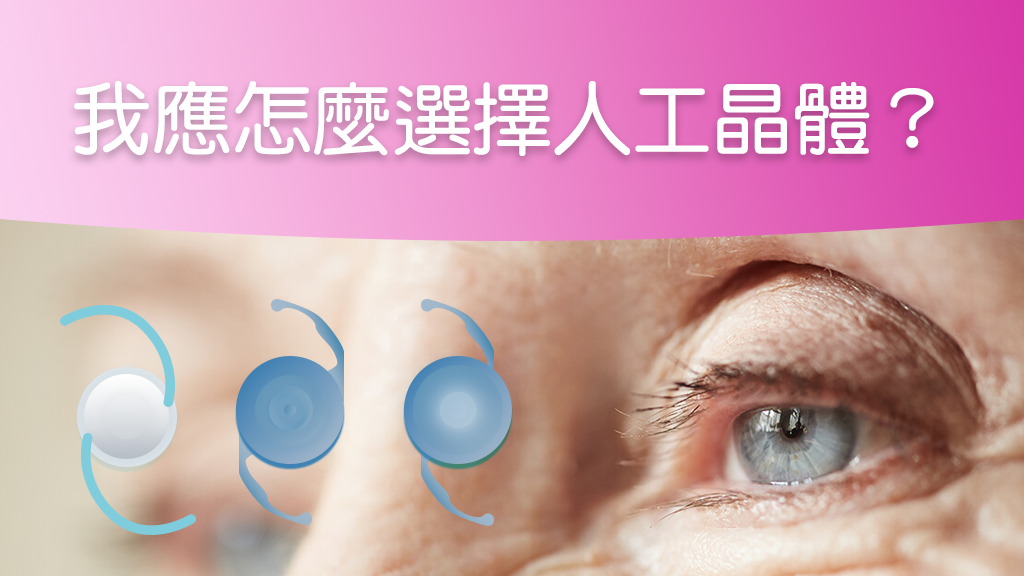
Personalized Intraocular Lens Selection
Intraocular lenses are meant to last a lifetime, so they must be customized according to individual lifestyle needs.
|
🔵
Monofocal Intraocular Lens |
🟢
Tri-Focal Intraocular Lens |
🟣
連視人工晶體 |
Instead of blindly pursuing expensive lenses, opt for a solution tailored to your needs through a thorough examination that considers your corneal topography, macular health, and visual requirements—such as whether you need night driving capabilities.
💬 Book an assessment now
Blurred vision isn't necessarily presbyopia! Get a comprehensive eye exam to seize the golden window for treatment.
Post-Cataract Surgery Care: The Key to Ensuring Success
Successful surgery is only the first step; proper postoperative care ensures optimal visual recovery.
|
👁 Eye Care and Protection Follow your doctor's instructions for applying eye drops, avoid rubbing your eyes, and wear an eye shield while sleeping. |
🏋️ Avoid strenuous exercise Avoid lifting heavy objects or engaging in impact sports for one month after surgery to prevent lens displacement. |
|
🚿 防污防感染 術後兩週內避免污水入眼,洗頭時要特別小心。 |
☀️ Adjusting to Light Initially, you may find your surroundings appear unusually bright. When going outdoors, it is recommended to wear sunglasses. |
Causes of Blurred Vision After Surgery
If your vision deteriorates some time after surgery, there's no need to worry too much. The most common cause is posterior capsule opacification (commonly known as "recurrent cataract"). This occurs due to cell proliferation on the posterior capsule. Simple laser treatment at an outpatient clinic can restore clear vision.
Can a professional inspection help you?
Many eye disease symptoms overlap, making it difficult to distinguish between cataracts, presbyopia, or macular degeneration based on self-assessment alone. A professional ophthalmic evaluation includes:
Slit-lamp examination: Direct observation of the degree of lens opacity.
Infrared Meibomian Gland Scan: Assesses for Meibomian Gland Dysfunction (MGD), as dry eye can affect the accuracy of surgical measurements.
Optical Imaging System: Precisely measures eye length and corneal curvature to calculate intraocular lens power.
If your daily life is already being affected by your vision, it's the right time for surgery.
已確診白內障或正在考慮手術?用 3 分鐘做個人工晶體配對測試,先了解自己生活習慣適合哪種方向。
Frequently Asked Questions FAQ
Conclusion: Don't wait any longer—reclaim your clear world today.
Declining vision significantly reduces quality of life and increases the risk of falls and injuries among seniors. If you notice blurred vision, dull colors, or problems that cannot be resolved by changing glasses, stop blindly trying health supplements.
Instead of fumbling in the dark, get a comprehensive eye exam. Discover the true cause of your vision loss to develop the best plan for you. Early intervention not only makes surgery safer but also helps you regain clear, vibrant vision faster.
💬 Book an assessment now
Blurred vision isn't necessarily presbyopia! Get a comprehensive eye exam to seize the golden window for treatment.