白內障要等「熟」先做得?拆解 5 大手術誤區,拖延治療隨時引發青光眼

Do cataract surgery need to be "ripe" before it can be performed? Let's break down the 5 major surgical errors, delaying treatment could lead to glaucoma at any time.

阿媽話要等白內障「熟」啲先做手術,但你有冇發現佢最近連落樓梯都怕踏空、煮飯時睇唔清調味料、甚至夜晚開車見到對頭車燈就好刺眼?你最擔心嘅係:萬一佢跌親點算?做手術會唔會好危險?幾時做先最好?

其實,等白內障「熟」先做,係幾十年前嘅舊觀念。今時今日,一旦白內障影響生活,就係最佳治療時機。拖得越耐,唔單止手術難度會增加,仲可能引發Acute Glaucoma或葡萄膜炎,造成永久視力損害。現代微創技術已經可以做到傷口細、恢復快,及早處理有助減低風險,保護視力。

白內障幾時做?唔好再等「熟」

好多人以為白內障要等到瞳孔變白、完全睇唔到先需要做手術。呢個觀念喺數十年前或許適用,但喺現代微創手術下已經過時。

正確的治療時機係:當視力模糊已經影響到你嘅日常生活。

例如:你開始睇唔清藥物標籤、落樓梯怕踏空、甚至煮食時睇唔清調味料。如果因為視力問題導致跌倒受傷,後果可能比白內障本身更嚴重。現代醫學建議,只要白內障影響生活,且身體狀況許可,便可考慮手術,無需等待「成熟」。

點解唔可以再等?

過去醫生建議等白內障「熟」,係因為當時嘅手術技術需要較大傷口,手術風險較高。但隨住微創技術嘅發展,而家嘅白內障手術傷口通常只有 2-3 毫米,甚至唔需要縫針。

更重要嘅係,過熟嘅白內障會帶嚟額外風險:

  • 手術難度增加:晶狀體變硬,需要更多超聲波能量去乳化,增加角膜水腫風險
  • 併發症風險上升:膨脹嘅晶狀體可能阻塞房水排出,引發急性青光眼
  • 發炎風險:溶解嘅晶狀體物質可能引致葡萄膜炎
  • 生活質素下降:長期視力模糊影響日常活動,增加跌倒受傷風險

幾時一定要睇醫生?呢啲係警號

如果你或家人出現以下情況,應盡快求醫檢查:

視力變化嘅警號:

  1. 視力持續模糊:即使換新眼鏡都改善唔到
  2. 夜間視力變差:特別係開車時覺得對頭車燈好刺眼
  3. 顏色變淡:睇嘢好似隔住一層黃色或啡色濾鏡
  4. 複視:單眼睇嘢都見到重影
  5. 頻繁更換眼鏡度數:短時間內度數變化好大

影響日常生活嘅情況:

  • 睇電視、睇書有困難
  • 認唔到人面或睇唔清路牌
  • 落樓梯或行路時感到唔安全
  • 做精細工作(如穿針線、煮食)有困難
  • 因為視力問題而減少社交活動

記住:唔需要等到完全睇唔到先處理。一旦影響生活質素,就應該考慮治療。

💬 預約詳細眼科檢查

視力模糊影響生活?立即預約全面白內障評估

WhatsApp inquiry

拖延有咩後果?急性青光眼隨時爆發

好多人覺得白內障只係「睇唔清楚」,最多影響生活質素,但唔會有大問題。呢個諗法其實好危險。

過熟白內障可引發嘅嚴重併發症:

1. 急性青光眼(Phacomorphic Glaucoma)

當白內障發展到晚期,晶狀體會膨脹變厚。膨脹嘅晶狀體會推前虹膜,收窄甚至完全阻塞前房角(房水排出嘅通道),導致眼壓急速上升。

症狀包括:

  • 突然劇烈眼痛、頭痛
  • 視力急劇下降
  • 見到彩虹光圈
  • 噁心、嘔吐

急性青光眼係眼科急症,如果唔及時處理,可以喺幾個鐘內造成永久性視神經損傷,導致失明。

2. 晶狀體溶解性葡萄膜炎(Lens-induced Uveitis)

過熟嘅白內障,晶狀體蛋白會開始溶解,滲漏到眼內。呢啲蛋白質會引起免疫反應,導致眼內發炎。

3. 手術難度同風險大增

過熟嘅白內障會變得好硬,手術時需要使用更多超聲波能量去乳化。與其冒住呢啲風險,不如喺白內障仍然處於早中期時進行手術,安全系數會高好多。

💬 及早評估,減低風險

唔好等到出現併發症先處理,立即預約檢查

WhatsApp inquiry

深度拆解:關於白內障手術的 5 大誤區

為咗讓你或你嘅家人更安心面對治療,我哋逐一拆解坊間最常見嘅誤解:

誤區 1:白內障越熟越好做?

真相:剛好相反,過熟會增加手術風險。

誤區 2:手術過程好痛、好恐怖?

真相:局部麻醉下進行,不適感輕微。

誤區 3:年紀太大唔做得手術?

真相:年齡不係限制,健康狀況才係關鍵。

誤區 4:做完手術要長期入床休息?

真相:無需住院,復原期比想像中快。

誤區 5:傳統手術風險大,無得揀?

真相:現代技術如 FLACS 提升了手術精準度。

人工晶體選擇:唔只係「睇得返」咁簡單

好多人以為白內障手術只係「換返個清嘅鏡」,但其實現代白內障手術唔單止可以恢復視力,仲可以一併處理其他視力問題。冇一種人工晶體係「最好」,只有「最適合你」嘅選擇。建議喺手術前同Ophthalmologist詳細討論你嘅需求同期望,先可以做出最合適嘅決定。

已知有白內障,但唔確定適合哪種Artificial crystal?用 3 分鐘做個初步配對測試,幫你根據生活習慣先了解方向。

👉 Take the test now

Common questions FAQ

1. 確診白內障一定要即刻做手術嗎?

唔一定。如果視力未影響生活,可以先定期觀察。但如果視力已造成困擾,或醫生評估有併發症風險,就不應拖延。

2. 白內障手術後會復發嗎?

白內障切除後不會復發。但約有 5-10% 患者喺術後一段時間,包裹人工晶體嘅後囊膜可能會變混濁,只需門診激光治療即可解決。

3. 我有糖尿病,可以做白內障手術嗎?

可以,而且更應該定期檢查。糖尿病患者患白內障嘅風險較高,且容易出現視網膜病變。

4. 白內障手術有冇年齡限制?

白內障手術冇上限年齡限制。只要身體狀況許可,經醫生評估後,任何年齡都可以進行手術。

💬 立即預約白內障評估

為你進行全面評估,制定最適合你的治療方案

WhatsApp inquiry

Do cataract surgery need to be "ripe" before it can be performed? Let's break down the 5 major surgical errors, delaying treatment could lead to glaucoma at any time. Read More »

50 歲後睇嘢有重影?可能係白內障合併散光

最近睇字會出現重影,就算戴住眼鏡都係咁?夜晚睇街燈會見到好多條光線射出嚟,好似「孔雀開屏」咁?你可能以為係散光加深,於是去配眼鏡,但驗光師話你度數冇變,建議你諮詢眼科醫生。其實,好多 50 歲以上嘅人出現呢啲症狀,都唔係單純散光加深咁簡單,而係白內障同散光「夾埋嚟」造成。

白內障會令水晶體混濁,而當水晶體開始變形、厚度不均,就會改變光線嘅折射,令原本嘅散光問題加劇,甚至產生新嘅散光。呢個時候,就算你配一副新眼鏡,都解決唔到問題,因為根源係水晶體本身已經出咗事。好消息係,現代白內障手術有多種晶體選擇,包括特殊嘅 Toric 人工晶體,可以同時處理白內障同散光問題,令你術後視力更清晰。

點解會同時有白內障同散光?

首先要明白,散光其實好常見。散光係因為角膜或者水晶體嘅弧度唔夠圓滑,導致光線入眼後無法聚焦喺同一點,形成影像變形或者重影。

但當你去到 50 歲之後,情況可能會改變。即係話,你可能本身有少少散光,但當白內障出現,散光問題會變得更嚴重。

點樣分辨係散光定白內障?

  • 突然配新眼鏡都解決唔到問題
  • 夜晚睇燈光會見到好多條光線射出嚟
  • 光線猛嘅時候反而睇得更差
  • 睇嘢好似隔住一層霧
  • 顏色變得暗淡、偏黃

如果你發現自己有以上症狀,而且戴眼鏡都無法改善,咁你就應該考慮搵眼科醫生做詳細檢查。

Toric 人工晶體:同時處理白內障 + 散光嘅選擇

對於散光度數較深、希望術後減少對眼鏡依賴嘅患者,Toric 人工晶體係一個有效嘅方案。醫生會根據你嘅具體情況,建議最適合嘅方案。

💬 立即預約詳細檢查

睇嘢有重影?夜晚眩光?為你進行全面白內障及散光評估

WhatsApp inquiry

已知有白內障合併散光,不確定適合哪種晶體?用 3 分鐘做個初步配對測試,幫你根據生活習慣先了解方向。

👉 Take the test now

Common questions FAQ

1. Toric 晶體可以矯正幾多度散光?

現時嘅 Toric 晶體可以矯正由 75 度至 600 度嘅散光。對於大部分患者嚟講已經足夠。

2. Toric 晶體同傳統晶體價錢差幾多?

Toric 晶體嘅費用一般會比傳統單焦點晶體貴數千元,視乎晶體型號同醫療機構而定。醫生會根據你嘅散光度數、生活需要、預算等,建議最適合嘅方案。

3. 手術後散光會唔會復發?

如果 Toric 晶體植入位置準確,而且術後穩定冇移位,散光矯正效果係長期嘅。

4. Toric 晶體會唔會移位?

現代 Toric 晶體設計已經好成熟,大部分都有防旋轉設計,長期穩定。

5. 植入 Toric 晶體後,可唔可以再做激光矯視?

可以。如果術後仍然有少量殘餘散光或近視,可以考慮做激光矯視作為補充。

結語:搵出最適合你嘅方案

如果你睇嘢有重影、夜晚開車見到眩光、配新眼鏡都解決唔到問題,好可能係白內障合併散光。呢個情況唔係單純配眼鏡可以解決,亦唔會自己好轉。記住,及早檢查、準確評估,先可以制定最適合你嘅治療方案。

💬 立即預約詳細檢查

睇嘢有重影?夜晚眩光?為你進行全面白內障及散光評估

WhatsApp inquiry

50 歲後睇嘢有重影?可能係白內障合併散光 Read More »

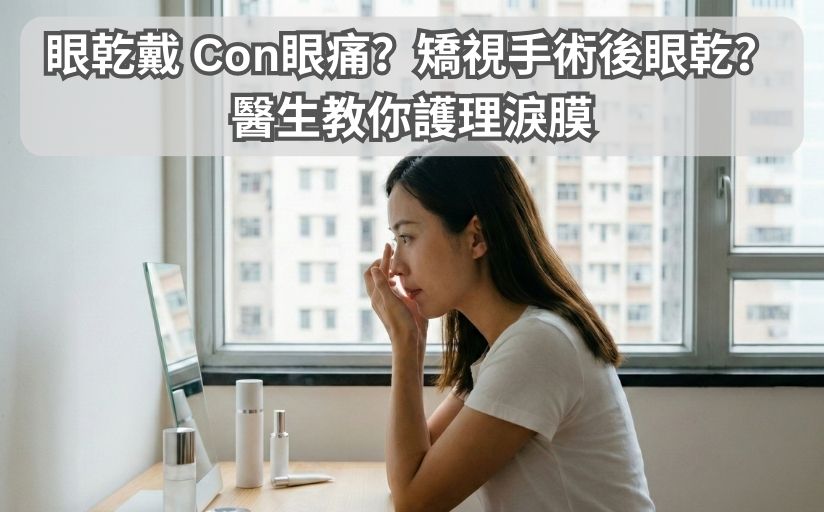
Dry eyes, wearing contact lenses? Sore eyes after refractive surgery? The doctor teaches you how to care for the tear film.

以前戴足全日 Con 都無事,而家戴兩三個鐘就眼紅、乾澀,甚至除 Con 時覺得「吸住」眼球好痛?或者你做完激光矯視手術(LASIK / SMILE)之後,視力雖然清晰咋,但眼睛卻總係有異物感,特別係朝早起身嗰陣?呢啲都係淚膜不穩定嘅警號。隱形眼鏡會吸走淚水,而矯視手術喺復原期會暫時影響神經反射,減少淚水分泌。如果你嘅瞼板腺本身功能不佳,呢啲因素就會令乾眼症惡化。好消息係,透過適當嘅治療同護理,好多人都可以改善淚膜質量,重拾戴 Con 嘅舒適,或者令矯視後嘅乾眼症狀得到緩解。

點解你會由「Con 友」變成「戴唔住 Con」?

好多人都有類似經歷:以前戴隱形眼鏡可以由朝戴到晚,舒舒服服。但唔知點解,佢一兩年開始戴唔住。可能你喺喺返到公司仲 OK,但到嗰下午就開始乾、開始紅、眼睛有好強烈嘅異物感。除 Con 嗰陣,鏡片好似吸實咗喺眼球度,要好用力先「啪」一聲揭出嚟,甚至會痛。

你可能會諗:「係唔係我對 Con 有問題?」於是你換咗另一個牌子、試咗日拋、試咗矽水凝膠,但問題仍然係度。其實,問題唔係出喺對 Con,而係你嘅淚膜。

隱形眼鏡對淚膜嘅影響

隱形眼鏡本身就好似一塊「海綿」,會吸收淚水。當你戴上 Con,淚水需要覆蓋嘅表面積增加咗,而且 Con 會不斷吸走淚水。如果你嘅淚水分泌本身已經唔夠,或者蒸發太快(因為瞼板腺功能障礙),佢 Con 就會變乾、變硬,開始磨擦角膜表面。

長期磨擦會造成:

角膜表面損傷

Con 好似砂紙咁磨擦角膜,造成微細嘅損傷(角膜上皮缺損)。你會覺得好痛、有異物感、畏光。

巨大乳突 狀結膜炎(GPC)

上眼瞼內側會長出好多細小嘅「乳突 」(papillae, 好似小粒粒咁),佢啲乳突 會令你戴 Con 好唔舒服,而且會分泌好多黏液。

角膜缺氧

雖然而家嘅 Con 透氧度已經好高,但如果淚水唔夠,氧氣傳遞都會受影響,角膜會缺氧,出現紅筋、水腫。

惡性循環

角膜受損→更加乾→更加唔舒服→更加唔想戴→但又要戴返工→繼續受損。

點解以前 OK 而家唔得?

你可能會問:「點解以前戴到,而家戴唔到?」有幾個可能原因:

年齡增長

30 歲之後,瞼板腺功能開始下降,油脂分泌減少。如果你 20 幾歲開始戴 Con,嗰時瞼板腺功能仍然好好,淚膜充足。但去到 30 幾歲,瞼板腺開始出問題,淚水蒸發加快,就開始戴唔住。

累積性損傷

長期戴 Con 會對角膜同結膜造成慢性刺激,累積幾年之後,組織開始出現變化,對 Con 嘅耐受性下降。

生活習慣改變

可能你而家嘅工作需要長時間對電腦,眨眼次數減少,令乾眼問題惡化。或者你開始化眼妝,化妝品堵塞咗瞼板腺。

荷爾蒙變化

特別係女性,懷孕、產後、更年期等荷爾蒙變化都會影響淚液分泌。

點樣知自己有冇問題?

如果你有以下情況,代表你嘅淚膜可能已經出問題:

  • 戴 Con 嘅舒適時間越來越短(以前成日得,而家幾個鐘就唔得)
  • 除 Con 時覺得「吸住」、難除、甚至會痛
  • 戴 Con 時視力會時清時矇,眨眼之後會清返少少
  • 戴 Con 嗰日晚上除咗之後,眼睛會好紅、好乾
  • 朝早戴 Con 時已經覺得唔夠滑潤、難戴入去
  • 經常要滴 Con 友專用嘅人工淚液

如果你有呢啲情況,唔好再勉強。繼續戴落去可能會造成永久性角膜損傷。你需要嘅係搵出淚膜問題嘅根源,先可以真正解決。

矯視手術後點解會眼乾?係唔永久?

好多人做激光矯視(LASIK 或 SMILE)之前都會聽講「手術後會眼乾」,但可能覺得「應該好快會好返」。但有啲人做完之後,發現乾眼問題比預期嚴重,而且持續好耐,於是開始後悔:「早知咁,就唔做喇。」

其實,矯視手術後嘅乾眼係常見嘅暫時性現象,大部分人都會隨住時間改善。但如果你術前已經有潛在嘅乾眼問題,或者術後護理唔當,就可能會拖得比較耐。

點解會眼乾?

角膜神經暫時受損

無論係 LASIK 定 SMILE,手術過程都會切開角膜組織,呢個過程會暫時切斷部分角膜神經。呢啲神經係負責感知眼睛乾燥,然後發出信號俾淚腺分泌淚水。當神經暫時失去功能,你嘅眼睛就算好乾,都可能感覺唔到,於是淚水分泌減少。

LASIK 因為需要製作角膜瓣,切斷嘅神經會較多,所以術後乾眼會較明顯。SMILE 切口較細,影響較少,但都會有一定程度嘅乾眼。

發炎反應

手術會引起短期嘅發炎反應,影響淚腺同瞼板腺嘅功能。

眨眼唔完全

術後初期,因為角膜敏感度下降,你可能會眨眼次數減少,或者眨得唔夠完全,令淚水分佈唔均。

係唔永久?

大部分人嘅術後乾眼都係暫時性。角膜神經一般會喺 3-6 個月內逐漸修復,長嘅可能需要 1 年。隨住神經修復,淚水分泌會恢復正常,乾眼症狀會逐漸改善。

但有幾種情況可能會令乾眼持續較耐:

術前已有乾眼症

如果你術前本身已經有瞼板腺功能障礙或者慢性乾眼症,只係程度輕微,你自己唔為意。手術之後,問題會被放大,而且因為神經受損,情況會雪上加霜。

深度近視

深度近視需要切除較多角膜組織,對神經嘅影響會較大,術後乾眼可能會較嚴重同持久。

術後護理唔當

如果術後唔定期用人工淚液、唔做好眼部護理,角膜表面會持續受刺激,影響修復。

環境因素

術後如果長時間對電腦、處於乾燥環境,會令症狀惡化。

好消息係,即使術後乾眼持續較耐,透過適當嘅治療(改善瞼板腺功能、淚小管栓塞等),大部分人都可以得到改善。真正永久性嘅嚴重乾眼係好罕見嘅。

點解眼藥水救唔到「Con 友」?

當你戴 Con 感到乾澀時,第一反應通常係滴 Con 友專用嘅人工淚液。頭幾次可能會有用,滴完即刻舒服返。但慢慢你會發現,效果越嚟越短暫,可能 10 分鐘後又乾返,於是你又滴,又乾,又滴……

點解眼藥水效果咁短暫?

如果你屬於油脂缺乏型乾眼症(佔 86%),你嘅問題唔係「缺水」,而係「鎖唔住水」。瞼板腺分泌嘅油脂唔足,淚水表面冇咗保護層,水份會好快蒸發。

當你戴住 Con 滴眼藥水,佢啲水份會暫時補充到 Con 表面,令佢潤滑返。但因為冇油脂保護,水份好快又蒸發咗,Con 又乾返。你滴幾多次都係一樣,因為你冇解決「鎖水」嘅問題。

就好似你屋企浴缸塞咗個塞,但個塞唔密,不斷漏水。你不斷開水龍頭加水,但水一樣會漏走,永遠儲唔滿。真正嘅解決方法係要整返好個塞(即係改善瞼板腺功能),先可以鎖住水。

長期依賴眼藥水嘅問題

防腐劑積聚

如果你用緊支裝嘅眼藥水(含防腐劑),每日滴好多次,防腐劑會積聚喺 Con 表面同角膜,反而造成刺激,令乾眼更嚴重。

沖走天然淚液

頻密滴眼藥水會沖走你自己分泌嘅天然淚液,包括入面嘅營養成份、抗菌成份等。長遠嚟講反而會削弱眼睛嘅自我保護能力。

依賴性

你會越嚟越依賴眼藥水,隨身要帶住,唔滴就會好唔舒服。呢個唔係一個健康嘅狀態。

真正嘅解決方法

如果你已經去到「無眼藥水唔得」嘅階段,你需要嘅唔係更多眼藥水,而係:

  1. 搵眼科醫生做詳細檢查,了解你嘅淚膜問題係出喺邊
  2. 評估你嘅瞼板腺功能
  3. 改善瞼板腺嘅油脂分泌(可能需要 IPL、LipiFlow 等治療)
  4. 暫時減少戴 Con,俾眼睛休息同修復
  5. 如果淚水分泌真係唔夠,考慮淚小管栓塞

當你嘅淚膜質量改善咗,你就可以減少對眼藥水嘅依賴,甚至重新戴返 Con。

💧 Want to know how severe your dry eye is?

It takes 2 minutes to complete.Dry Eye Syndrome Index (OSDI) assessment questionnaireGet a preliminary understanding of how dry eyes affect your daily life and take early control of your eye condition.

👉 Complete the OSDI Dry Eye Assessment Questionnaire immediately

矯視前後嘅淚膜管理:準備同復原同樣重要

如果你打算做激光矯視,或者喺喺做完,淚膜管理好重要。術前嘅準備同術後嘅護理,直接影響你嘅視覺質量同舒適度。

術前評估:唔係人人都喺即刻做

好多人以為,只要近視/散光度數穩定、角膜夠厚,就可以做矯視手術。但其實,淚膜健康都係好重要嘅評估項目。

術前淚膜評估應該包括:

  • 淚液分泌測試(Schirmer Test)
  • Time of tear film rupture (TBUT)
  • 瞼板腺功能評估
  • 角膜表面健康檢查
  • 眼表疾病指數問卷

如果評估發現你有中重度乾眼症,醫生可能會建議你先治療乾眼,等淚膜狀況改善咗,先做矯視手術。呢個唔係拖延你,而係為咗你嘅安全同術後效果。

點解要先治療乾眼?

  1. 術後康復較快: 健康嘅眼表可以更快愈合
  2. 視覺質量較好: 穩定嘅淚膜先有清晰嘅視力
  3. 減少併發症: 避免術後乾眼過度嚴重
  4. 提升滿意度: 唔會因為乾眼問題而後悔做咗手術

術前治療

如果你有輕度至中度乾眼症,醫生可能會建議你術前做以下治療:

改善瞼板腺功能

透過 LipiFlow 或 IPL 治療,改善油脂分泌,將淚膜調整到最佳狀態。

處方眼藥水

使用消炎眼藥水(如環孢素)減少眼表發炎,或者處方高質量嘅人工淚液。

停戴隱形眼鏡

術前至少要停戴 Con 一段時間(軟 Con 通常 1-2 星期,硬 Con 可能需要 1 個月或以上),俾角膜回復自然形狀。

日常護理

熱敷、清潔眼瞼邊緣、攝取 Omega-3 等。

術後護理

手術完成只係成功咗一半,術後護理同樣重要。

積極使用人工淚液

術後醫生通常會建議你每日滴人工淚液 4-6 次,甚至更頻密。唔好嫌麻煩,呢個係幫助角膜修復、維持淚膜穩定嘅關鍵。建議用無防腐劑嘅單支裝。

Regular check-ups

術後會有多次覆診,醫生會檢查你嘅角膜愈合情況、淚膜狀態。如果有問題,可以及早處理。

繼續瞼板腺護理

即使做完手術,都要繼續熱敷、清潔眼瞼,保持瞼板腺暢通。

避免刺激

術後初期避免化眼妝、游水、用力擠眼、處於煙霧或沙塵環境。

保持良好用眼習慣

雖然視力清晰咗,都唔好長時間對住電腦唔休息。記住 20-20-20 法則。

透過適當嘅術前準備同術後護理,大部分人嘅術後乾眼都可以得到良好控制。

💬 預約矯視術前淚膜評估

打算做 LASIK / SMILE?先評估淚膜健康,減少術後乾眼風險。

WhatsApp 查詢術前評估

點樣重拾戴 Con 嘅自由?

如果你因為乾眼問題而戴唔到 Con,唔代表你要一世都放棄。透過適當嘅治療同調整,好多人都可以重新舒適咁戴返 Con。

暫時停戴,俾眼睛休息

第一步係暫時停戴 Con,俾你嘅角膜同結膜有機會修復。持續時間視乎你嘅損傷程度,可能需要 2-4 星期,甚至更長。

呢段時間可以戴返眼鏡。雖然你可能會覺得唔方便,但呢個係必要嘅修復期。

治療瞼板腺功能障礙

如果檢查發現你有瞼板腺功能障礙(大部分 Con 友都有),你需要先改善油脂分泌。可以考慮:

LipiFlow 或 IPL 治療

深層疏通瞼板腺,改善油脂質量。當你嘅淚膜有足夠嘅油脂保護,就可以減少蒸發,令 Con 保持潤滑。

眼瞼深層清潔

如果你有化眼妝習慣,可能需要做 BlephEx 清潔,清除積聚喺眼瞼邊緣嘅化妝品殘留、蟎蟲等。

更換 Con 嘅類型

當你嘅淚膜改善咗,可以考慮重新戴 Con。但可能需要轉用其他類型:

矽水凝膠 Con

透氧度較高,對角膜較溫和。如果你之前戴普通水凝膠 Con,可以試下轉矽水凝膠。

每日即棄 Con

雖然貴啲,但每日都係用全新嘅 Con,唔會有蛋白沉澱、細菌積聚等問題,對眼睛較好。而且唔使清洗護理,減少化學物質對眼睛嘅刺激。

含水量較低嘅 Con

好多人以為含水量越高越好,但其實高含水量嘅 Con 需要吸收更多淚水嚟維持水份,對於乾眼患者反而更乾。低至中含水量嘅 Con(38-50%)可能更適合。

減少戴 Con 時間

可能你以前習慣由朝戴到晚,而家可以考慮:

  • 返工先戴,返到屋企就除咗換眼鏡
  • 只係出街、見客、做運動先戴
  • 避免喺乾燥環境(長途機、冷氣好勁嘅地方)長時間戴

使用合適嘅護理產品

選擇溫和嘅 Con 藥水

有啲 Con 藥水含有較刺激嘅防腐劑或清潔成份,可能會令你更加敏感。可以試下轉用標榜「敏感眼專用」嘅產品。

使用補油型人工淚液

如果需要喺戴 Con 時滴眼藥水,選擇補油型、而且註明「Con 友適用」嘅產品。

Regular check-ups

重新戴 Con 之後,定期返眼科覆診好重要。醫生會檢查你嘅角膜有冇損傷、Con 嘅配戴情況、淚膜狀態等。如果有問題,可以及早調整。

好多 Con 友經過適當治療之後,都可以重新舒適咁戴返 Con。關鍵係唔好勉強,搵出問題根源同埋俾眼睛足夠嘅修復時間。

淚小管栓塞:當淚水真係唔夠時

如果你做完瞼板腺治療、試過各種方法,但係檢查發現你嘅問題係「水液缺乏型」——即係真係淚水分泌唔夠——咁可以考慮淚小管栓塞(Punctal Plugs)。

乜嘢係淚小管栓塞?

我哋嘅淚水係透過淚小管(位於內眼角)排走。淚小管栓塞就係用一個好細小嘅「塞子」塞住淚小管嘅開口,令淚水無法排走,留喺眼球表面。

就好似浴缸嘅去水位,正常情況下水會不斷排走。但如果你浴缸嘅水唔夠(淚水分泌唔夠),你就可以塞住去水位(淚小管栓塞),令有限嘅水可以留喺浴缸入面。

Who is it suitable for?

  • 經檢查確認係水液缺乏型乾眼症
  • 試過瞼板腺治療但仍然好乾(因為瞼板腺冇問題,問題係淚水真係唔夠)
  • 矯視手術後淚水分泌明顯減少
  • 自身免疫系統疾病(如乾燥症)引致淚液分泌不足
  • 某啲藥物副作用導致淚水減少

過程係點?

淚小管栓塞係一個好簡單嘅門診程序:

  1. 醫生會先滴麻醉眼藥水
  2. 用好細嘅工具將栓塞放入淚小管開口
  3. 整個過程只需幾分鐘
  4. 不適感好輕微
  5. 當日可以返工、正常活動

栓塞有幾種

暫時性栓塞(膠原蛋白栓塞)

由可吸收嘅膠原蛋白製成,會喺 1-3 個月內自然溶解。通常會先試暫時性栓塞,睇下效果如何。如果效果好,先考慮長期栓塞。

長期栓塞(矽膠栓塞)

由矽膠製成,可以長期留喺淚小管入面。如果將來唔需要或者有問題,醫生可以輕易移除。

效果同好處

  • 淚水可以留喺眼球表面更長時間
  • 減少對人工淚液嘅依賴
  • 改善眼睛舒適度
  • 對於矯視手術後嘅患者,可以幫助術後初期嘅乾眼
  • 對於 Con 友,可以提供更穩定嘅淚膜

有冇副作用?

大部分人都唔會有問題,但少數情況下可能會:

  • 輕微異物感(通常幾日內適應)
  • 栓塞跌落(可以再放過)
  • 眼睛流眼水(如果淚水太多,可以移除栓塞)
  • 淚小管發炎(罕見)

整體嚟講,淚小管栓塞係一個安全、有效、可逆嘅治療方法。

💬 預約 Con 友 / 矯視後乾眼評估

戴 Con 唔舒服?矯視後持續眼乾?眼科醫生為你評估淚膜健康WhatsApp 查詢乾眼治療

Common questions FAQ

1. 我做咗矯視手術一年,但仍然好乾,係唔永久?

大部分人嘅術後乾眼會喺 3-6 個月內改善,但有啲人需要較長時間(1-2 年)。如果一年後仍然好乾,建議做詳細檢查。可能係瞼板腺功能障礙、或者淚水分泌真係唔夠。呢啲都係可以治療嘅,唔係永久。

2. 淚小管栓塞會唔會好痛?要唔要打針?

唔會痛,亦唔使打針。只係滴麻醉眼藥水,過程只有輕微嘅壓力感,幾分鐘就完成。好多患者都話「比預期簡單好多」。

3. 我而家戴唔到 Con,係唔代表我永遠都戴唔返?

唔係。好多人經過適當治療(改善瞼板腺功能、暫時休息、轉用其他 Con 類型)之後,都可以重新舒適咁戴返 Con。關鍵係搵出問題根源同埋俾眼睛足夠嘅修復時間。

4. 我打算做 LASIK,但擔心術後會好乾,係唔唔應該做?

唔係。術後乾眼雖然常見,但大部分都係暫時性,而且可以透過適當護理改善。重要嘅係術前要做詳細評估,如果有乾眼問題要先處理。選擇有經驗嘅醫生、做好術前準備同術後護理,大部分人都可以有良好嘅術後體驗。

5. 我可以戴住 Con 滴眼藥水嗎?

可以,但一定要用註明「隱形眼鏡配戴時適用」嘅眼藥水。普通眼藥水可能含有防腐劑或其他成份會被 Con 吸收,積聚喺 Con 入面,反而傷害角膜。而且最好選無防腐劑嘅單支裝。

6. 彩妝會唔會影響乾眼?我應該點化妝?

會。眼線液、睫毛膏如果進入眼睛或者堵塞瞼板腺開口,會加重乾眼同瞼板腺功能障礙。建議:

  • 眼線唔好畫入眼瞼邊緣(睫毛根部)
  • 徹底卸妝,用專門嘅眼部卸妝產品
  • 如果乾眼嚴重,暫時減少化眼妝
  • 定期做眼瞼深層清潔

7. 做完瞼板腺治療後,幾耐可以戴返 Con?

視乎你嘅恢復情況。一般建議治療後至少 1-2 星期,等瞼板腺功能改善、眼瞼消腫、淚膜穩定咗,先重新戴 Con。最好問返醫生意見,唔好自己心急戴返。

8. 我術後滴咗好多人工淚液,但仍然覺得乾,點算?

可能你用緊嘅係純補水型人工淚液,但你嘅問題係油脂唔足。可以試下轉用補油型人工淚液,或者做瞼板腺治療。如果試過都唔得,可能需要考慮淚小管栓塞。建議同醫生詳細討論。


結語:唔好俾淚膜問題限制你嘅生活

無論係為咗美觀戴隱形眼鏡,定係為咗方便做矯視手術,穩定嘅淚膜都係擁有清晰舒適視覺嘅基礎。

好多人因為乾眼問題而放棄咗戴 Con,或者後悔做咗矯視手術。但其實,呢啲問題大部分都係可以改善嘅。關鍵係唔好忽視眼睛發出嘅警號,及早搵專業眼科醫生做詳細評估。

戴 Con 戴唔住,唔係因為你「唔啱戴 Con」,而係你嘅淚膜需要護理。矯視手術後眼乾,唔係因為「手術失敗」,而係需要時間同適當護理去修復。

透過現代嘅治療方法——改善瞼板腺功能、淚小管栓塞、選擇合適嘅 Con 類型——好多人都可以重拾舒適嘅配戴體驗,或者令術後嘅乾眼得到緩解。

唔好因為擔心、因為唔了解,就放棄或者忍受。由專業醫生為你把關,確保你嘅眼睛有足夠嘅「滋潤」去應對生活嘅挑戰。

如果你戴 Con 唔舒服、矯視手術後眼乾、或者考慮做矯視但擔心乾眼問題,歡迎聯絡我們進行詳細淚膜分析。專業眼科醫生會為你評估淚膜健康、瞼板腺功能,制定最適合你嘅護理或治療方案。唔好再俾乾眼問題限制你嘅生活選擇。

💬 立即預約淚膜分析

戴 Con 唔舒服?矯視後眼乾?擔心乾眼問題?眼科醫生為你評估淚膜健康

WhatsApp details inquiry

Dry eyes, wearing contact lenses? Sore eyes after refractive surgery? The doctor teaches you how to care for the tear film. Read More »

Dry eyes after SMILE surgery? Even moisturizing eye drops won't help? IPL or LipiFlow can help you

做完 SMILE 微笑矯視,視力終於清晰,唔使再戴眼鏡。但點解雙眼成日乾到唔舒服?朝早起身眼睛黏實、對住電腦一陣就覺得乾澀、夜晚瞓覺前更加灼熱刺痛。醫生叫你多滴人工淚液,你由每日滴 4 次變成滴 10 次,但效果越來越短暫,甚至開始懷疑:係咪手術做錯咗?其實,SMILE 手術後出現乾眼係好常見嘅現象,但如果你發現滋潤藥水越滴越無效,問題可能唔係出喺「水份不足」,而係你嘅瞼板腺功能出咗問題。當油脂層無法有效鎖住水份,你滴幾多人工淚液都只係短暫舒緩。好消息係,針對呢種「缺油型」乾眼症,現代眼科有 IPL 強脈衝光同 LipiFlow 熱量脈動等有效治療方案,可以從根本改善淚膜質量,令你重拾舒適嘅視覺體驗。

點解 SMILE 手術後會眼乾?

SMILE(Small Incision Lenticule Extraction,微笑激光矯視)係目前最先進嘅屈光矯視手術之一。相比傳統 LASIK,SMILE 嘅切口更細(約 2-4mm),對角膜嘅創傷較少,理論上術後乾眼應該會較輕微。

但點解咁多人做完 SMILE 之後,仍然會出現明顯嘅乾眼症狀?

角膜神經暫時受損

無論 SMILE 嘅切口幾細,手術過程始終需要切開角膜組織、取出一片透鏡狀嘅角膜基質。呢個過程會切斷部分角膜神經纖維。

呢啲神經纖維係負責感知眼睛乾澀,然後發出信號俾淚腺分泌淚水。當神經暫時失去功能,你嘅眼睛就算好乾,你都可能感覺唔到,或者感覺減弱,於是淚水分泌會減少。

呢個情況通常係暫時性。角膜神經一般會喺 3-6 個月內逐漸修復,長嘅可能需要 1 年。隨住神經修復,淚水分泌會逐漸恢復正常。

手術引起嘅發炎反應

手術後嘅頭幾星期,眼睛會有輕微嘅發炎反應。呢種發炎會影響淚腺同瞼板腺嘅功能,導致淚水分泌減少、油脂質量下降。

大部分患者嘅發炎會喺術後 1-2 個月內逐漸消退,但如果你本身有慢性瞼緣炎或者其他眼表問題,發炎可能會持續較耐。

眨眼次數減少

術後初期,因為角膜敏感度暫時下降,你可能會不自覺地眨眼次數減少,或者眨得唔夠完全。眨眼係幫助淚水均勻分佈喺眼球表面、同時刺激瞼板腺分泌油脂嘅重要動作。眨眼減少會令淚膜更加不穩定。

點解有啲人特別嚴重?

大部分人嘅術後乾眼會喺 3-6 個月內明顯改善。但有啲人會持續較耐,甚至去到 1-2 年都仍然好乾。呢啲人通常有以下特點:

  • 術前已有隱性乾眼症(特別係瞼板腺功能障礙)
  • 深度近視(需要切除較多角膜組織,神經受損較多)
  • 年齡較大(淚腺同瞼板腺功能本身已經下降)
  • 長期戴隱形眼鏡(角膜同結膜已有慢性刺激)
  • 術後護理不當(復定期用人工淚液、長時間對電腦)

如果你屬於呢幾類人,術後乾眼可能會比較明顯同持久,需要更積極嘅管理。

點解滋潤藥水幫唔到?

術後醫生通常會建議你每日滴人工淚液 4-6 次,甚至更頻密。頭幾日你可能覺得有用,滴完即刻舒服返。但慢慢你會發現:

  • 滴完 10-15 分鐘又乾返
  • 需要越滴越密
  • 由每日 4 次變成 8 次、10 次
  • 甚至隨身要帶住,隨時滴
  • 但效果越來越短暫

你可能會開始懷疑:「係咪嗰隻人工淚液唔夠好?」於是你又試第二隻、第三隻,貴嘅平嘅都試過,但結果都係一樣。

問題唔係出喺邊隻人工淚液,而係你嘅問題根本唔係「缺水」,而係「鎖唔住水」。

淚膜嘅三層結構

要了解點解滋潤藥水無效,首先要了解淚膜嘅結構。健康嘅淚膜有三層:

1. 油脂層(最外層)

由瞼板腺分泌,覆蓋喺淚水表面,防止水份蒸發。呢層好薄,但好重要。如果油脂層不足或者質量差,淚水會喺幾秒鐘內就蒸發曬。

2. 水液層(中間層)

由淚腺分泌,佔淚膜嘅大部分。提供眼球所需嘅水份同營養。

3. 黏液層(最內層)

由結膜杯狀細胞分泌,幫助淚水附著喺角膜表面,令淚膜更穩定。

大部分人係「缺油」而非「缺水」

醫學研究顯示,大部分乾眼症患者係屬於「蒸發性乾眼症」,即係油脂層不足,導致淚水蒸發過快。只有少部分人係真正嘅「水液缺乏型」。

當你嘅瞼板腺功能不佳(可能係術前已經有、或者術後惡化),油脂分泌不足或者質量差,淚水表面就慘缺保護層。就算你不斷滴人工淚液補水,水份都會好快蒸發,就好似一個漏水嘅水桶,你不斷加水都儲唔滿。

SMILE 手術點樣影響瞼板腺?

SMILE 手術本身唔會直接損傷瞼板腺,但會間接影響:

1. 發炎反應

術後嘅輕微發炎會影響瞼板腺嘅分泌功能,令油脂質量下降。

2. 神經反射減弱

角膜神經受損會影響淚液分泌反射,同時亦會影響瞼板腺嘅分泌反射。

3. 眨眼減少

眨眼係刺激瞼板腺排出油脂嘅重要動作。術後眨眼減少會令油脂無法有效排出,積聚喺腺體入面。

4. 放大術前嘅問題

如果你術前已經有輕微嘅瞼板腺功能障礙(自己可能唔為意),手術後嘅種種因素會令問題放大、變得明顯。

點樣知自己係「缺油」定「缺水」?

你可以留意以下線索:

缺油型嘅特徵:

  • 滴完人工淚液好快又乾返(10-15 分鐘)
  • 眼眶邊緣有時會有油脂粒
  • 朝早起身眼屎特別多
  • 有時會流眼水(反射性流淚)
  • 眼睛有灼熱感

缺水型嘅特徵:

  • 滴完人工淚液會舒服較長時間
  • 眼睛好乾但唔會有太多分泌物
  • 可能合併有自身免疫系統疾病

但最準確嘅方法,係搵眼科醫生做詳細檢查,包括紅外瞼板腺成像(Meibography),先可以確定你嘅淚膜問題係出喺邊。

術前已有嘅隱性乾眼問題

好多人做 SMILE 之前,根本唔知自己已經有輕微嘅乾眼症,特別係瞼板腺功能障礙。點解會係咁?

長期戴隱形眼鏡會掩蓋症狀

如果你術前係長期 Con 友,隱形眼鏡本身會吸收淚水、減少眼球表面嘅氧氣供應、刺激角膜同結膜。呢啲慢性刺激會令你嘅瞼板腺功能逐漸下降。

但因為你每日都戴 Con,可能已經習慣咗少少乾澀嘅感覺,覺得「正常」。或者你會滴 Con 友專用嘅潤滑液,掩蓋咗乾眼嘅症狀。

當你做完 SMILE、唔使再戴 Con,原本俾 Con 掩蓋咗嘅瞼板腺問題就會浮現。再加上手術嘅影響,症狀就會變得好明顯。

術前評估可能唔夠全面

傳統嘅 LASIK / SMILE 術前評估,主要集中喺角膜厚度、屈光度數、眼壓等。但唔係每間診所都會做詳細嘅淚膜分析同瞼板腺檢查。

如果術前冇做紅外瞼板腺成像、淚膜破裂時間測試、瞼板腺分泌評估等,就好難發現輕微嘅乾眼問題。結果就係:手術係成功嘅,但術後乾眼好嚴重,影響生活質素。

年齡因素

30 歲之後,瞼板腺功能會逐漸下降。如果你係喺 30 幾歲或以上先做 SMILE,就算術前冇明顯症狀,你嘅瞼板腺功能可能已經開始走下坡。手術後嘅額外負擔會令問題顯現。

生活習慣

  • 長時間對電腦、手機:眨眼次數減少,瞼板腺油脂無法有效排出
  • 化眼妝:眼線、睫毛膏會堵塞瞼板腺開口
  • 唔夠徹底卸妝:化妝品殘留會積聚喺眼眶邊緣
  • 睡眠不足:影響淚腺同瞼板腺嘅分泌功能
  • 飲食不均衡:缺乏 Omega-3 會影響油脂質量

呢啲因素會喺術前已經令瞼板腺功能下降,只係程度輕微,未必有明顯症狀。但術後就會被放大。

💧 Want to know how severe your dry eye is?

It takes 2 minutes to complete.Dry Eye Syndrome Index (OSDI) assessment questionnaireGet a preliminary understanding of how dry eyes affect your daily life and take early control of your eye condition.

👉 Complete the OSDI Dry Eye Assessment Questionnaire immediately

IPL 同 LipiFlow:針對「缺油」而非「缺水」

如果你做完 SMILE 之後,發現滋潤藥水越滴越無效,而檢查又發現你係屬於「缺油型」乾眼症(瞼板腺功能障礙),話你需要嘅唔係更多人工淚液,而係針對瞼板腺嘅治療。

目前有兩種備受認可、臨床證實有效嘅治療方案:IPL 強脈衝光同 LipiFlow 熱量脈動。

IPL 強脈衝光:消炎 + 疏通

IPL(Intense Pulsed Light)強脈衝光本來係皮膚科用嚟治療酒糟鼻嘅技術,後來醫學界發現佢對乾眼症都有顯著療效。

How does it work?

IPL 利用特定波長嘅光能(500-1200 nm),作用於眼眶周圍嘅皮膚。光能會產生以下效果:

  1. 封閉異常微血管:當你有慢性瞼緣炎,眼眶周圍會出現好多異常增生嘅微血管,呢啲血管會釋放炎症因子。IPL 可以封閉呢啲異常血管,切斷炎症來源。
  2. 軟化瞼板腺油脂:光能產生嘅熱力可以傳導到瞼板腺,幫助軟化硬化咗嘅油脂,令佢哋更容易排出。
  3. 殺滅蠕形蟎:IPL can kill the demodex mites that live at the base of the eyelashes and reduce their irritation of the eyelid glands.
  4. 抗菌作用:光能可以減少眼眶表面嘅細菌數量。

Who is it suitable for?

IPL 特別適合:

  • 合併有瞼緣炎(眼眶邊緣紅腫、發炎)
  • SMILE 術後持續乾眼超過 6 個月
  • 檢查發現有明顯嘅異常血管增生
  • 眼眶油脂分泌旺盛、質量差

Treatment schedule

通常需要進行 3-4 次為一個完整療程,每次間隔 2-4 星期。每次治療大約 10-15 分鐘,過程舒適,完成後可以即刻返工。

Results

完成整個療程後,效果通常可以維持 6-12 個月。好多患者會發現:

  • 眼睛唔再咁灼熱
  • 滴人工淚液嘅次數明顯減少
  • 朝早起身唔會再黏實
  • 視力更加穩定清晰

LipiFlow 熱量脈動:深層疏通瞼板腺

LipiFlow 係專門針對瞼板腺功能障礙而設計嘅治療系統,獲美國 FDA 認證。佢嘅設計理念係「由內而外」咁深層疏通瞼板腺。

How does it work?

LipiFlow 使用一個特製嘅治療探頭,會放喺你嘅眼眶內側。呢個探頭有兩個功能:

  1. 控溫加熱:The probe provides precise temperature control heating from the inside out (approx. 42.5 degrees), directly heating the eyelid glands. This temperature is calculated scientifically to soften and soften the hardened oil, but it does not damage the tissue.
  2. 規律脈動按摩:同時,探頭會進行規律嘅脈動按摩,好似「擠牙膏」咁,將軟化咗嘅油脂從腺體深處擠出嚟。

整個過程會持續 12 分鐘。呢 12 分鐘入面,你嘅瞼板腺會得到深層嘅疏通。

Who is it suitable for?

LipiFlow 特別適合:

  • 瞼板腺明顯堵塞(紅外成像顯示腺體堵塞但未萎縮)
  • SMILE 術後持續乾眼,主要係油脂問題
  • 希望單次性進行深層疏通
  • There isn't time to do multiple treatments.

Treatment schedule

LipiFlow 通常單次治療已經可以見到效果。整個治療過程只需 12 分鐘,完成後可以即刻返工。

Results

效果一般可以維持 9 個月至 3 年,視乎個人保養同生活習慣。好多患者做完會話:

  • 終於可以減少對人工淚液嘅依賴
  • 眼睛舒服好多
  • 視力更加穩定
  • 生活質素明顯提升

點樣揀?邊種適合你?

好多人會問:「我應該揀 IPL 定 LipiFlow?」其實冇所謂「最好」,只有「最適合」。醫生會根據你嘅詳細檢查結果幫你決定:

如果你主要係發炎問題:

  • 眼眶邊緣明顯紅腫
  • 有明顯嘅異常血管
  • 可能合併有皮膚敏感、酒糟鼻

→ 建議 IPL

如果你主要係堵塞問題:

  • 瞼板腺成像顯示明顯堵塞
  • 擠壓時油脂好難排出、好濃稠
  • The inflammation indicator is not high.

→ 建議 LipiFlow

如果係混合型:

好多患者其實係混合型,既有發炎又有堵塞。呢種情況下,醫生可能會建議:

  • 先做 IPL 消炎
  • 然後做 LipiFlow 疏通
  • 配合眼眶深層清潔(BlephEx)
  • 加上處方藥物

Combination therapy can target various aspects of the problem to achieve the best results.

💬 預約 SMILE 術後乾眼評估

SMILE術後持續乾眼?滋潤藥水無效?為你評估瞼板腺功能,提供 IPL 或 LipiFlow 建議

WhatsApp 查詢術後乾眼問題

SMILE 術前術後點樣管理淚膜?

如果你打算做 SMILE,或者啱啱做完,以下係淚膜管理嘅最佳實踐。良好嘅術前準備同術後護理,可以大大減少乾眼問題。

術前準備:唔好急住做

好多人一心想擺脫眼鏡,會好急住做手術。但其實,充分嘅術前準備好重要。

建議做詳細嘅淚膜評估:

除咗基本嘅角膜厚度、屈光度數檢查,亦應該做:

  • 淚膜破裂時間(TBUT)測試
  • Infrared eyelid gland imaging (Meibography)
  • 瞼板腺分泌評估
  • Eye Disease Index (OSDI) Questionnaire
  • Inflammatory marker test (MMP-9)

呢啲檢查可以幫助醫生評估你術前嘅淚膜健康,判斷你係咪需要先處理乾眼問題。

如果發現有輕度至中度乾眼症:

醫生可能會建議你:

  1. 先做瞼板腺治療(IPL / LipiFlow)
  2. 使用處方消炎眼藥水 2-4 星期
  3. 停戴隱形眼鏡足夠時間(軟 Con 至少 1-2 星期,硬 Con 可能需要 1 個月)
  4. 改善日常護理(熱敷、眼眶清潔、攝取 Omega-3)
  5. 等淚膜狀況改善咗,先做手術

呢個唔係拖延,而係為咗你術後嘅視覺質素同舒適度。

點解要先處理乾眼?

  • 術後康復較快
  • 視覺質量較好
  • 減少術後乾眼嘅嚴重程度
  • 提升整體滿意度

術後即時護理(頭 1-3 個月)

積極使用人工淚液

術後醫生會建議你每日滴人工淚液 4-6 次,甚至更頻密。但要注意:

  • 選用無防腐劑嘅單支裝
  • 如果有補油成分會更好
  • 定時定候滴,唔好等到好乾先滴
  • 瞓覺前可以用凝膠型

Regular check-ups

術後會有多次覆診,醫生會檢查角膜癒合情況、視力恢復、淚膜狀態。如果乾眼問題比預期嚴重,醫生可能會:

  • Prescription anti-inflammatory eye drops
  • 建議做眼眶深層清潔
  • 考慮淚小管栓塞(暫時堵住淚小管,令淚水留喺眼球表面)

繼續瞼板腺護理

即使做完手術,都要繼續:

  • 每日熱敷 1-2 次(每次 10-15 分鐘)
  • 輕輕按摩眼眶,幫助油脂排出
  • 清潔眼眶邊緣

保持良好用眼習慣

  • 遵守 20-20-20 法則(每 20 分鐘望 20 呎外 20 秒)
  • 確保眨眼完全
  • 避免長時間對住冷氣出風口
  • 睡眠充足
  • 多攝取 Omega-3(深海魚、亞麻籽)

術後長期管理(3 個月後)

評估乾眼狀況

如果術後 3-6 個月,你嘅乾眼症狀仍然明顯,建議做詳細嘅淚膜分析:

  • 重新做紅外瞼板腺成像
  • 評估瞼板腺功能
  • 檢測發炎指標

考慮進階治療

如果檢查發現瞼板腺功能不佳,而你已經試過幾個月保守治療(人工淚液、熱敷)都冇明顯改善,就可以考慮:

  • IPL 或 LipiFlow 治療
  • 處方藥物(如環孢素 Cyclosporine)
  • 淚小管栓塞

Management expectations

重要嘅係要明白:SMILE 術後嘅乾眼大部分都會改善,但需要時間。有啲人 3 個月就明顯好轉,有啲人可能需要 6 個月、1 年,甚至更長。

目標唔係「完全冇乾眼」,而係「控制症狀、提升生活質素、防止惡化」。

💬 預約 SMILE 術前淚膜評估

打算做 SMILE?先評估淚膜健康,減少術後乾眼風險。為你評估準備方案

WhatsApp 查詢評估

Common questions FAQ

1. SMILE 術後乾眼係咪永久?

大部分人嘅術後乾眼都係暫時性。角膜神經一般會喺 3-6 個月至 1 年內修復,隨住神經修復,淚水分泌會恢復正常。但如果你本身有瞼板腺功能障礙,就需要額外治療。真正永久性嘅嚴重乾眼係好罕見。

2. 我術後已經 1 年,仍然好乾,點算?

建議搵眼科醫生做詳細淚膜分析,包括紅外瞼板腺成像。如果發現係瞼板腺功能障礙,可以考慮 IPL 或 LipiFlow 治療。呢啲都係可以改善嘅,唔好放棄。

3. IPL 同 LipiFlow 會唔會痛?

兩種治療都唔會痛。IPL 嘅感覺好似「橡筋輕輕彈一下」,有少少溫熱感,但完全可以接受。LipiFlow 會滴麻醉眼藥水,過程中只會有溫暖感同輕微壓力,好多人形容「好似做 spa 咁」。

4. 做完治療後幾耐會見效?

IPL 通常需要完成 3-4 次療程先見到最佳效果,即係大約 2-3 個月。LipiFlow 單次治療已經可以見效,好多患者喺 1-2 星期內已經感覺到改善。

5. 治療效果可以維持幾耐?

IPL 療程完成後,效果一般可以維持 6-12 個月。LipiFlow 效果一般可以維持 9 個月至 3 年。持續時間視乎個人保養、生活習慣等。如果效果減退,可以再做補充治療。

6. 我術前冇乾眼,點解術後會咁嚴重?

你可能術前已經有輕微嘅瞼板腺功能障礙,只係自己唔為意。或者你係長期 Con 友,隱形眼鏡掩蓋咗症狀。手術後嘅額外負擔會令問題顯現。建議做詳細檢查,揾出根源。

7. 我可以同時做 IPL 同 LipiFlow 嗎?

可以。有啲患者係混合型(既有發炎又有堵塞),醫生可能會建議先做 IPL 消炎,然後做 LipiFlow 疏通。組合治療可以針對唔同層面嘅問題,效果可能更好。

8. 如果我打算做 SMILE,應該點樣準備?

建議術前做詳細嘅淚膜評估,包括瞼板腺檢查。如果發現有乾眼問題,先處理好先做手術。手術前至少 1-2 星期停戴隱形眼鏡。選擇有經驗嘅醫生、做好術前準備同術後護理,大部分人都可以有良好嘅術後體驗。


結語:唔好俾術後乾眼影響你嘅矯視體驗

做完 SMILE 微笑矯視,終於可以擺脫眼鏡,係好多人嘅夢想。但如果術後乾眼問題持續困擾你,甚至令你後悔做咗手術,就好可惜。

其實,大部分術後乾眼都係可以改善嘅。關鍵係要搞清楚你嘅問題係出喺邊:

  • 如果係神經未完全修復:俾多啲時間,繼續做好日常護理,大部分人都會逐漸好轉。
  • 如果係瞼板腺功能障礙:單靠滋潤藥水係無效嘅,你需要針對「缺油」而非「缺水」嘅治療。IPL 同 LipiFlow 都係經過大量臨床驗證、安全有效嘅方案。
  • 如果係混合型:可能需要組合治療,配合藥物同日常護理。

重要嘅係唔好放棄,亦唔好盲目咁不斷滴人工淚液。透過專業檢查,揾出乾眼嘅真正成因,然後用最適合你嘅方法處理,你可以重拾舒適嘅視覺體驗,真正享受到 SMILE 手術帶俾你嘅清晰視力。

唔好因為術後乾眼而後悔做咗手術。呢個問題係可以解決嘅。由專業眼科醫生為你評估,制定個人化嘅治療方案,令你嘅矯視體驗更加完美。

💬 立即預約淚膜分析

SMILE術後持續乾眼?打算做矯視但擔心乾眼?為你評估瞼板腺功能,制定最適合方案

WhatsApp details inquiry

Dry eyes after SMILE surgery? Even moisturizing eye drops won't help? IPL or LipiFlow can help you Read More »

Is IPL the right treatment for you? The doctor tells you: Which type of dry eye condition is right for you

I've tried applying heat packs, taking fish oil supplements, and using various eye drops, but the dry eye symptoms persist? My eyes are glued shut in the morning, and when I look at the screen during the day, my eyes burn and I can't close them at night. I've tried conservative treatments for several months without any noticeable improvement, and I'm starting to wonder if there's no hope.In fact, when dry eye develops to moderate to severe severity or is accompanied by inflammation of the eyelid margins, home care alone often has limited effectiveness. Modern ophthalmology has evolved from a simple “supplementation” to “repairing” and “clearing.” For eyelid gland dysfunction (MGD), there are currently two well-recognized instrument treatment options: IPL intense pulsed light and LipiFlow thermal pulsations. But you might ask: Which one is right for me? Is there any difference? Will it be painful? Today, we will go into detail to explain them to you.

Why is conservative treatment ineffective?

If you have tried conservative treatments such as eye drops, heat packs, and fish oil for several months but the symptoms still haven't improved significantly, you may wonder: "Is it because I'm not doing enough? Or is my dry eye condition particularly severe?"

Actually, conservative treatment is ineffective, usually because your problem is no longer "surface-level" but has reached a "structural" level:

Mild vs Moderate vs Severe Dry Eye Syndrome

Dry eye syndrome can be classified according to severity into:

Mild

Symptoms occasionally appear; the eyes may become dry at times, but it is not persistent. The eyelid gland function is slightly reduced, but most of the glands remain healthy. In this stage, conservative treatments such as heat therapy, eye drops, and improving lifestyle habits are usually effective.

Moderate

Symptoms occur frequently; the eyes become dry every day, affecting daily life. The meibomian glands begin to appear noticeably plugged, and some glands shrink. Conservative treatment may provide some relief, but the effect is not significant or short-lived.

Severe

The symptoms persist and severely affect the quality of life. The palpebral gland shrinks or disappears significantly, possibly accompanied by corneal damage. Conservative treatment alone is largely ineffective.

If you have tried conservative treatment for several months and it hasn't improved, you are very likely to be in the moderate or severe stage. At this point, you need more aggressive treatment.

Severe blockage or atrophy of the palpebral gland

When the oil inside the meibomian glands becomes persistently blocked, it becomes very thick and even hardened, like "toothpaste that has dried out after squeezing it into a tube." The temperature and time of home heat therapy may not be enough to soften this hardened oil, and using eye drops alone may not reach the deeper glands.

If the sebaceous glands remain inactive for too long, they may begin to shrink and even lose their function permanently. Infrared imaging of the sebaceous glands reveals that the shrinking glands become shorter, thinner, or even completely disappear. At this stage, you need a specialized instrument to deeply unclog the glands.

Chronic inflammation not treated

Many patients with moderate to severe dry eye syndrome also have chronic eyelid inflammation (inflammation of the edge of the eyelids). You may notice the edges of the eyelids are red and sometimes crusty, and there is a particularly thick layer of mucus.

This chronic inflammation continues to irritate the eyelid glands, causing them to produce poorer-quality oil and more easily become clogged. The clogging also exacerbates the inflammation, creating a vicious cycle. Using only heat therapy and eye drops is unlikely to break this cycle.

Worm mite or bacterial problems

Some people have excessive growth of Demodex mites in their eyelids, or bacteria accumulate and form a "biomembrane." These parasites and bacteria clog the eyelid glands and cause inflammation.

Cleaning your home thoroughly can be difficult to eliminate these problems; it requires professional deep cleaning or specific treatments.

If you fall into any of the above categories, conservative treatment alone is not enough. You need specialized equipment to deep clean, reduce inflammation, and repair the damage.

IPL Intense Pulsed Light: Targeted deep-level treatment for inflammation

IPL (Intense Pulsed Light) is a technology originally used in dermatology to treat rosacea; later, the medical community discovered that it has significant therapeutic effects on dry eye syndrome, especially in patients with conjunctivitis.

How does it work?

IPL uses light energy of specific wavelengths (usually 500-1200 nm) to act on the skin around the eyelids. This light energy produces the following effects:

1. Abnormal microvascular occlusion

When you have chronic eyelid inflammation, there are many abnormal proliferating capillaries around the eyelids. These capillaries release inflammatory factors and continuously attack the eyelid glands. The thermal effect of IPL can seal these abnormal capillaries and cut off the source of inflammation.

2. Oily secretion from the eyelid gland

The thermal energy produced by light can be transmitted to the meibomian glands, helping to soften the hardened oils inside, making them easier to expel.

3. Kill the tapeworm mites

IPL can kill the demodex mites that live at the base of the eyelashes and reduce their irritation of the eyelid glands.

4. Antimicrobial effect

Light energy can reduce the number of bacteria on the eyelid surface, reducing the risk of infection.

Who is it suitable for?

IPL is particularly suitable for the following situations:

  • The fusion has conjunctival inflammation (redness and inflammation at the edge of the eyelids).
  • Has rosacea (acne) or skin sensitivity problems
  • The eyelids secrete a lot of oil, causing frequent eye infections.
  • Suspected of having a tapeworm problem
  • It is a type of dry eye disease characterized by inflammation.

Treatment schedule

IPL usually requires 3-4 sessions for a complete treatment, spaced 2-4 weeks apart. Each treatment lasts about 10-15 minutes. After completing the entire treatment, the results can usually last for 6-12 months, depending on individual care.

Features

  • ✅ Has anti-inflammatory effects, which can address the underlying problem
  • ✅ The treatment time is short and the process is comfortable.
  • ✅ At the same time, improve skin quality (reduce pores and reduce dark spots)
  • ⚠️ It takes multiple treatments to be effective.
  • ⚠️ Not suitable for dark-skinned individuals or those with photosensitivity.

LipiFlow Heat Pulse: Deep Forehead Gland Stimulation

LipiFlow is a treatment system specifically designed to address eyelid gland dysfunction and is FDA-certified in the United States. Its design philosophy is to deeply unclog the eyelid gland from the inside out.

How does it work?

The LipiFlow uses a specially designed treatment probe that is placed inside your eyelid. This probe has two functions:

1. Temperature control heating

The probe provides precise temperature control heating from the inside out (approx. 42.5 degrees), directly heating the eyelid glands. This temperature is calculated scientifically to soften and soften the hardened oil, but it does not damage the tissue.

Unlike traditional heat packs for home use, LipiFlow’s heating is continuous, uniform, and controllable, and can reach deep into the glands without being blocked by the skin or muscle layers.

2. Regular pulse massage

At the same time, the probe performs regular pulse massage, like “toothpaste,” squeezing the softened oil out of the glands deep within. This massage has a specific rhythm and intensity to ensure the oil can be effectively drained out.

The entire process will take 12 minutes; during this 12 minutes, your meibomian glands will be deeply cleared.

Who is it suitable for?

The LipiFlow is especially suitable for the following situations:

  • The meibomian glands are noticeably blocked (infrared imaging shows the glands are blocked).
  • Oily and hard, thick texture
  • I hope to perform a deep cleansing at one time.
  • It is a simple type of cyst (not a primarily inflammatory type).
  • There isn't time to do multiple treatments.

Treatment schedule

LipiFlow usually shows results after a single treatment. The entire treatment process takes only 12 minutes, and you can immediately return to work or continue your daily activities after completion.

The effect is generally maintained for 9 months to 3 years, depending on personal care and lifestyle habits. If the effect diminishes, you can have another treatment.

Features

  • ✅ One-time treatment is effective, saving time
  • ✅ Deep cleansing, lasting results
  • ✅ FDA certified, safe and reliable
  • ✅ The process is comfortable and painless.
  • ⚠️ Primarily directed at Sesae, with limited direct effect on inflammation.
  • ⚠️ The one-time cost is relatively high

💧 Want to know how severe your dry eye is?

It takes 2 minutes to complete.Dry Eye Syndrome Index (OSDI) assessment questionnaireGet a preliminary understanding of how dry eyes affect your daily life and take early control of your eye condition.

👉 Complete the OSDI Dry Eye Assessment Questionnaire immediately

How does the doctor help you choose? Which type is best for you?

You might ask, "Which one should I choose?" In fact, there is no such thing as the "best" treatment; only the plan that is "most suitable" for you. The doctor will develop a personalized treatment plan based on your test results.

Detailed examination can determine the cause.

Before deciding on a treatment plan, the doctor will first perform a series of tests on you:

Eye Disease Index (OSDI) Questionnaire

Evaluate the severity of your symptoms and their impact on your life.

Time of tear film rupture (TBUT)

Measuring your tear film can stabilize it for a certain period of time. Normally, it should be more than 10 seconds; if it is less than 5 seconds, it means it is severely unstable.

Infrared eyelid gland imaging (Meibography)

Through infrared photography, you can clearly see how many of your palatine glands are healthy and how many are shrinking or clogged. This is the most crucial examination.

Eyelid gland secretion test

The doctor will gently squeeze your eyelids to see if any oil has drained out, whether the oil is clear or cloudy, and how fluid-like it is.

Inflammatory marker test (MMP-9)

Test to see if your eye is inflamed.

Inflammatory-driven → IPL

If the examination finds that your main problem is inflammation:

  • The edge of the eyelid is noticeably red.
  • MMP-9 inflammatory marker high
  • There is significant abnormal vascular hyperplasia.
  • Has skin problems (acne, sensitive skin)

Doctors usually recommend IPL. Because the main benefits of IPL are anti-inflammatory, closing abnormal blood vessels, and reducing inflammatory factors.

Sasse-led → LipiFlow

If the inspection finds that your main problem is constipation:

  • Orbital gland imaging showed that the gland was significantly congested.
  • It’s difficult to get the oil out when squeezing, or it’s very thick.
  • The inflammation indicator is not high.
  • Mainly a problem with the quality of the oil.

Doctors usually recommend LipiFlow. Because LipiFlow can deeply unclog and physically remove hardened oil.

Mixed type → Combination therapy

Many patients actually have a combination of both types of symptoms: inflammation and congestion. In this case, the doctor may recommend a combination treatment:

  • First, do IPL anti-inflammatory treatment to reduce abnormal blood vessels.
  • Then do LipiFlow deep cleansing treatment.
  • In conjunction with deep-layer eyelid cleaning (BlephEx)
  • In addition, prescription medications (anti-inflammatory eye drops or antibiotics)

Combination therapy can target various aspects of the problem to achieve the best results.

Remember:Doctors will develop a plan based on your specific situation, not a "one-size-fits-all" approach.You don't need to judge for yourself which type of treatment is appropriate; professional evaluation is the most accurate.

💬 Book an eye dryness assessment

Not sure which one to choose: IPL or LipiFlow? An ophthalmologist will perform a detailed examination for you.

WhatsApp inquiry for treatment options

What is the treatment process like? Will it be painful?

Many people are alarmed when they hear "instrumental therapy," "light therapy," or "probe therapy," wondering if it will be painful or whether there will be any risks. In fact, both of these treatments are very safe and comfortable outpatient procedures.

IPL treatment process

Pre-treatment preparation:

  • The doctor will first clean your face and the skin around your eyes.
  • Put a special protective goggles on you to protect your eyes (the light won't directly hit your eyes)
  • Apply a special gel to the treatment area.

The treatment process:

  • The doctor will use an IPL device to irradiate pulses of light into the skin of your lower eyelid (the cheekbone area below the eyes).
  • With each flash of light, you will see a flash of light and feel a slight warmth at the same time.
  • It sounds like a "pop," but it doesn't hurt.
  • Each eye emits about 5-10 pulses of light.
  • The whole process takes about 5-10 minutes.

After the treatment:

  • Cleansing gel
  • The eyelid skin may experience slight redness, which usually resolves within a few hours.
  • You can immediately return to work, apply makeup, and carry out daily activities.

Feelings:

Most patients describe the process as being like "a rubber band being gently stretched," with a slight warm sensation, but it is completely acceptable and won't cause pain.

LipiFlow treatment process

Pre-treatment preparation:

  • The doctor will first clean your eyelids.
  • Administering an anesthetic eye drop (local anesthesia; no injection required)

The treatment process:

  • The doctor will place the LipiFlow treatment probe gently on the inner side of your eyelid (one on each upper and lower eyelid).
  • The probe will automatically start heating and massaging.
  • You will feel a warm sensation and slight pressure in the eyelids.
  • During the process, you can close your eyes and rest, or even listen to music.
  • Treat each eye for 12 minutes (both eyes can be treated at the same time, or one at a time).

After the treatment:

  • Remove the probe
  • The doctor may again press on your eyelids to remove the softened oil.
  • You'll see the grease that comes out; sometimes you'll be surprised to see how much is actually trapped there.
  • You can immediately return to work and resume your daily activities.

Feelings:

Most patients describe the process as "comfortable" and "like a spa". There is a warm sensation and slight pressure, but because there is anesthesia in the eyes, it doesn't hurt. Some people even fall asleep during the procedure.

Both treatments do not require hospitalization or time off from work; you can immediately return to work after completion. So there’s no need to worry too much.

What should I pay attention to after treatment?

Although both types of treatment are very safe, there are some things to keep in mind after treatment to ensure the best results:

Aftercare after IPL treatment

Attention today:

  • Avoid washing your face within 4-6 hours after treatment.
  • There may be slight redness in the treated area, but don't worry; it usually subsides within a few hours.
  • Avoid washing your face with hot water or steaming your face.
  • You can apply makeup, but it is recommended to use gentle products.

Within a week, please pay attention to:

  • Apply sunscreen (SPF 30 or higher) because the skin will be more sensitive to sunlight after the treatment.
  • Avoid other skin treatments (such as acid peeling, laser therapy, etc.)
  • Continue with your usual eye care routine (heating pads, cleansing)

Aftercare after LipiFlow treatment

Attention today:

  • There may be slight swelling or pressure marks on the eyelids; they usually subside within a few hours.
  • Avoid wearing makeup that day.
  • You can use your eyes normally while looking at the computer or phone.

Continuing care:

  • Your doctor may recommend that you continue with daily heat therapy to help maintain the flow of the meibomian glands.
  • Regularly clean the edge of the eyelids
  • Maintain good eye habits

General advice

Regardless of the type of treatment, it is recommended to:

For daily care

The goal of treatment is to clear up and repair the eyelid glands, but daily care is equally important. Continue maintaining good eye hygiene, applying proper heat packs, and improving your eye habits.

Regular check-ups

After the treatment, the doctor will arrange a follow-up appointment to evaluate the results and adjust the care plan. If necessary, they may recommend additional treatment.

Management expectations

Treatment can significantly improve symptoms, but dry eye is a chronic problem that is difficult to completely cure. The goal is to control the symptoms, improve quality of life, and prevent further deterioration.

Healthy lifestyle habits

Consuming plenty of Omega-3, getting enough sleep, reducing eye strain, and thoroughly removing makeup all help maintain the therapeutic effect.

Many patients after treatment say, "If I had known it would be this comfortable, I would have come sooner." So if you suffer from persistent dry eye problems, you don't need to worry too much about the treatment process.

💬 Book an eye-dryness assessment immediately

Have you tried many methods but they haven't worked? An ophthalmologist can help you evaluate the situation.

WhatsApp inquiry

Common questions FAQ

1. Is the IPL treatment process safe? Will the eyes be injured?

It is very safe. During the treatment, special protective goggles are used to protect the eyeball. The light mainly affects the skin area below the eyelids, and does not directly irradiate the eyeball. Under the supervision of a professional doctor, it is very safe. There have been many years of experience and safety records worldwide.

2. I have darker skin, can I get an IPL treatment?

IPL is more suitable for light to medium skin tones. If your skin is darker, your doctor will assess the risk and may recommend other treatment options (such as LipiFlow). This is because darker skin contains more melanin, which absorbs more light energy and increases the risk of burns.

3. Will LipiFlow treatment damage the eyeball?

No, LipiFlow’s treatment tip is specially designed. The outer part (the part that contacts the eyeball) is smooth and has a protective layer, so it won’t damage the cornea. Moreover, anesthesia drops are applied before the treatment, making the process very comfortable.

4. Do I need to take time off work after treatment?

No need. Both treatments are outpatient procedures; after completion, you can immediately resume your daily activities without any impact on work. There may be slight redness after the IPL treatment, but it usually subsides within a few hours and you can wear makeup to cover it up.

5. Will it be completely healed after one treatment?

It depends on your situation. IPL usually requires 3-4 treatment sessions to achieve optimal results. LipiFlow can already be effective with a single treatment, but the duration of the effect depends on individual care. Dry eyes is a chronic problem; the goal of treatment is to improve symptoms and enhance quality of life, not to “fix it.”

6. How much do treatment costs usually cost? Will health insurance cover it?

Costs vary depending on the treatment plan; the fees for IPL and LipiFlow are different, and multiple treatments or combinations may be required. Please contact us for more information. Some medical insurance plans may cover eye care; we recommend checking with your insurance provider first.

7. How long can the effects of the treatment last after it is completed?

After completing the IPL treatment, the results can generally be maintained for 6-12 months. The results of LipiFlow can generally be maintained for 9 months to 3 years. The duration depends on factors such as personal care, lifestyle habits, and work environment. If the results diminish, additional treatment can be administered.

8. Can I do both?

Yes. Some patients have a combination type of condition (both inflammation and blockage), and the doctor may recommend a combination treatment, first performing IPL to relieve inflammation, then LipiFlow to clear the blockage, combined with eyelid cleansing and medication. Combination treatment can target different aspects of the problem, and the results may be better. The doctor will develop a plan based on your examination results.


In conclusion: Don't keep silently enduring it anymore.

If you suffer from persistent dry eyes and have tried many methods that haven’t worked, you don’t have to continue to silently endure it. Modern eye technology offers many effective treatment options for dry eye patients.

Both IPL and LipiFlow are based on extensive clinical trials and are safe and effective treatment options. They are not a "miraculous cure" that will make you "hairless," but they can significantly improve your symptoms and enhance your quality of life, allowing you to no longer endure the pain of dry eyes on a daily basis.

The important thing is to find out where your problem lies, and then use the method that best suits you.Not everyone needs to undergo IPL treatment; not everyone is a good candidate for LipiFlow. Through scientific testing and professional evaluation, we can help you break the vicious cycle of inflammation and blockage.

Don't keep putting up with it because you're worried that the treatment will be painful, complicated, or expensive. Many patients who undergo it say, "It's so simple; if I had come sooner, I would have done it sooner."

💬 Professional evaluation for booking IPL / LipiFlow

Conservative treatment ineffective? An ophthalmologist will evaluate you and explain the treatment plan.

WhatsApp details inquiry

Is IPL the right treatment for you? The doctor tells you: Which type of dry eye condition is right for you Read More »

Must-read for working professionals: Are your eyes dry and painful from working on a computer for long hours? Here’s how doctors can help you improve your office dry eye syndrome.

By 3 or 4 p.m., my eyes start feeling dry and scratchy again, the focus becomes slow, and even I might experience a migraine. When I get back to the office in the morning, my condition is still great, but after spending a few hours in front of the computer, my eyes start feeling burning, I start seeing blurry images, and I have to work really hard to focus. By 4 or 5 p.m., I might feel a headache and neck pain, and my whole body feels very tired. Closing my eyes for a while seems to help, but when I open the computer again, it immediately becomes uncomfortable again.These are all signs of distress from the eyes. When we spend long hours staring at a screen in an air-conditioned room, our blink rate drops from 15 times per minute to below 5 times per minute. This causes tears to not be distributed evenly, and combined with the air conditioning’s drying effect, the cornea becomes like being exposed to a desert for a long time. This prolonged “extreme environment” is precisely what causes the dysfunction of the eyelid glands.

Why is afternoon so tiring? The environment and habits combine to strain your eyes.

If you work in an office, you might notice a pattern: your eyes are still comfortable when you get to work in the morning; but after noon, especially between 3-5 p.m., they start to feel very uncomfortable. Why is that?

The blink rate has dropped sharply

Normal people blink about 15-20 times per minute. But when you focus on watching a computer screen, typing, or looking at documents, the number of blinks drops sharply to less than 5 per minute, and some people may even blink as few as 2-3 times.

The blink effect is to evenly apply the tears to the surface of the eye while distributing the oil from the eyelid glands to form a protective film. If you blink only a few minutes later, the tears will not be evenly distributed, resulting in dry patches on the eye surface, which makes you feel dry, sticky, and like there is something foreign in your eyes.

After several hours of accumulation, this dryness becomes increasingly noticeable, and by the afternoon it becomes very uncomfortable.

Dehumidifying in air-conditioned rooms

Offices in Hong Kong are usually very cold with very low humidity. Air conditioners constantly remove water from the air, which can cause the indoor humidity to drop to 30-40% (the ideal humidity is 50-60%). In this low humidity environment, the tears on the surface of your eyes will evaporate more quickly.

If you sit near the air vent in an air-conditioned room, the problem will be even more serious. The cold air blows directly into your eyes; the evaporation rate of tears is faster, and your eyes will become drier.

Screen position and distance

If your computer screen is set too high, you need to look up. The exposed area of your eyes increases, and the evaporation of tears is faster. Additionally, looking up for a long time causes neck muscles to become tense, affecting blood circulation, which can make your eyes feel even more uncomfortable.

The ideal screen position is 10-20 degrees below the horizontal line of the eye, with a distance of about 50-70 cm from the eye. However, many people’s screens are not positioned properly, which puts additional pressure on the eyes and neck.

Blue light stimulation

Although the effects of blue light on the eyes remain controversial, prolonged exposure to it can indeed make the eyes more tired. In addition, the flickering of the screen light (although you may not notice it) also increases the strain on the eyes.

The meibomian glands are blocked

When you spend a long time in front of a computer, the number of blinkings decreases, and the oil from the meibomian glands cannot be properly excreted. This oil accumulates inside the glands and gradually becomes thick and hardened. Over time, the glands become clogged.

The meibomian glands that are blocked cannot secrete enough oil to protect the tears, so the tears evaporate very quickly, making the eyes even drier. This is a vicious cycle: fewer blinkers → no oil secretion → faster evaporation of the tears → dry eyes → even less desire to blink → the problem gets worse.

By 3 or 4 p.m., after several hours of accumulated dryness, fatigue, and irritation, your eyes have reached a critical point, and you will experience noticeable discomfort.

Is it enough to rest with your eyes closed? Does the USB heating eye mask work?

Many working people will say, "Would it be better if I took a break during the day and put on a USB eye mask to cool my eyes down?"

Resting with your eyes closed is helpful, but not enough.

Closing your eyes for a short period of time can actually reduce the evaporation of tears and provide your eyes with a brief period of recovery. If you can close your eyes for 10-15 minutes during your lunch break, it will be beneficial for your eyes.

But the problem is, if your eyelid glands are already congested, resting alone won't solve the problem. After you rest and open your eyes, you might feel a little better, but as soon as you sit back down and face the computer, the problem will quickly return.

The USB heating eye mask does have some effect, but it is limited.

Many USB eye patches on the market claim to relieve eye fatigue and improve dry eyes. These products are indeed better than doing nothing at all; the heat can help soften the oil in the eyelid glands and promote blood circulation.

But there are a few things to keep in mind:

Temperature is difficult to control

To effectively soften the sebum in the eyelid gland, the temperature needs to be maintained at 40-42 degrees Celsius. However, many USB heat patches have unstable temperatures; some may overheat and burn the eyelids, while others are not warm enough to achieve the desired effect.

The time has to be long enough.

Medical advice suggests applying heat for at least 10-15 minutes each time, and doing it 2-3 times daily. But if you have to go to work, how much time can you really spare for this? Maybe you only have 5-10 minutes to apply it during lunch time, and that time may not be enough to achieve the ideal results.

It only softens, but doesn't come out.

Heating pads can soften the oil in the eyelid glands, but if the gland openings are already blocked, the oil still cannot be expelled. It’s like when the water in your home gets blocked; even if you turn on the highest water faucet, the water still can’t get through.

Unable to treat inflammation

If the edge of your eyelids is inflamed (conjunctivitis), there is a build-up of mites or bacteria, heat compresses will not solve these problems. These problems will continue to irritate the eyes and worsen dry eye syndrome.

Therefore, the USB heating eye mask can be used for daily care, but if your dry eye syndrome is already quite noticeable and affecting your work, these home-use products alone are not enough.

💧 Want to know how severe your dry eye is?

It takes 2 minutes to complete.Dry Eye Syndrome Index (OSDI) assessment questionnaireGet a preliminary understanding of how dry eyes affect your daily life and take early control of your eye condition.

👉 Complete the OSDI Dry Eye Assessment Questionnaire immediately

Medical-grade care: It’s not just rest, but also “clearing the blockage” and “repairing”

If your eyes are so dry that it affects your work efficiency and you’re struggling every afternoon, what you need is not just rest, but genuine “clearing” and “repairing.”

The ophthalmologist will first perform a detailed examination to determine where your dry eye syndrome is located:

Examination of eyelid gland function

The doctor will evaluate the quality of your blinking (whether it is completely closed), the secretion of the meibomian glands (by pressing on the eyelids to see if any oil is being released), and the quality of the oil (whether it is clear or cloudy).

Infrared eyelid gland imaging (Meibography)

Through infrared photography, you can clearly see whether your meibomian glands are shrinking, clogged, or disappearing. This examination can show your meibomian gland health status in a visual way.

Tear fluid analysis

Measure the rate at which your tears evaporate, the thickness of the lipid layer, and the tear fluid permeability pressure to determine whether you are dehydrated or oily.

Based on the results of the examination, the doctor will recommend the treatment plan that suits you:

Medical-grade thermal pulse therapy (LipiFlow)

This is an FDA-approved treatment specifically designed to address eyelid gland dysfunction. The doctor inserts a special probe into your eyelid, providing constant, heat-based heating from the inside out (approximately 42.5 degrees Celsius) while performing regular pulsed massage.

This treatment is more precise than home-use heat packs: the temperature is controlled precisely, the heating is deep into the glands, and combined with massage, it can effectively remove old skin oils. The overall effect of a single treatment can last from 9 months to 3 years (depending on individual care).

Intense Pulsed Light (IPL) treatment

If you have dry eye syndrome combined with eyelid inflammation (inflammation of the eyelid edges), IPL is a good option. It uses light energy of specific wavelengths to seal off the abnormal capillaries around the eyelids, reducing inflammatory factors and softening the oil glands in the eyelid membranes.

The treatment time is short, the process is comfortable, and it is generally recommended to undergo 3-4 sessions for a complete treatment, with a 2-4 week interval between each session.

Deep cleansing of the eyelid margins (BlephEx)

Many working people apply makeup; products like eyeliner and mascara can accumulate at the base of the eyelashes and the edge of the eyelids, blocking the opening of the meibomian glands. In addition, daily dust, dirt, and sebum form a layer of “biomembrane,” which may also contain parasitic mites.

The doctor will use a microscope, like during a dental cleaning, to deep clean the edge of the eyelid, removing the accumulated mites and bacteria that are invisible to the naked eye. After cleaning, the opening of the eyelid glands will reopen, allowing the oil to be discharged normally.

The goal of this specialized treatment is to restore the healthy structure of the tear film and allow your eyes to regain their ability to self-moisturize. Once eyelid gland function improves, you no longer have to endure the painful dryness of the afternoon every day.

Remember:Rather than enduring it every day, it's better to have it evaluated by a professional ophthalmologist. Hopefully, you won't need professional drainage for your eyelid glands.

💬 Book an eyelid gland function check-up

Does dry eye affect your work performance in the afternoon every day? Let us evaluate the health of your eyelid glands for you.

WhatsApp inquiry office dry eye syndrome

Prevention is better than cure: tips for daily care

Even if you undergo professional treatment, daily eye care and eye habits are also important. Here are some practical suggestions to help you protect your eyes at the office:

The 20-20-20 rule

For every 20 minutes spent using a computer, look at an object 20 feet (about 6 meters) away for at least 20 seconds. This can help relax your eye muscles while reminding you to blink.

You can set your phone or computer to alert you every 20 minutes with a notification. While it might seem like a disruption at first, once you get used to it, you’ll find that your eyes feel much more comfortable.

Pay attention to the direction of the air flow.

If your seat is near the air conditioning vents, try adjusting the direction of the air flow to avoid the air blowing directly at your side. If that doesn't work, you can consider changing seats or using objects such as curtains or binders to block the air flow.

If possible, you can place a small humidifier near the seat to increase the local humidity.

Adjust the screen position

Make sure your computer screen is positioned at a horizontal distance of 10-20 degrees from your eyes, and at a distance of about 50-70 cm from your eyes. The screen brightness should be similar to the surrounding environment; it should not be too bright or too dark.

If you need to frequently view paper documents, you can place them on a file rack next to the screen to avoid frequent head movements and adjusting the focus.

Intentionally remind myself to blink.

When you are focused on your work, try reminding yourself to blink every few minutes. You can stick a sticky note with the message "blink" on the edge of the screen or set up a reminder.

When blinking, the eyelids should be completely closed; they should not just be gently closed. Only when the eyelids are fully closed can the oil be effectively distributed to the surface of the eyeball.

Eat more Omega-3

Research shows that omega-3 fatty acids (especially EPA and DHA) help improve the quality of sebum secretion from the meibomian glands and have anti-inflammatory effects. You can eat more deep-sea fish (such as salmon and tuna) or take fish oil supplements.

It is recommended to consume at least 2000 mg of Omega-3 daily. However, if you are taking other medications or have any special health conditions, it is best to consult a doctor first.

Complete makeup removal

If you wear makeup, be sure to thoroughly remove it when you get home. Products like eyeliner and mascara can easily accumulate in the opening of the eyelid gland, causing it to become blocked. You can use a specialized eye makeup remover to gently massage the edge of the eyelid to ensure cleanliness.

Hot compress before bed

If you have time, you can do a 10-15 minute hot compress before going to bed. Use a clean towel soaked in hot water (about 40-42 degrees) and apply it to the closed eyelids. When the towel cools down, repeat the process for another 10-15 minutes.

After applying heat, you can gently massage the eyelids from the inside out to help remove the oil.

Maintain adequate sleep

Lack of sleep can affect tear secretion, worsening dry eye syndrome. Try to maintain 7-8 hours of sleep each night.

Although these daily care routines seem simple, consistency is crucial. When combined with professional treatment, they can effectively prevent the recurrence of dry eye syndrome.

When should you see a doctor? Don't miss these signs

If you have tried the above daily care methods for a period of time (for example, 2-4 weeks), but your eyes still feel uncomfortable, or if the following symptoms occur, you should seek immediate medical attention from an ophthalmologist:

The symptoms continue to affect work.

If you find yourself having to work late every afternoon because your eyes are causing you discomfort, making it difficult to concentrate, or even having to leave work early, this is not a minor problem. Prolonged exposure to this can affect your performance at work and also increase psychological stress.

Blurred vision during the day and clear vision at night

If you find that your vision becomes unstable, sometimes clear and sometimes blurry, and then clears up again after blinking, this is an indication of unstable tear film. Long-term instability of the tear film can affect the health of the cornea and may even cause corneal damage.

There is a burning or stinging sensation in the eyes

If your eyes are not just dry but also have a noticeable burning sensation, stinging, or like sand has entered the eye, this may indicate damage to the surface of the cornea or inflammation. This condition requires evaluation and treatment by a doctor.

Recurrent eye infections (eye picking)

If you experience eye infections more than 2-3 times a year, it is very likely that you have a dysfunction of the meibomian glands. Each time you get an eye infection causes damage to the meibomian glands, which in the long run leads to atrophy of the glands. Therefore, if you have recurring eye infections, you should address the underlying cause as soon as possible.

The more eye drops you use, the denser they become.

If you find that your dependence on eye drops is getting worse and worse, from 2-3 drops per day to having to drop them every hour, this means your dry eye syndrome may have reached moderate to severe levels and that eye drops alone cannot solve the problem.

When I wake up in the morning, my eyelids are glued shut.

If you wake up in the morning and find that your eyelids are sticky, there is a lot of eye mucus, and the edges of your eyelids are red, this may be a problem of eyelid inflammation or demodectic mange, and requires professional treatment.

Don't just say "you can get by with a little patience." If dry eye syndrome is not treated, the meibomian glands will continue to be damaged, and even shrink. Once the glands shrink, it becomes difficult to fully restore their function.The sooner it is treated, the better the results will be.

💬 Book an eye examination immediately

Are dry eyes still affecting your work? To assess your situation, we offer the most suitable solution for you.

WhatsApp inquiry

Common questions FAQ

1. I wear contact lenses at work often. Can I use artificial tears to relieve dry eyes?

When wearing contact lenses, choose single-use artificial tears that do not contain preservatives. Also, make sure they are “Con-only” (indicated on the packaging). If dryness is severe, it is recommended to temporarily stop wearing contact lenses and seek a doctor to check the condition of the tear film. Wearing Con lenses for an extended period along with dry eye syndrome can cause corneal damage.

2. Are blue-light glasses useful? Can they improve dry eyes?

Blue light glasses mainly reduce the impact of blue light, which may help alleviate eye fatigue. However, they have limited direct help for dry eye syndrome. The main problems with dry eye syndrome are unstable tear film and gland dysfunction. Blue light glasses do not solve these problems. However, if you find that wearing them makes your eyes feel more comfortable, you can continue to wear them.

3. Can I install a humidifier in my company? Is it safe to use?

Yes. Increasing the humidity in the environment can indeed help reduce the evaporation of tears. You can place a small humidifier near your seat to maintain a humidity level of around 50-60%. However, be sure to clean the humidifier regularly to prevent bacteria from growing.

4. How much heat should I apply? How do I know if it's enough?

The effective heat compress temperature is 40-42 degrees, which is about the level of warmth you feel but not too hot. If you use a towel to compress, you can try applying it to your palms first to see if it feels comfortable before applying it to your eyelids. If it’s too hot, it will burn your skin; if it’s too cold, it won’t be effective.

5. Will the checkup be too expensive? Does my company's medical insurance plan cover it?

The cost of a complete dry eye examination varies depending on the item. Please contact us for more information. Some company health insurance plans cover eye examinations. You can first check with your insurance provider to see if it covers this. Early diagnosis and treatment can prevent problems from worsening and reduce medical expenses in the long run.

6. Do I need to take a leave after the treatment is completed? Will it affect my work?

No need. Treatments such as LipiFlow, IPL, and BlephEx are all outpatient procedures; you can resume your daily activities immediately after completion, and there is no impact on work. Some patients may experience mild temporary redness after treatment, which usually resolves within a few hours.

7. How long will I see results after treatment? How long will they last?

Depending on the treatment method and individual circumstances, improvement is usually felt within 2-4 weeks. IPL usually requires completing the entire treatment (3-4 sessions) to see noticeable results. The effects of LipiFlow can generally last from 9 months to 3 years, depending on individual care. With good eye care habits, the results can be even more lasting.

8. Why do I feel fine in the morning when I wake up, but when I start working at the computer, I start to feel unwell?

Because when you sleep, your eyes are closed, and tears don't evaporate; your eyes can get adequate rest. But when you work at a computer and blink less frequently, the air conditioning is running at full speed, and you keep using your eyes, the tear film gradually becomes unstable. After a few hours, the symptoms become more and more obvious. This is a typical example of office dry eye syndrome.


In conclusion: Don't let dry eyes affect your work performance.

Having good work efficiency is important, but healthy eyes are a long-term asset. If you have to endure dry eyes, eye pain, and blurred vision every afternoon, this not only affects your work performance but also increases psychological stress, making you feel increasingly tired.

Many people think dry eyes are just a result of excessive eye strain or resting for a while will make them better. However, if you have adjusted your schedule, tried applying heat packs, or using eye drops, the symptoms still persist; this may not be simply fatigue but a warning sign of an eye condition.

The environment in the office (air conditioning, low humidity, prolonged use of computers) accelerates the development of eyelid gland dysfunction. If it is not treated early, the gland may gradually shrink and its function may not be fully restored.

Rather than enduring it daily, it is better to undergo a detailed examination to identify the root cause of the problem.Through professional evaluation, doctors can assess the health of your eyelid glands and develop the most suitable improvement plan for you. Once eyelid gland function is restored, you can regain comfortable working conditions.

💬 Book an eyelid gland function check-up

Are you troubled by dry eyes and headaches every afternoon? Let us help you improve your office dry eye syndrome.

WhatsApp inquiry office dry eye syndrome

Must-read for working professionals: Are your eyes dry and painful from working on a computer for long hours? Here’s how doctors can help you improve your office dry eye syndrome. Read More »

Why are so many eye drops still dry even after being applied? The doctor tells you: it may be a "lack of oil" rather than a "lack of water."

Even though I’ve been using eye drops every day, why is my left eye still so dry and watery? Even when my vision is clear in the morning, it’s still blurry when I close my eyes. After I finish applying the drops at work in the morning, it starts to dry again before noon, so I have to apply them again. But have you noticed that the effectiveness of the eye drops is getting shorter and shorter, from 2-3 hours originally to 1 hour, half an hour, or even immediately after I finish applying them? It’s not that I’m not diligent enough in applying the drops; it’s that I might be applying them in the wrong direction. Many people think that dry eyes are caused by a lack of water, and they keep applying artificial tears; but in fact, most people with dry eye syndrome are lacking oil rather than water. When there isn’t enough oil in the tear film, the water evaporates extremely quickly within seconds, and no matter how much artificial tears I apply, it only provides temporary relief and cannot solve the underlying problem. In fact, the preservatives in the eye drops can even cause the cornea to become even more damaged.

Why does it get drier the more you drip? You might be doing it wrong all along.

Many people's experiences are quite similar: at first, the eyes feel a little dry; you go to the pharmacy and buy a drop of eye drops; after using it, you feel immediately comfortable. So you start relying on it, keeping one in your home, one at work, and one in your bag. At first, maybe once a few hours is enough, but gradually it becomes once every two hours, once every hour, and eventually, you may have to drop it every half hour.

At that point you might think, "Is my dry eye condition getting worse?" or "Is this eye medication not good enough; should I switch to a more expensive one?" So you try another one, a third one, and try both the expensive and the cheaper ones, but the results are always the same: after a comfortable five minutes of use, it's dry again.

The problem isn't with the eye drops themselves; it's that you're using the wrong method in the first place.

Many people think that dry eyes are caused by a lack of tears, so they need to “replenish the moisture”. But tears actually have three layers:

  1. Oily layer(The outermost layer, secreted by the meibomian glands, is responsible for locking in moisture.)
  2. Water layer(Middle layer, the main component is water)
  3. Mucous layer(The innermost layer, helping the tears adhere to the surface of the cornea)

If your problem is a lack of oil production, which means that your meibomian glands are malfunctioning and unable to secrete enough oil to coat the surface of your tears. Even if you keep moisturizing, the water will evaporate quickly, just like using a leaky cup that never fills up completely.

Even worse, many eye drops on the market contain preservatives (especially the large-volume ones that can be used repeatedly). Preservatives are intended to prevent bacteria from growing, but if you use them several times a day, the preservatives accumulate on the surface of the cornea, causing damage to the cornea and making dry eye syndrome even more severe. That’s why you might feel like you’re “dripping more and more.”

Water shortage vs oil shortage: Most people are mistaken

Dry eye syndrome is actually divided into two main categories:

Aqueous Deficient Dry Eye

This is due to insufficient tear gland secretion, which truly means "lack of water." It is common in autoimmune disease (such as dry eye), older age, or the side effects of certain medications. This condition is relatively rare.

Oily/Vesicular Dry Eye (Evaporative Dry Eye)

This is a form of meibomian gland dysfunction (MGD), which causes insufficient or poor quality sebum secretion and rapid evaporation of tears.This is the most common type of dry eye syndrome.It is also most common among urban residents.

If you belong to the second type (most people are), then no amount of moisturizing artificial tears will be of any use because you’re not dehydrated; you’re just unable to retain water. It’s like your air conditioner is broken and it doesn’t cool, but you keep adding more ice cubes; the problem is that the compressor is broken and adding more ice cubes won’t help.

How do you know which type you are?

It's hard for you to make an accurate judgment on your own. But there are some clues you can refer to:

  • If you finish applying the eye drops and they dry again within a few minutes, there is a very high chance that you are suffering from a lack of lipids.
  • If you often have oil particles at the edge of your eyelids, or if you have particularly much morning-time eye mucus, it may be due to clogged meibomian glands.
  • If you have recurring eyelid twitching (eyelid twitching), there is a high chance that you have a dysfunction of the palpebral gland.
  • If you sometimes feel like you're tearing up but at the same time your eyes feel dry, that's called "reflexive tearing," and it's also a symptom of dry eye syndrome.

But the most accurate method is to have an ophthalmologist perform a professional examination to confirm the exact condition you are experiencing.

Eye drops available on the market: Which one are you using?

When it comes to eye drops, many people go to the pharmacy and ask, “Do you have any eye drops?” “My eyes are very dry.” But in fact, the effects of different types of eye drops are very different.

1. Ordinary artificial tears (containing preservatives)

Characteristics: Large capacity, reusable, usually the cheapest
Ingredients: Mainly water + preservatives (such as BAK)
Suitable for: Occasional dry eyes; apply 1-2 drops daily
Question: If you use more than 4 drops per day, the preservatives will accumulate in the cornea, making the eyes even drier and more uncomfortable.

2. Artificial tear without preservatives (single-use package)

Characteristics: Independently packaged; once opened, use immediately; usually more expensive.
Ingredients: Mainly water, no preservatives.
Suitable for: Recommended for frequent use by those with sensitive corneas
Question: Only replenishes moisture, not oil; it has limited effectiveness for oily dry eye syndrome.

3. Lubricating eye drops/gels

Characteristics: The texture is more viscous, and when you finish applying it, you may experience a brief blurring effect.
Ingredients: Containing mineral oil, lanolin or other fatty ingredients
Suitable for: Oily and dry eye syndrome due to lipid deficiency, use at night
Question: There are few options on the market, and if the meibomian glands are already severely clogged, applying external oil alone will only treat the symptoms.

4. Prescribed anti-inflammatory eye drops

Characteristics: Requires a doctor's prescription; usually contains steroids or immunomodulators
Ingredients: Such as Cyclosporine, steroids, etc.
Suitable for: There is significant inflammation and autoimmune dry eye syndrome.
Question: It can only be used after a doctor has evaluated it; you should not buy it without consulting a doctor.

Most people who go to pharmacies usually buy the first or second type, which is the “hydrating” type. But if you have oily-deficient dry eye syndrome (the most common type), then the effects of the drops you apply will be very limited.

💧 Want to know how severe your dry eye is?

It takes 2 minutes to complete.Dry Eye Syndrome Index (OSDI) assessment questionnaireGet a preliminary understanding of how dry eyes affect your daily life and take early control of your eye condition.

👉 Complete the OSDI Dry Eye Assessment Questionnaire immediately

Why can't eye drops solve the problem alone? The dysfunction of the meibomian glands is the key factor.

If your eye drops have gone from being applied twice daily to 10 times daily, but the effect is getting weaker and weaker, then you have to face the fact that:Eye drops alone won't solve your problem.

The root cause of the problem is your meibomian glands. The meibomian glands are tiny glands located inside the upper and lower eyelids. There are about 30-40 glands on each eyelid. Their job is to secrete oil, and every time you blink, that oil is evenly applied to the surface of the eyeball, forming a protective film that prevents the tears from evaporating.

But why do eyelid glands become problematic?

  1. Age increase: After the age of 30, the function of the meibomian glands begins to decline, and the secretion of oil decreases.
  2. Hormonal changes: Especially for women, hormonal changes around menopause can affect sebum secretion.
  3. Makeup habits: Cosmetic products such as eyeliner and eye serum will clog the eyelid gland opening.
  4. Eye habits: Long time use of computers and mobile phones reduces the frequency of blinking, and the oil cannot be evenly distributed.
  5. Chronic inflammation: Inflammation of the eyelid margin (blepharitis) can cause the glands to become blocked.
  6. Worm-shaped mites: Excessive reproduction of mites at the base of the eyelashes causes clogged glands.

When the meibomian glands become blocked, the oil inside them becomes thick and hardened, unable to be properly drained. Over time, the glands may shrink and even permanently lose their function. At that point, even though you apply as many eye drops as you want, they only provide water replenishment; they cannot lock in the water, so the effect is very short-lived.

Why can't it be done by applying heat to relieve congestion?

You might be thinking, "So can I do a heat therapy treatment?" Online says that heat therapy can dissolve the oil. Heat therapy definitely helps, but there are a few problems:

  1. Temperature difficult to control: To effectively dissolve the oil, it needs to be kept at 40-42 degrees; it's difficult to achieve this with a household heating pad.
  2. The time must be long enough: Do it at least 10-15 minutes each time, 2-3 times a day. Can you do it even if you have to go back to work?
  3. Only softens, does not remove: Heating pads can only soften the oil, but if the gland openings are already blocked, the oil cannot be expelled.
  4. Unable to treat inflammation: If you have eyelid inflammation or mite problems, heat therapy won't solve them.

So if you’ve tried eye drops and heat therapy for several months and they haven’t improved, it means you need professional intervention.

What can a professional inspection help you with?

To effectively improve dry eyes, you first need to identify the source of your problem. Eye doctors will use the following tests to accurately determine the type and severity of your dry eye syndrome:

Eye Disease Index (OSDI) Questionnaire

Assess the extent of your symptoms' impact on daily life to help the doctor understand your subjective experience.

Tear fluid permeation pressure measurement

Measure the salt content of your tears. If the osmotic pressure is too high, it means that the tears evaporate too quickly or are not secreted enough.

MMP-9 protein level index

Test the indicators of eye inflammation. If the index is high, it means your eyes are inflamed and you need anti-inflammatory treatment.

Eye-droplet evaporation test

Measure the rate at which your tears evaporate. If the evaporation is too fast, it indicates a lack of oil layer.

Infrared eyelid gland imaging (Meibography)

This is the most critical examination. Through infrared photography, you can clearly see whether your eyelid glands are shrinking or congested. Normal eyelid glands are a series of clear white lines; if there is a problem, you will see that the glands become shorter, smaller, or even completely disappear.

Based on the results of the examination, the doctor will determine whether you have mild, moderate, or severe dry eye syndrome, whether you have a deficiency of water or oil, and whether you have inflammation. Then they will develop a personalized treatment plan.

Treatment options for eyelid gland dysfunction

If the examination reveals that you have eyelid gland dysfunction (the most common), there are several effective treatment methods available in modern ophthalmology:

Intense Pulsed Light (IPL) treatment

Using the thermal effect to seal the abnormal blood vessels around the eyelids, reducing inflammatory factors and softening the oil glands in the eyelid glands. Especially suitable for patients with eyelid inflammation. The treatment time is short and the process is comfortable. It is generally recommended to undergo 3-4 sessions for a complete treatment.

LipiFlow heat pulse therapy

Using proprietary technology, it simultaneously provides constant temperature heating (approximately 42.5 degrees) and regular massage to drain the oil from the sebaceous glands in the eyelids. It has been certified by the U.S. FDA and can generally maintain its therapeutic effect for 9 months to 3 years (depending on individual care).

Deep-layer eyelid cleaning (BlephEx)

It’s like getting your teeth cleaned; it deep cleans the eyelids and the root of the eyelashes from bacteria, mites, and dandruff. The process is safe and effective, helping to maintain eye lid hygiene and reduce the risk of inflammation.

Prescription drugs

Depending on your situation, your doctor may prescribe anti-inflammatory eye drops (such as cyclosporine), antibiotics (to improve the quality of the oil), or oil-replenishing eye drops.

Different treatment methods are suitable for different situations. Based on your examination results, doctors will recommend the most suitable plan for you. Some patients may need a combination of treatments to achieve the best results.

Remember:Rather than constantly trying different eye drops, it's better to undergo a detailed examination and find the true cause of dry eyes.A professional evaluation can save you several months of time and prevent the problem from worsening.

📲 Book an appointment now

Are eye drops drying up faster and faster? To help you assess the full extent of your dry eye condition and identify the true cause.

WhatsApp inquiry for dry eyes

Common questions FAQ

1. Is dry eye syndrome curable?

Dry eye syndrome is often a chronic urban disease that is difficult to completely cure. However, through appropriate treatment and lifestyle adjustments, it can effectively control the symptoms and significantly improve quality of life. The key is to identify the true cause and treat it accordingly.

2. Should I use preservative-free eye drops?

If you need to use more than 4 drops per day, it is recommended to use single-dose artificial tears without preservatives. Although they are more expensive, they can prevent corneal damage caused by the accumulation of preservatives. If you only use them occasionally (1-2 times per day), the general problem with preservatives is minor.

3. Why do I feel blurry for a while after taking my eye drops?

If you are using a drop or ointment type eye drop, the consistency will be more viscous, and after applying it, the clarity of vision may be temporarily affected. It usually resolves within a few minutes. If you continue to feel blurry or uncomfortable, consult your doctor.

4. Will the inspection process be painful?

Most examinations for dry eye are non-contact or involve only slight contact; the process is generally comfortable and does not cause pain. Infrared eyelid gland imaging involves using a special camera and does not involve contact with the eyeball at all.

5. Can I stop using eye drops after the treatment is complete?

The goal of treatment is to restore tear film stability. Many patients can significantly reduce their dependence on eye drops after the treatment, but the specific situation depends on the severity of the individual. Some patients may still need to use small amounts of artificial tears as a daily maintenance product.

6. I sometimes tear up, so why did the doctor say I have dry eyes?

That is "reflexive tears." When the eyes become too dry and irritated, the brain sends a command to secrete large amounts of tears to provide emergency relief. However, these tears lack the necessary oil coating, so they do not stay on the surface, resulting in the appearance of watery eyes. This is also a common symptom of dry eyes.

7. How long does the dry eye examination take? How much does it cost?

A complete dry eye examination usually takes 20-30 minutes, including tests for tear fluid and eyelid gland imaging. The cost varies depending on the test items. Please contact us for more information.

8. Why haven't many eye drops I've tried been effective?

If you’ve tried multiple eye drops and they’re all ineffective, it’s very likely that you’re using a “water-replenishing” type of product. But the real problem you’re facing is “oil deficiency.” Simply replenishing water alone won’t solve the problem of insufficient oil, so the results are short-lived. At that point, what you need is a professional examination to identify the true cause.


In conclusion: Don't blindly try eye drops again

If you’ve tried many eye drops and they’re getting less and less effective, or you feel like you’re “dripping more and more” — don’t waste time and money trying the next one. The problem isn’t the eye drops themselves, but rather that you may have been using the wrong method in the first place.

Most cases of dry eye are caused by dysfunction of the meibomian glands, which results in insufficient oil secretion. In this case, no amount of moisturizing eye drops will be able to cure the problem. Long-term use of eye drops containing preservatives can also damage the cornea, making the problem even worse.

Rather than constantly trying different eye drops, it's better to undergo a detailed eye examination to identify the true cause of dry eyes.Through professional examination, doctors can accurately determine whether you are dehydrated or oily, whether you have inflammation, and the extent of blockage of the eyelid glands. They can then formulate the most suitable treatment plan for you.

Don't wait until your vision becomes blurry or the cornea is damaged before taking action. Identifying the root cause early can truly improve the symptoms and restore a comfortable visual experience.

📲 Book an appointment now

Are eye drops drying up faster and faster? To help you assess the full extent of your dry eye condition and identify the true cause.

WhatsApp inquiry for dry eyes

Why are so many eye drops still dry even after being applied? The doctor tells you: it may be a "lack of oil" rather than a "lack of water." Read More »

眼瘡反覆發作點算?醫生話你知:可能係你忽略咗嘅日常習慣

How to deal with recurring eye infections? The doctor tells you: it may be a daily habit you’ve been ignoring.

My eye problem just got better a little while ago, but then I got it again last month? Even though I've already seen a doctor, taken medicine, and applied ointment, it keeps coming back every few months?Many women aged 30 to 50 years old ask the same question: "Why do my eye infections keep coming back? I take great care of my hygiene, I wash my face every day." In fact, there are many possible reasons behind the recurring infections: it could be a matter of eye hygiene habits, a genetic factor, hormonal changes, or a chronic problem in the eyelid itself.To truly eliminate recurrence, you first need to identify the true cause of your recurring episodes, not just every time you give birth.

You have had eye infections three times in your first year of life. What are you going through?

If you get eye infections three times a year, think about how you spent that year. With each infection, not only is there physical discomfort, but also psychological suffering. You have to take constant sick leave to see a doctor, and every time it takes at least half a day. The workload is overwhelming; your colleagues have to help you with the workload, and you feel like you can’t get through it.

For someone who has to go back to work to meet clients, you might not dare to make the first move every week when you have a zit because you feel it looks bad and affects your professional image. When you meet clients, you might feel insecure and constantly wonder if the other person is looking at your eyes. If your company has a big project to pitch right now, but you just got a zit, your presentation might come out very insecure and you might be absent during the entire meeting. In this situation, your work performance will definitely be affected.

But what’s even more distressing is the psychological pressure. You start to feel very anxious, wondering when the cycle will start again. Every time you wash your face and put on makeup, you’re so careful that you worry that it might trigger it again. You start to refuse to wear eye makeup and wear contact lenses, which has affected your confidence in your appearance. When friends ask you to take photos together, you find ways to push them away because you’re afraid that you might get another outbreak. This long-term psychological burden is even more painful than the actual eye infection itself.

Many people ask, “Why do I keep getting eye infections?” In fact, most recurrences have a reason and can be prevented. The problem is that if you don’t know where the source is, you’ll keep repeating this cycle: getting an eye infection → getting it treated → getting it again after a few months → getting it treated again → getting it again. Every time this cycle repeats, you have to endure more of this pain.

Many people ignore eye hygiene habits

People who repeatedly develop eye infections often have some problems with their eye hygiene habits, but they may not even be aware of them. These seemingly small habits, when accumulated over time, increase the chances of eye infections recurring.

The first common question is about the use of cosmetics. If you wear makeup, especially eye makeup, be sure to check the expiration date after opening the product. Using the same product for extended periods of time, plus coming into contact with the skin around the eyes each time you apply it, can increase the risk of bacteria growth. Although the recommended expiration dates for different products vary, in general, eye makeup should be replaced regularly after opening to maintain hygiene.

The second problem is the makeup removal routine. Often, when returning home late from work or feeling too tired, people may not remove their makeup thoroughly. The remnants of eye makeup accumulate at the base of the eyelashes and the edges of the eyelids, blocking the openings of the eyelid glands. Over time, this can lead to inflammation. Especially for waterproof eye makeup products, it is even more necessary to use specialized makeup removers to thoroughly clean them.

The third problem is the habit of rubbing your eyes with your hands. When your eyes feel itchy or there is a foreign object in them, many people will involuntarily rub them with their hands. But our hands come into contact with many things every day, and there are many bacteria on them. If you rub your eyes frequently with your hands, you will bring bacteria into your eyes, increasing the risk of infection.

The fourth issue is the sharing of cosmetics or tools. Sometimes, when you share cosmetics with friends, go to a makeup store to try products, or have a makeup artist use the same set of tools to apply makeup to different people, there is a chance of cross-infection. Especially for eye products, because they are directly in contact with the eyes, the risk is higher.

But keep in mind that these hygiene habits are only one part of the problem. If you have already improved your hygiene habits but your eye infections keep recurring, it may indicate a deeper problem that needs to be addressed.

Why do people still get sick despite improving their hygiene habits? The root cause is the key issue.

When people with recurrent eye infections undergo detailed eyelid examinations, they often discover underlying causes that lie deep within the eye. This may be chronic conjunctivitis, a mite problem, or dysfunction of the eyelid glands. These problems cannot be resolved through improved hygiene practices; they require professional treatment.

Many people don't know that after your eye infections recur for a period of time, your eyelids undergo some deep changes. You can't see these changes yourself, but they keep causing you to get eye infections. The first problem is chronic eyelid inflammation, which means that the edges of your eyelids are in a state of inflammation for a long time. You may feel that your eyelids sometimes itch, sometimes have a sticky secretion, and your eyes feel dry. But you think that this is normal. Actually, these are all symptoms of eyelid inflammation.

Conjunctivitis causes dysfunction in the eyelid gland function, and the secreted oil becomes turbid and gets blocked, which makes it easy to form eye infections. Every time you get an eye infection, it makes the conjunctivitis even worse, creating a vicious cycle. You think you’ve cured it, but in reality you’ve only cured the acute infection; the chronic inflammation remains, so it will recur after a while.

The second problem is mites. There are actually small amounts of mites in the base of our eyelashes called Demodex. Normally, if the number is low, it’s not a problem. But in some cases, the number of mites may increase, clogging the eyelid glands and causing inflammation. If this is the cause, a doctor needs to perform a detailed examination and treatment.

The third problem is eyelid gland dysfunction. Especially in women aged 30-50, hormonal changes can affect the oil secretion of the eyelid glands. If the oil secretion is too abundant or becomes too thick, it will become particularly easy to clog it. And every time you get a stye, it will damage the eyelid glands, making their function deteriorate further. At some point, even if you don’t wear makeup or pay strict attention to hygiene, you’ll keep getting styes because your eyelid glands have already become problematic.

If you have improved your hygiene habits but your eye infections still keep coming back, it may indicate a deeper problem that needs to be addressed. To completely resolve it, you need to see an ophthalmologist for a detailed examination to identify the true cause of your recurring infections and then undergo targeted treatment.

Repeated episodes can cause permanent damage, and it is important to treat them early.

Many people think eye infections are just a minor problem that happens after giving birth. But here’s a sobering fact: If your eye infections keep recurring and you don’t take any preventive measures, your eyelid glands can cause lasting damage that’s difficult to repair.

Some people start getting eye infections as early as their youth, but they always go to the doctor when they get them. Once they’re cured, they never think about doing any prevention. By the time they reach their 40s, they start to feel that their eyes are very dry, uncomfortable, and they always feel like sand is in their eyes. They’ve seen many doctors, and everyone says it’s dry eye syndrome, and they’ve been given a lot of eye drops, but it hasn’t improved much.

Why? Because upon detailed examination, it is found that most of the meibomian glands have shrunk and become blocked. Over the long term, repeated inflammation damages the meibomian glands, which accumulates over decades. Eventually, most of the meibomian glands lose their function. The meibomian glands are responsible for secreting oil to protect the eyes; without this oil, tears evaporate quickly, resulting in long-term dry eyes.

If preventive treatment had been started decades ago to control blepharitis, we wouldn’t have reached this point. Many people only realize that eye infections are not a minor problem until the problem becomes severe. The damage at this stage is difficult to completely recover from, requiring lifelong use of artificial tears, and the eye infections will continue to occur because the eyelid gland function is already very poor.

This is not an isolated case. Many people ignore the problem of recurrent outbreaks, but in fact each outbreak is actually a single damage to the meibomian glands. When you are young, the meibomian glands function well and may recover even if damaged. But after age 30, the regeneration ability of the meibomian glands starts to decline, and each damage may be permanent.

So if you experience more than 2-3 eye infections within a year, don't keep thinking that "it's okay to treat them after giving birth." You need to figure out why they keep recurring, and then implement targeted preventive treatment to stop the eyelid glands from continuing to damage your eyes. Because once they reach a point of permanent damage, there's no turning back. We don't want you to suffer from long-term dry eye discomfort in the future.

💬 Book an eye examination immediately

Persistent eye problems? Book an appointment for detailed assessment and treatment plan.


WhatsApp inquires about eye problems

For women in their 30s, starting prevention now isn't too late. But if you wait another few years and start at age 40, it might be too late. The sooner you see a doctor for a detailed examination to identify the true cause of recurring outbreaks, the better you can protect your eyelid gland function and prevent future permanent damage.

Common questions FAQ

▶ 1. I’ve been very careful about hygiene, so why do I keep getting eye infections?

There are many reasons for recurrent eye infections; hygiene habits are only one part of the problem. If you have been experiencing recurrent infections for a while, you may have conjunctivitis, mite problems, or eyelid gland dysfunction. These deep-rooted problems cannot be detected by improving hygiene habits alone; seeking professional medical advice is necessary to find the true cause.

▶ 2. Is it too much to have eye infections twice a year? Do I need to undergo preventive treatment?

Having it happen twice a year is considered recurrent scarring. You should see a doctor to check if there are any underlying problems. If it isn’t treated, it may become more frequent and cause cumulative damage to your eyelid glands. The sooner it is treated, the better; don’t wait until it causes permanent damage before you regret it.

▶ 3. After preventive treatment is completed, will I never have another eye infection?

Preventive treatment can greatly reduce the chance of recurrence, but that doesn't mean that 100% of cases won't recur. You must continue to maintain good eye hygiene habits, replace your makeup regularly (eyelash glue every 3 months), and visit the clinic once a year to maintain the results in the long term.

▶ 4. Severe damage to the eyelid gland function significantly affects the quality of life.

Damage to the eyelid gland function can lead to long-term dry eyes and the continuous growth of eye infections, seriously affecting quality of life. Moreover, some of the damage is persistent, and even with the best treatment, it is difficult to completely recover. Therefore, early prevention is crucial; don’t wait until permanent damage occurs before you regret it.

▶ 5. Even when I don't wear makeup, I still get eye infections repeatedly; is there no way to cure it?

Even without makeup, it keeps coming back. You should definitely see a doctor. This is very likely an eyelid inflammation or a mite problem that requires professional treatment. The good news is that these problems are treatable; they’re not incurable, but you need to address them early.

▶ 6. Can I wait until the eye infection clears before seeing a doctor?

Of course you can, but then you will have to keep repeating this cycle, constantly plagued by eye inflammation problems and psychological stress. Instead of constantly treating the problem, it’s better to do preventive treatment to solve the problem at once. Moreover, the longer you delay, the more severe the cumulative damage to the eyelid glands will be, and eventually it may reach the point of permanent damage.

▶ 7. Do cosmetic products need to be replaced regularly?

After opening eye makeup products, there are recommended usage periods because they come into contact with air and skin, which can increase the risk of bacteria growth. Although the recommended usage periods for each product vary, the general professional recommendation is to regularly check and replace them. If you keep getting eye infections, you may consider replacing your eye makeup more frequently to see if it improves. If the infections continue despite following hygiene practices, you should see a doctor to check for any underlying deeper problems.

How to deal with recurring eye infections? The doctor tells you: it may be a daily habit you’ve been ignoring. Read More »

眼挑針幾耐好?如何快速消除? 醫生話你知點解唔可以拖

How long does it take to heal after getting an eye piercing? How to quickly remove an eye piercing? The doctor tells you why you shouldn't wait too long.

生眼挑針已經一個星期,每朝起身第一時間照鏡,希望佢消咗,點知仲越嚟越腫?下星期要見客、要開會,但隻眼仲係腫到好明顯?到底幾耐先會好?我可唔可以做啲咩加快康復?其實,眼挑針有黃金治療期,頭3-5日係關鍵。如果你錯過咗呢個時機繼續拖,可能會由原本1星期就好得嘅問題,變成要1-2個月先搞得掂,甚至最後要做手術。今日我會話你知點樣把握時間,用最快方法解決眼挑針。

眼挑針症狀:自己check幾嚴重

好多人一開始都以為眼挑針係小事,以為瞓夠啲、「熱氣」少啲就會自己好。但其實眼挑針(醫學上叫麥粒腫)嘅嚴重程度,會直接影響你要幾耐先康復,同埋係咪需要睇醫生。

頭1-3日(初期)

如果你啱啱發現眼皮有少少腫、有異物感、眨眼會有啲唔舒服,呢個係初期階段。呢個時候如果處理得啱,有機會3-5日自己好返。但重點係「如果處理得啱」——即係你要每日熱敷4-5次、要有充足休息、唔好再化妝戴con。對於返緊工嘅你嚟講,呢啲條件現實嗎?如果做唔到,或者3日之後仲越嚟越腫,就代表你要考慮睇醫生了。

第4-7日(發展期)

到咗呢個階段,眼皮會明顯紅腫、摸落去熱熱地、開始痛、可能見到有膿。好多人去到呢度仲係諗「等多陣睇下先」,但我要同你講:呢個時候細菌感染已經形成,你身體要自己打低佢需要好長時間,而且過程會好辛苦。如果你呢個時候睇醫生,用返啱藥,可以快好多,亦唔使進入下一個更麻煩嘅階段。

2星期以上(慢性期)

如果你嘅眼挑針已經超過2星期,而且摸落去硬硬哋、唔係好痛但就係唔消,呢個就係慢性囊腫(霰粒腫)。好多病人嚟到診所都會問:「點解我等咗咁耐都唔好?」答案好簡單:因為已經錯過咗最佳治療時間。呢種硬化咗嘅囊腫唔會自己消失,手術是針對此類硬化囊腫最徹底且有效的清除方法。

眼挑針幾耐好?拖得越耐越麻煩

呢個係我診所入面最多人問嘅問題。好多病人會話:「我個friend上次生眼挑針,3日就好咗,點解我已經2個星期?」

自己處理:2-3星期起跳

如果你係輕微眼挑針,免疫力又好,有時間好好休息同做足護理,理想情況下要7-10日先會自然好返。但現實係,30-50歲嘅香港人邊個唔係日日OT、夜晚瞓唔夠?呢種情況下,你嘅眼挑針可能要拖2-3星期,甚至1個月都未必好得晒。

而喺呢段時間,你要每日忍受個樣唔靚、見客冇晒信心、影相要諗辦法遮、化妝又驚會刺激到。呢啲心理壓力同時間成本,其實好貴。

睇醫生:1-2星期搞掂

如果你頭3-5日就睇醫生,醫生會俾返啱藥你,配合專業嘅護理建議,通常5-7日已經明顯改善,1-2星期完全康復。對比起自己拖2-3星期甚至更耐,已經慳咗一半時間。

如果已經有膿或者變咗硬塊,醫生可以做個好簡單嘅門診小手術,10-15分鐘搞掂,術後1-2星期就完全好返。對比起你可能拖1-2個月都唔好,最後仲係要做手術,點解唔一開始就解決?

最大分別:確定性

自己處理最大嘅問題唔係淨係時間長,而係「唔知幾時會好」。你可能今日見到好少少,聽日又腫返;試咗呢樣嗰樣都唔work,心裡面越嚟越慌。但睇醫生就唔同,醫生會話你知你個情況係點、預計幾時會好、要做啲咩。呢種確定性,對於要返工要見人嘅你嚟講,其實好重要。

針眼變硬塊點算?呢個係最常見嘅錯誤

好多病人嚟到診所都會同我講:「醫生,我個眼挑針本來會痛,而家變咗硬但唔痛,係咪好緊?」每次聽到我都覺得好可惜,因為呢個唔係好緊嘅跡象,而係代表已經變咗慢性囊腫。

變硬=唔會自己消失

當眼挑針由軟腫變成硬塊,即係話入面嘅油脂同發炎組織已經纖維化、變硬咗,形成咗一個囊腫。好多人以為「唔痛咪即係好咗囉」,所以繼續等佢消失。但我要同你講一個事實:這類硬化後的囊腫自行消失的機會極低。

我見過有病人等咗3個月、半年,個硬塊仲係度。每日照鏡都見到眼皮凸咗一舊嘢出嚟,影響外觀又令人好煩躁。最後都係要嚟做手術清除,但呢個時候個囊腫已經大咗、硬咗,處理起上嚟都複雜咗。

拖延嘅代價

可能你會諗:「反正唔痛,就算啦。」但其實有幾個問題。第一,佢會持續影響外觀,特別係如果長喺明顯位置。第二,個囊腫可能慢慢變大,壓住個眼球,搞到你視力模糊。第三,同一個位置可能會反覆發炎,隔一排就腫返、痛返一次。

最大嘅代價其實係時間。你可能覺得「唔駛睇醫生咪唔駛俾錢囉」,但你付出緊嘅係時間同埋每日嘅心理壓力。呢啲無形嘅成本,其實仲貴。

生眼針如何快速消除?時間表話你知

當你上網search「生眼針如何快速消除」,我知你想要嘅係快速見效嘅方法。作為眼科醫生,我直接同你講:真正快速嘅方法,要專業處理。

點解「快」咁重要?

對於返緊工嘅香港人嚟講,時間就係一切。你可能下星期要見大客、要開重要會議、要影工作相。眼挑針唔止影響外觀,更加影響你嘅專業形象同信心。呢個時候,快速解決唔係奢求,而係實際需要。

好多人會試網上嘅各種「快速消除」方法——狂熱敷、搽各種藥膏、飲涼茶。但實際效果?大部分人發現要1-2星期先見效,而且都唔確定work唔work。呢個叫「快速」?

點解你買嘅眼瘡藥膏效果有限?

講到藥膏,呢個係好多人會犯嘅錯誤。一發現眼挑針,就去藥房問:「有冇眼瘡藥膏?」買返嚟搽幾日,發現完全冇效,就開始懷疑人生。

其實問題唔係出喺你身上,而係呢類藥膏難以滲透到腺體深處的感染源頭,因此效果有限。外用嘅眼瘡藥膏(通常係抗生素藥膏)只能處理皮膚表面嘅細菌,但眼挑針嘅感染源頭係藏喺腺體深處。藥膏根本滲透唔到入去殺死入面嘅細菌,所以你搽幾多都係得個「搽」字。

更加要小心嘅係,市面上好多所謂「眼瘡藥膏」其實只係潤滑藥膏,主要成分係礦物油同凡士林,作用同潤眼藥膏差唔多,只係令你舒服啲,但對治療感染完全冇幫助。你以為自己喺處理緊問題,但其實只係浪費時間。

如果你已經搽咗藥膏3-5日都冇改善,就係一個好明確嘅信號:你需要睇醫生。醫生會根據情況處方口服抗生素(先可以到達感染深處)或者直接做手術清除,呢啲先係真正有效嘅方法。

醫生提供嘅快速方案

當你去到眼科診所,醫生會根據你嘅情況俾最快嘅解決方案。如果係初期或發展期,醫生會開啱藥俾你,配合消炎藥,通常2-3日已經明顯改善,1星期基本好返。呢個速度係你自己處理做唔到嘅。

如果已經有膿或者變咗硬塊,最快嘅方法就係做個小手術。好多病人一聽到「手術」就驚,但其實好簡單:局部麻醉、10-15分鐘完成、當日返屋企、3-5日消腫、1-2星期完全好返。對比起你拖1-2個月都未必好,呢個先係真正「快速」。

許多患者在完成手術後,都認為手術比他們原先想像的更為簡單快速,能有效節省等待時間。

黃金治療期:頭3-7日

眼挑針有「黃金治療期」,就係發現之後嘅頭3-7日。呢段時間炎症未完全形成,組織未硬化,呢個時候治療效果最好、時間最短、最少辛苦。一旦過咗呢段時間,就會越嚟越複雜、越嚟越花時間。

所以如果你真係想快速消除眼挑針,最有效嘅方法唔係上網搵偏方,而係把握黃金治療期,盡快搵眼科醫生做專業評估。

幾時一定要睇醫生?唔好錯過呢啲signal

我明白有啲人可能想觀察幾日先,但至少要知道以下呢啲情況出現時,一定要睇醫生,唔可以再拖:

時間過咗5-7日都未好

如果你嘅眼挑針已經超過5-7日都冇改善,或者本來好緊少少但突然又嚴重返,即係話淨係熱敷同休息已經冇用,需要專業治療。唔好再等,因為拖得越耐,越大機會變慢性囊腫。

腫脹影響到視野

眼皮腫到開始影響睇嘢、越嚟越痛影響生活、出現發燒或者成隻眼周圍都紅腫(唔係淨係眼挑針嗰度)、視力突然模糊。呢啲都係感染可能擴散嘅警號,要立即處理。

影響工作同生活

如果眼挑針嚴重影響你返工同生活,例如重要會議喺即、要影證件相、有重要場合,就唔好猶豫,盡快睇醫生先可以及時解決。

變咗硬塊

如果眼挑針由軟變硬,就算唔痛都要睇醫生。因為呢個代表已經變慢性囊腫,唔會自己消失,越早處理越簡單。

Remember:與其估估下同擔心,不如直接搵專業眼科醫生評估。一次檢查就知你確實情況同最佳治療方案,呢個比你自己上網搵資料、試嚟試去更有效率。

💬 Book an eye examination immediately

Persistent eye problems? Book an appointment for detailed assessment and treatment plan.


WhatsApp inquires about eye problems

Common questions FAQ

▶ 1. 眼挑針一定會自己好?

唔一定。輕微嘅眼挑針如果免疫力好、有適當護理,可能7-10日自己好。但好多時候會拖延幾星期甚至變慢性囊腫,最後都係要專業治療。與其等未知結果,不如盡快睇醫生確保快速康復。

▶ 2. 眼挑針變硬仲會自己消失?

唔會。變硬即是纖維化囊腫,極少會自行消失。有病人等咗幾個月都冇消。呢種情況唯一有效方法係手術清除,所以越早處理越好。

▶ 3. 手術會唔會好複雜?

完全唔複雜。手術過程通常比病人預期簡單,耗時約5-10分鐘,無需留院。

▶ 4. 睇醫生會唔會好貴?

對比起你拖延幾星期甚至幾個月所浪費嘅時間、影響嘅工作表現同心理壓力,睇醫生其實係明智嘅選擇。而且部分醫療保險會包眼科治療,及早治療可以避免問題惡化。

▶ 5. 我可以自己處理幾日先睇醫生?

如果啱啱發現,可以先觀察2-3日。但如果3日內冇改善或者症狀加重,就應該即刻睇醫生。因為黃金治療期好短,錯過咗就需要更長時間同更複雜嘅治療。

▶ 6. 熱敷真係有效?

熱敷對初期輕微眼挑針有幫助,但要每日4-5次、每次15分鐘先有效。對返緊工嘅香港人嚟講好難堅持。而且如果已經有膿或者變囊腫,熱敷效果好有限。醫生嘅藥物治療會快好多。

▶ 7. 點解有人幾日就好,我要幾星期?

康復時間因人而異,睇你免疫力、眼挑針嚴重程度、護理等。如果你康復時間明顯長過人,好大機會係需要專業治療而唔係自己處理。唔好拿健康同時間去賭。

▶ 8. 睇醫生後幾耐可以完全好返?

如果用藥治療,通常1-2星期康復。如果做手術,術後1-2星期都完全好返。總之比自己拖幾星期甚至幾個月快好多,而且過程有醫生監督更安全。


結語:唔好再等,把握黃金時間

睇完呢篇文章,希望你明白:眼挑針唔係「等」就會好,而係「治」先會快。

好多人因為覺得眼挑針係小事,或者怕睇醫生麻煩,就選擇拖延。但實際上,呢種拖延令你付出嘅代價遠遠超過盡早求醫:浪費咗嘅時間、影響咗嘅工作、失去咗嘅信心、承受緊嘅心理壓力,以及最終可能都係要接受嘅治療。

我喺診所見過太多病人後悔咁講:「早知一開始就嚟睇,唔使受咁耐嘅罪。」但時間唔可以返轉頭,錯過咗嘅黃金治療期都冇得重來。

如果你而家正為眼挑針煩惱,唔好再猶豫。立即預約眼科檢查,等專業醫生幫你評估情況、制定最快最有效嘅治療方案。一次專業評估,可能令你慳返幾星期嘅痛苦等待時間。

你嘅時間好寶貴,你嘅健康更加寶貴。唔好俾一個本來可以快速解決嘅小問題,拖延到變成要更複雜治療嘅大麻煩。

如果你正為眼挑針煩惱,建議你盡快聯絡我們安排檢查,及早治療,避免問題拖延惡化。

How long does it take to heal after getting an eye piercing? How to quickly remove an eye piercing? The doctor tells you why you shouldn't wait too long. Read More »

眼瘡定眼挑針?醫生話你知:你可能已經浪費咗2星期做錯嘢

Eye infection or eye pick needle? The doctor tells you: You might have already wasted 2 weeks doing the wrong thing | Eye diagnosis

My eyelid is swollen. I searched online and found that you should apply heat to it. So I started applying it diligently every day, but after 2 weeks, the swelling hasn't gotten any smaller and it's getting harder and harder?Many people have experienced this situation: the lump under the eye has been there for 3 weeks, and I have applied heat packs 3-4 times a day, morning and night. I have been following the online instructions diligently. In the first week, I thought, “Maybe it’s not enough time,” but in the second week I started to wonder, “Why isn’t it working?” By the third week, the lump not only didn’t get smaller, but it got bigger, and that’s when I decided to see a doctor.The results showed that this was not acute granuloma but chronic shingles. In this case, heat therapy was no longer effective and surgical removal was necessary.At this point, many people will inevitably ask, “So I’ve been doing nothing for the past three weeks?” The answer is: Yes. If you had gone for a diagnosis at the beginning, you could have had the surgery done and recovered in the first week, so you wouldn’t have wasted so much time. Today, I’ll tell you why things went wrong and how to avoid it.

The cost of wasting 3 weeks: What are you enduring?

If you waste three weeks on ineffective treatment, you end up having to have surgery. During those three weeks, you have to endure the hard lump; you see it every day when you look in the mirror, and every day when you go out you think, “Will other people see it?” Friends ask you to take a photo together, but you push them away. If you want to apply makeup to cover up the spot, you’re afraid it might irritate it. This kind of situation is really excruciating.

What would be different if you went for a diagnosis from the very beginning? You could have the surgery done in the first week, and be completely recovered by the second week. You wouldn't have to endure the psychological stress of those three weeks, wouldn't have to worry about when the lump will heal every day, and wouldn't have to avoid all social gatherings. In order to avoid seeing a doctor, you ended up wasting three weeks and having to endure so much psychological stress.

But what’s even more distressing is the mental torment you’ve been experiencing these past three weeks. Every day you look in the mirror and see that lump, you start to think: “Will it keep getting bigger?” “Will it get worse?” “Is it because I’ve been born with some strange thing?” When you search online, you see all sorts of possibilities, and the more you look, the more scared you get. Even when you’re sleeping at night, you keep thinking about it, which affects your quality of sleep. This kind of mental stress follows you day and night.

This is the real cost of making a mistake. It’s not just a waste of 3 weeks of time; you have to endure the presence of the tumor, the psychological stress, and the impact on daily life and social interactions for 3 weeks. All of this could be avoided if you seek medical diagnosis from the very beginning and receive the most appropriate treatment.

Why does online information waste your time?

Many people ask, "Isn't it possible to find the answer by searching online?" The problem is that the information online usually says, "You need to apply heat to your eyes," "You can treat eye puffiness yourself," but they rarely tell you that there are two completely different types of eyelid swelling and that both require completely different treatment methods.

In medicine, eyelid swelling is divided into papule (acute bacterial infection) and abscess (chronic gland blockage). Papules appear suddenly, are painful, become red and swollen, and may contain pus. Heat therapy may be helpful in this situation. In combination with rest and medication, it may take a few days to a week to heal. Abscesses, on the other hand, form slowly, are painless, and are hard lumps. The tissue in these cases has already become fibrous; heat therapy is limited in its effectiveness. Surgery is the most effective and thorough method for removing these chronic hard lumps.

The problem is that in Cantonese, everyone commonly calls them "eye blisters" or "eye pickles," so when you search online for "how to treat eye blisters," the information you find may be for barley blisters, but you might actually have a stye. Then you follow ineffective methods and waste time.

What’s even more troublesome is that if you don’t treat a pimple properly and let it fester for too long, it will eventually turn into a pustule. So at first, you might actually have a pimple, and applying heat to it is effective, but because you’re too busy to properly treat it or don’t do it frequently enough, it ends up turning into a pustule. By this point, continuing to apply heat is useless.

Many people experience this. At first, when the eyelids swell, they think it’s a stye, so they start applying heat packs. But they’re too busy, so they only have time to apply them at night. After a few days of doing this, they still don’t see any improvement. Then they think, “Maybe I’m not applying it enough; let’s try applying it more often.” But by that time, it’s already turned into a stye, and even if you apply it more often, it won’t help. So they try it for a month, and in the end they have to have surgery. If they went to the doctor during the first week, maybe the stye was still a stye at that time, and taking the right medicine might have helped. Even if it’s already a stye, you can have the surgery a month earlier.

You think you know, but in reality you are mistaken.

Some people will say, "I looked it up online; I know if I have a corn or a cyst." But a lot of times, they're wrong. Because the two conditions sometimes look the same and can change over time. Today you might have a corn, and in a few days it could turn into a cyst. How would you know?

Some people will go online after reading the information and say, "I know I have a granuloma because it doesn't hurt and it's a hard lump. I want to make an appointment for surgery right away." But after the examination at the clinic, the doctor might say, "You have a granuloma, not a granuloma." The hard lump you feel is because it's deep inside, but there's still acute inflammation inside. If we operate now, it will only make the inflammation spread and we have to wait until it's stable before doing it. We need to take medicine after the operation, and then we'll come back for a follow-up visit.

At this point, you might be quite surprised to find that you have figured it all out. But even as a doctor, you need to use an instrument to confirm the diagnosis. Even if you look at information online, how can it be 100% accurate? Often, after taking the medication, the swelling goes away on its own, and you don't even need to undergo surgery. Fortunately, going for a checkup was a good thing; otherwise, it could have caused a much bigger problem.

There is also a more troublesome situation. Some people have two types of inflammation at the same time. On the outside, there is a corn cyst, but inside there is actually an old abscess. So how do you tell the difference? You might think, “It’s painful now and there’s swelling, so it must be a corn cyst,” so you apply heat and take medicine. The acute inflammation goes away for a while, and you think it’s all over. But in fact, the abscess inside is still there; after a while, it will flare up again, and you think you’re getting another corn cyst, and you follow the same method again, and the cycle just keeps repeating.

In these cases, it’s impossible to tell for yourself by looking online. You need a professional ophthalmologist to use equipment to examine you, so that you can accurately determine your specific condition. Instead of guessing and wasting time trying ineffective methods, it’s better to diagnose at the beginning and use the fastest and most appropriate method to solve the problem.

"Try it first" is the most time-wasting option.

Many people's mindset is, "Let me try it myself first, and only see a doctor if it doesn't work." That sounds reasonable and seems like a good way to go. But in reality, this is the most time-wasting approach.

Suppose you come to the doctor right from the start. If it’s a corn wart, the doctor will give you medicine to take for 5-7 days. If it’s a chalazion, make an appointment for surgery immediately; it can be done within a week. You’ll be completely recovered within two weeks. In total, it takes up to two weeks to resolve the problem.

But if you decide to “try it first.” The first week you apply heat packs yourself; there’s no improvement. The second week you go to the pharmacy and ask about eye drops and ointments; they still don’t work. The third week you start to worry; you do a search online and try other methods; still no improvement. The fourth week you finally decide to see a doctor, but you have to make an appointment and wait a few days. The fifth week you finally see a doctor; the diagnosis is a hordeolum; you make an appointment for surgery. The sixth week the surgery is performed; the recovery takes seven to eight weeks.

It took a total of two months to resolve it. You thought trying it out first would make it more stable, but in fact you wasted half a month of time.

But what’s more torturous is, what are you enduring these six weeks? Every day you look in the mirror and see that lump, and you ask yourself, “Why hasn’t it gotten smaller yet?” “Will it keep getting bigger and bigger?” Every time you go out, you worry that people will see it. When friends invite you to a gathering, you push them away. When you want to take a selfie and post it on Instagram, you hesitate. In these six weeks, your daily life, social life, and mood have all been affected.

This kind of situation is not uncommon. Because of avoiding seeing a doctor, trying several ineffective methods for a few weeks resulted in a waste of time and also caused a lot of unnecessary psychological stress. This is the most profound lesson.

So “trying it first” is not a reliable approach; it’s the most wasteful practice. The truly efficient approach is to immediately seek medical advice when a problem is detected, and to solve it using the fastest and most appropriate method. The time saved and the psychological distress avoided are the most important things.

💬 Book an eye examination immediately

Persistent eye problems? Book an appointment for detailed assessment and treatment plan.


WhatsApp inquires about eye problems

Common questions FAQ

▶ 1. I looked up the information online myself and found out what it was. Can I avoid seeing a doctor?

Even if you think you know, you might still be wrong. And the situation can change over time; today it might be a follicular cyst, but in a few days it could turn into a choriocarcinoma. Instead of wasting time guessing wrong, it’s better to get diagnosed and start the right treatment.

▶ 2. If it doesn't work after 3 days of trying, should I see a doctor?

Yes. The third day is a very critical time. If there is no improvement or even worsening within three days, it means the situation is not simple and requires professional evaluation. Don't wait any longer; the longer you wait, the more troublesome it becomes, and for every day you wait, you waste one day of time.

▶ 3. My friend had an eye infection last time; applying heat for a few days helped it get better. Why can't I do the same?

Because you may not be in the same situation. Your friend may have a granuloma; heat therapy is effective. But you may have a granuloma; heat therapy won’t work. Or maybe you originally had a granuloma, but because you didn’t treat it properly it has turned into a granuloma. That’s why you can’t rely on guesswork; you need a diagnosis.

▶ 4. Do I need to undergo multiple tests to confirm the diagnosis?

No need. In most cases, a doctor can tell by looking at you; at most, they’ll use a device to get a clearer picture. The process is quick, but it can save you a lot of time and avoid wasting weeks trying ineffective methods.

▶ 5. If it's a granuloma, do I need to have surgery?

If the lump has been present for more than 2 weeks, it is usually recommended to consider surgery to remove it, as this is the most definitive solution. I have seen patients who waited for six months and the lump still remained, and in the end they had to undergo surgery.

▶ 6. Will the surgery be painful? Do I need to be hospitalized?

Local anesthesia is painless. In outpatient surgery, you can go home the same day after the procedure. You don't need to stay in the hospital. The surgery takes only 5-10 minutes.

▶ 7. Can I wait until I have time to see a doctor first?

This is why so many people waste so much time. The longer you wait, the bigger the problem becomes, and the longer the treatment time you ultimately need. If you have a cyst, the longer you wait, the bigger the cyst gets, and the more complicated the surgery will be. Why not schedule an appointment now and get it resolved sooner?

▶ 8. "Try it first" isn't very reasonable, right? Why is it said to be the most time-wasting?

Because the process of trying is in itself a waste of time. If you guess wrong, you might waste weeks doing ineffective treatments, and in the end you still have to see a doctor. You have to endure this hard spot for the next few weeks, bear the psychological pressure, and affect your daily life and social interactions. Once this time is gone, these psychological torment are unnecessary.


In conclusion: Don't waste time trying to figure it out anymore.

Many patients eventually realize that early diagnosis can avoid unnecessary waiting and psychological stress. From now on, no matter what illness it is, they will see a doctor immediately for a diagnosis, and they will no longer “try it first.”

When too many people come to the clinic, they always say, "If I had come in from the beginning, I wouldn't have had to try it myself for so long." But time has already been wasted, and there's no turning back. If you have swollen eyelids now, don't go online to guess what it is or try this or that. The fastest way is to see a doctor for a diagnosis, and then use the most appropriate method to treat it.

The time you save and the psychological torment you avoid are the most precious things. Don't use "try it first" as an excuse to procrastinate anymore; every day you try it is a waste of time and an unnecessary psychological burden.

We recommend that you contact your doctor as soon as possible to schedule an examination to determine your specific condition, so that we can provide the fastest and most effective treatment plan.

💬 Book an eye examination immediately

Persistent eye problems? Book an appointment for detailed assessment and treatment plan.


WhatsApp inquires about eye problems

Eye infection or eye pick needle? The doctor tells you: You might have already wasted 2 weeks doing the wrong thing | Eye diagnosis Read More »