
Early control of children's nearsightedness can prevent it from deepening.
Hong Kong has one of the highest prevalence rates of myopia in the world. According to the Health Department, about 18.3 percent of children in Hong Kong are affected by myopia by the age of six; by the time they graduate from elementary school, percent of them are affected; and by the time they enter university, 90 percent of them are affected. Therefore, early childhood prevention of myopia is particularly important.
The Hong Kong Eye Center has participated in a national key research and development project. The “Children’s AI Myopia Control Program” has been validated on 129,242 young people, with a high predictive accuracy of over 80%, helping to predict myopia in adolescents.
Child myopia control AI smart platform
How can parents help control their children's myopia?
The “Children’s AI Myopia Control Program” aims to slow down the progression of myopia in children. Since people with severe myopia are more likely to develop eye diseases in the future, parents should educate their children from an early age to establish good eye care habits, so that children may not become patients with severe myopia (600 degrees or more) when they grow up.
Generally speaking, the ideal rate of myopia progression for children is within 50 degrees per year. If a child increases their myopia by 100 degrees per year, it is considered to be a rapid progression of myopia, so it is recommended that they consider seeking treatment.
Parents can accurately predict their child’s future myopia changes through the “Child Myopia Control AI Smart Platform.” This AI platform uses big data intelligence to analyze the predicted results, allowing parents to observe the changes in their child’s refractive errors based on the predicted report (the parent can view this as a “refractive development file”). Ophthalmologists will also analyze the current myopia status of their child in detail based on the predicted report, comparing the normal refractive performance of the same age group with the general population, and formulating personalized myopia treatment plans.
Details of the Children's AI Myopia Control Program include:
Using AI and big data analysis, predict near-sightedness for the next 3 years
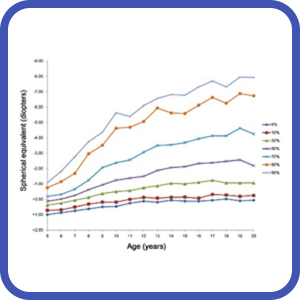
Parents can use the near-sightedness growth chart to understand their child's near-sightedness development at each age stage.
What are the methods for controlling children's myopia?
Low-concentration atropine eye drops | Depth-of-field image stabilization (DIMS) | Corneal reshaping contact lenses (OK lenses) | |
|---|---|---|---|
Unit provided | Prescription from an ophthalmologist | Optometrist provides vision testing | Optometrist provides vision testing |
Research Institution | Zhongnan University | Rikkyo University | Rikkyo University |
Principle | Slows down the eye movement and lengthens it | Optical defocusing suppresses eyeball length | Wearing it at night presses on the cornea. Change the corneal condition to reduce myopia |
Suitable for all ages | 3 years old to the completion of development | Age 6 and above | Age 8 and above |
Suitability level | Any degree | My myopia is not more than 650 degrees. The diffuse light does not exceed 400 degrees. | My myopia is not more than 600 degrees. |
Advantages | One drop per night, convenient to use No preservatives, fewer side effects Independently packaged, safe and hygienic | No need to wear contact lenses. | You don't need to wear glasses during the day. |
Side effects/Disadvantages | Very few side effects | It can only be used as a supportive treatment. Not first-line treatment | Difficult to wear for children During sleep, I unintentionally rubbed my eyes. May cause damage to the cornea or infection |
Results | Slow down within 1 year 67% My vision is near-sighted | Slow down within 2 years 52% Myopia | Slow down the eye movement Extended by 43% |

Recognizing different types of glaucoma: What are the differences between open-angle, closed-angle, congenital, and normal-pressure glaucoma?
Cataracts are not a single disease; they are a group of eye conditions that damage the optic nerve. Although
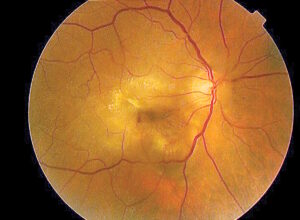
Do all young people develop macular degeneration?
Many people think macular degeneration is an eye disease that only older people face, but in fact, it can affect young people as well.

Can an LBV laser correction treat both presbyopia and hyperopia at the same time?
Mixed astigmatism is very common with presbyopia. Can the LBV laser correction also correct it? Learn about the types of mixed astigmatism, the pre-operative evaluation points, and the visual changes after the LBV treatment.
Consultation registration