Q and A
Q1: Does a child being diagnosed with refractive error mean they have true myopia?
A1: Children can experience pseudomyopia because their ciliary muscles have strong accommodative function. After focusing on near objects, their vision becomes blurry when shifting to distant objects, resulting in a degree of blurriness similar to myopia.When children experience discomfort while wearing myopic glasses, it stems from the persistent factors causing ciliary muscle contraction. Therefore, doctors use cycloplegic eye drops to dilate the pupils and relax the ciliary muscles, enabling differentiation between true and false myopia.
Q2: Does using smart devices affect children's myopia?
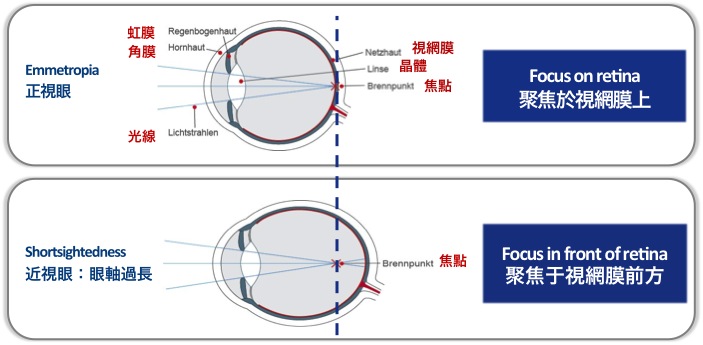
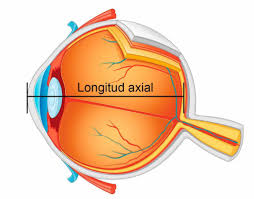
A2: Any form of close-up work can trigger myopia. Prolonged near-focusing tasks increase strain on the ciliary muscles, causing the eyeball to elongate. The American Academy of Pediatrics has issued guidelines advising against electronic device use for children under two years old. For children aged two and above, screen time should ideally not exceed two hours, though adjustments should be made based on the child's learning needs.
Q3: Can delaying the start of wearing glasses or using glasses with a lower prescription slow down the progression of myopia?
A3: A pair of glasses with the correct prescription helps you easily recognize distant objects without causing headaches or eye strain. If children cannot see clearly or use an improper lens prescription, it may lead to amblyopia and potentially worsen myopia.Of course, some children may still experience worsening myopia even with properly prescribed glasses. This could be due to the natural progression of myopia as the eye continues to develop and elongate, or it may be related to poor visual habits, such as prolonged screen time.
Q4: What is the purpose of vision correction for children?
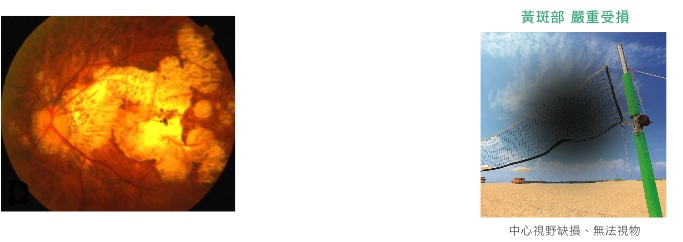
A4: The goal of myopia control for children is not to completely halt the progression of myopia, but to slow down its rate of progression. If a child's myopia increases by 100 degrees annually, this is considered rapid progression, making treatment worth considering. For children, the ideal rate of myopia progression is within 50 degrees per year. It's important to note that high myopia (500 degrees or more) carries a higher risk of developing eye diseases.
Q5: Can children's eye drops slow the progression of myopia?
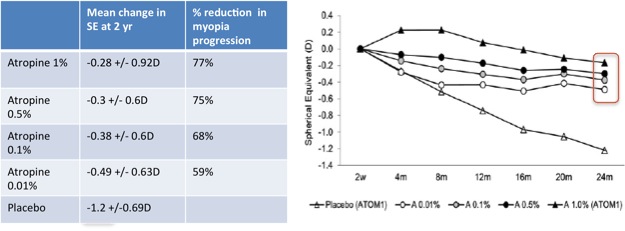
A5: Yes, low-dose atropine eye drops are commonly used by ophthalmologists as a first-line treatment to slow myopia progression in children. A study by the Chinese University of Hong Kong found this method can effectively reduce the rate of myopia progression in children by up to 60%, with rare side effects.
Q6: What are OK lenses?
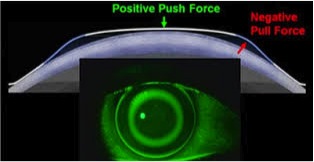
A6: OK lenses, or orthokeratology lenses, are rigid gas-permeable contact lenses worn overnight. They utilize the surface tension of tears to reshape the cornea's curvature and contour. Children undergoing this treatment simply wear the lenses while sleeping at night, eliminating the need for glasses in the morning.The only concern is that children may unknowingly rub their eyes during sleep, potentially causing corneal damage or infection. Therefore, this method is only suitable for children aged 8 and above who demonstrate good self-care abilities.
Q7: What is the latest method for children's vision correction?
A7: A "Multi-Zone Positive Optical Defocus" (DIMS) eyeglass lens designed by The Hong Kong Polytechnic University has been proven to slow the progression of myopia by up to 60% in participating children.The lens comprises a "central optical zone" for correcting refractive errors and a "multi-zone progressive myopia defocus" extending from the center to the periphery. When viewing objects at different distances, the DIMS lens provides clear vision and myopia defocus to correct visual acuity.
Q8: Besides receiving treatment, what other methods can help protect vision?
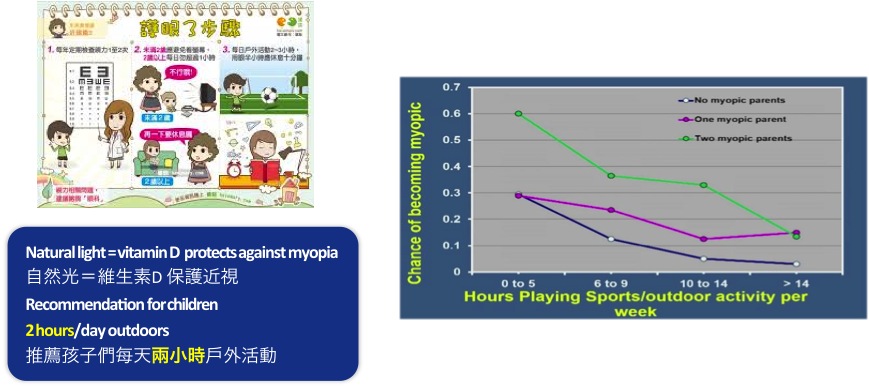
A8: When reading on a mobile phone or tablet, remember to do so under adequate lighting. Reduce the brightness of electronic devices and adjust font size and line spacing to moderate levels to minimize eye strain. After every 20 minutes of reading, look at an object 20 feet away for 20 seconds to allow the ciliary muscles sufficient rest and relaxation.Australian research indicates that children engaging in 14 hours of outdoor activities weekly can stimulate dopamine secretion, thereby slowing the progression of myopia.
Q9: Can exercises such as massaging the area around the eyes help delay the onset of myopia in children?
A9: There is no evidence that such exercises can control myopia. On the contrary, excessive pressure on the muscles around the eyes can cause an increase in intraocular pressure. Furthermore, individuals with high myopia risk retinal detachment if they move their eyes rapidly, so caution is essential. It is best for them to participate in outdoor activities, which can help delay the progression of myopia.
Q10:Laser vision correction surgery can reverse myopia and guarantee perfect vision for life.
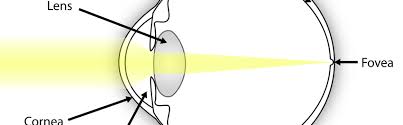
A 10: An increase in myopia means the eyeball has lengthened. Currently, there is no way to shrink the eyeball back to its original length when vision was perfect. However, laser vision correction can help patients eliminate their dependence on glasses or contact lenses. The surgery does not shorten the eyeball; instead, it reshapes the cornea so that light can focus on the retina without the aid of glasses or contact lenses.