
PresbyopiaPresbyopia is a vision problem that occurs with age. Almost everyone develops presbyopia; it usually occurs in people around 40 years old. Many people with presbyopia are reluctant to wear reading glasses because they fear being ridiculed for being old, which can affect their daily lives. However, there are now more and more methods to correct presbyopia available on the market; wearing reading glasses is no longer the only option; Dr. Tong Wenjie, an ophthalmologist who strongly recommends it, is one of them. Presbymax cataract laser surgeryThis not only avoids the embarrassment of wearing reading glasses, but also allows the eyes to regain the vision of their younger days.
Methods of treating presbyopia
Although cataracts are not considered a serious eye disease,PresbyopiaAs people age, this gradually affects their standard of living, so many people consider undergoing cataract surgery to correct their vision.
LBV progressive lens correction
Laser Blended Vision, or LBV multifocal correction, is a form of multifocal correction that uses laser to correct the shape of the cornea.Improve farsightednessOne of its methods. Its operation principle is to change the curvature of the cornea to adjust the refraction of light, while improving presbyopia, it also provides better three-dimensional vision and ensures good vision at long and intermediate distances.
However, LBV multifocal contact lenses are not suitable for everyone; for example, patients with eye diseases such as cone-shaped cornea, cataracts, or glaucoma may not be able to undergo this type of surgery.
SMILE progressive lens correction
Smile old-fashioned reading glassesThe system using a femtosecond laser (Carl Zeiss VisuMax) focuses the main lens into a flat image without any degree of distortion (for viewing distances at medium and long distances), while the secondary lens is designed to focus at approximately 50–200 degrees (for viewing at close distances), thereby improving the problem of presbyopia.
The biggest advantage of Smile multifocal contact lenses is that they do not require the complete opening of the corneal flap during the process of correction; only about 3 mm of incision is required to remove the excised tissue, thus offering high safety and a short recovery time, and less dry eye after surgery.
However, this type of surgery is not suitable for people withFar visionPeople with myopia greater than 1000 degrees or presbyopia greater than 500 degrees. Moreover, the Monovision "one-eye vision" principle of SMILE multifocal contact lenses may cause blurred mid-distance vision and lead to problems with poor stereopsis.
Presbymax Presbyopia correction
Presbymax cataract surgery is currently one of the methods globally recognized as effective in improving presbyopia. Doctors use laser to refine the cornea, creating a convex lens effect that improves the vision problems of presbyopia. This surgery also incorporates Spherical Aberration, which reduces slight spherical aberration, increases the depth of field, elongates the focal point, and changes chromatic aberration. This not only makes distant, intermediate, and near vision clear, but also prevents distortion of original colors and the sense of depth, and does not cause glare.
Presbymax multifocal contact lenses are the most advanced and mature in modern times.Laser vision correction treatment for presbyopiaThe patient satisfaction rate is very high; compared to LBV and SMILE, Presbymax is more suitable for most patients with presbyopia.
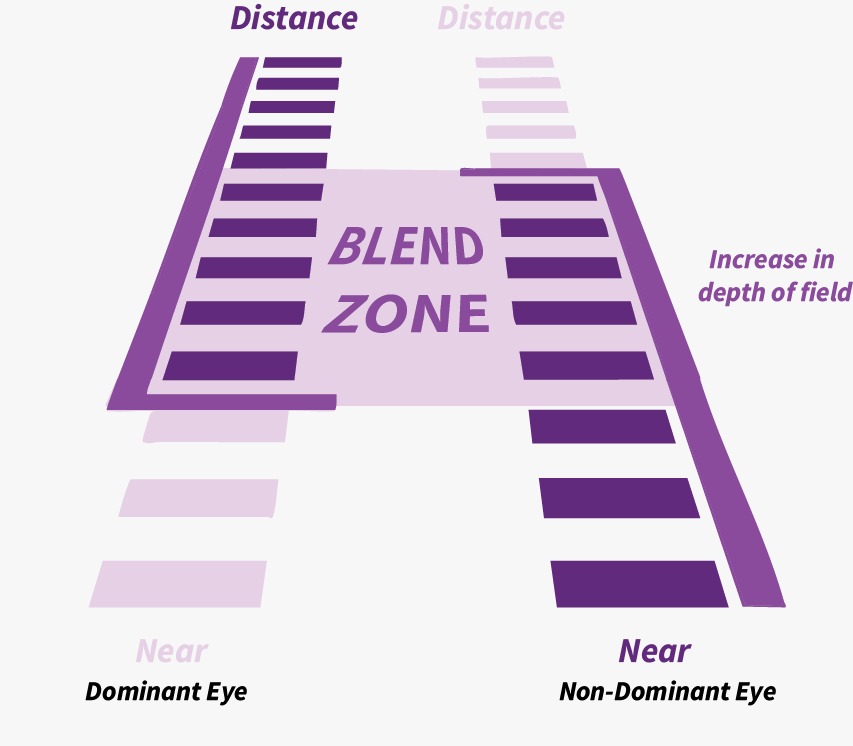
Single-eye vision surgery
Single-eye vision surgery is performed by laser refractive surgery to correct farsightedness. The principle is to correct the main eye to 0 degrees, while the other eye retains the near-vision correction to compensate for farsightedness. This type of surgery is suitable for those with myopia and those without it.CataractSomeone from
However, since the visual acuity of both eyes after surgery will vary significantly, it takes some time for the eyes to adjust; some people may not be able to adapt to this change and will need to consider undergoing another surgery. Additionally, post-surgery cataracts can also have the potential to worsen again, which may mean that they will need to wear reading glasses again in the future.
Multifocal artificial lens
Multifocal intraocular lenses are implanted "glasses" that offer full-field vision in all distances—far, intermediate, and near.Artificial lensIt can simultaneously improve problems such as presbyopia, myopia, or hyperopia. If a patient with presbyopia also suffers from cataracts, they can consider undergoing this type of surgery. The cataract problem can be solved simultaneously. Multifocal intraocular lenses are made of elastic materials such as plastic or silicone, and usually are not noticeable. However, this type of surgery is invasive; after the procedure, care must be taken to avoid problems such as bacterial infection or lens dislocation.
How to choose cataract surgery?
Advanced cataract surgery continues to innovate, leading to a wide range of methods for correcting cataracts today. However, not all surgeries are suitable for everyone. Therefore, when choosing cataract surgery, it is necessary to carefully consider multiple factors, such as a patient’s medical history, the degree of nearsightedness/far-sightedness/astigmatism, personal lifestyle habits, and cataract surgery costs. To achieve optimal treatment results, doctors generally perform comprehensive examinations on patients before the procedure to confirm their eye health status before deciding on the treatment method.
Dr. Tung Weijie stated that Presbymax cataract surgery is one of the currently recognized and mature cataract surgery methods worldwide. The patient satisfaction rate after the Presbymax surgery is extremely high, and in Hong Kong, the cataract surgery costs are relatively affordable. The surgery takes only a very short time, about 10 minutes, and patients can resume normal activities within 24 hours. Vision can be fully restored within a few weeks without any discomfort, making Presbymax the best choice for cataract surgery.
Risk of presbyopia correction
Presbyopia correction surgery is usually classified as a minimally invasive procedure. The incision is small and recovery time is relatively short. However, in reality, all surgeries carry some risk. Therefore, before considering undergoing surgery, it is still necessary to learn about some of the risks associated with presbyopia correction in advance.
- Infection of the wound:After the procedure, it is essential to take care of the wound according to the doctor's instructions to prevent bacterial infection.
- Glare and shadows:Some old-lens vision correction procedures may cause glare or ghosting after the procedure, which may affect nighttime driving.
- Fear of lightSome patients may be more sensitive to light after surgery, which can lead to discomfort in bright environments.
- Excessive or insufficient correction:Although doctors meticulously formulate corrective treatment plans before surgery, it is not possible to guarantee 100% accuracy; if the patient experiences discomfort, a second surgery may be necessary to improve the situation.
- Corneal problems: In rare cases, surgery may lead to corneal problems such as scarring or corneal epithelial cell proliferation.
The risk of farsighted eye surgery may vary depending on the procedure. It is recommended that you ask your doctor for a detailed explanation before choosing farsighted eye surgery. Of course, these risks do not occur frequently and may be temporary. As long as you seek the help of a qualified ophthalmologist, there is no need to worry excessively.